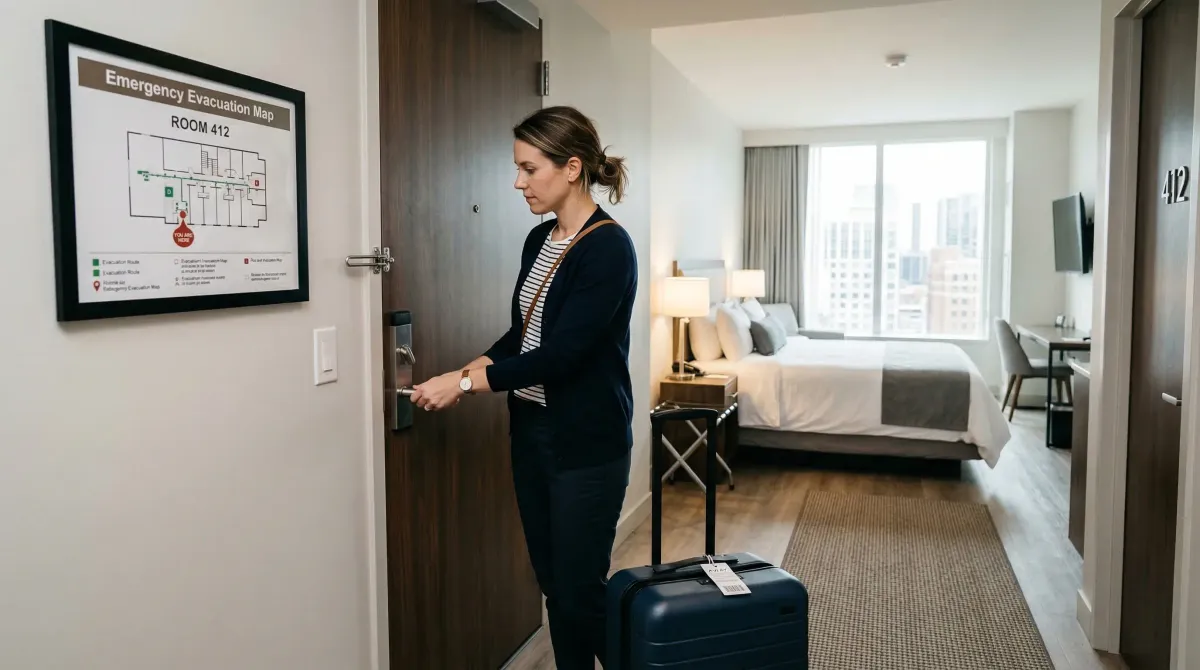
A hotel room can feel safe the second the door closes. Most of the time it is. But travel is also when people miss easy warning signs because they are tired, late, jet-lagged, or in a hurry to throw the bag down and head back out.
A five-minute check fixes that. You are not trying to turn every trip into a crime documentary. You are just making sure the locks work, the exits make sense, the room has basic fire protection, and nobody can learn more about you than they should.
This checklist pulls from lodging and travel safety guidance published by the U.S. Department of State, the U.S. Fire Administration, the American Red Cross, the Government of Canada, and the FBI’s business travel guidance. I kept it centered on the checks that are fast, practical, and easy to do the moment you walk in.
How We Built This Checklist
I kept the list focused on three kinds of hotel room risk:
- Privacy problems, such as exposed room numbers, bad curtains, or strangers learning where you are staying
- Security problems, such as weak locks, surprise visitors, or valuables stored carelessly
- Fire and emergency problems, such as unclear exits, missing alarms, or not knowing how to get out in the dark
Not every hotel issue looks dramatic. A weak deadbolt, a broken window lock, or a room phone that does not work is usually enough reason to call the desk and fix the problem early.
Hotel Room Safety Checklist: 11 Things to Check in the First 5 Minutes
1. Keep your room number private before you even reach the elevator
The room itself is not the only safety issue. Check-in matters too.
The U.S. Department of State’s guidance for women travelers says hotel staff should not display your room number, and it suggests using a first initial rather than your full first name when possible. Its lodging safety page adds one small tip that is easy to overlook: carry the room key separately from the key packet that shows the room number.
That means two things in practice. If the front desk says your room number out loud, ask them to write it down instead. Then pocket or toss the sleeve before you start walking around the lobby with it in plain view.
2. Test the main door, deadbolt, and any secondary lock right away
Do this before you unpack. Close the door, lock it, unlock it, and make sure the latch catches cleanly.
The State Department advises travelers to make sure all doors and windows lock properly, and that includes the main door, any connecting door between rooms, and the bathroom window if there is one. If the deadbolt sticks, the swing bar is loose, or the door does not fully latch unless you pull it hard, call the front desk and ask for maintenance or a new room.
This is the kind of problem that feels minor until 11:30 p.m. when somebody rattles the handle in the wrong hallway. It is easier to solve when the room is still clean, your bag is still zipped, and you are not half asleep.
3. Do a quick room sweep before you settle in
Open the closet. Check behind the curtains. Look under the bed. Scan mirrors, corners, and any shelf or console area with electronics.
This is straight from U.S. State Department lodging guidance, which tells travelers to check behind curtains, under the bed, and around the room when they arrive. The same guidance also says to look for unusual electronics and report anything that seems off.
That does not mean assuming every smoke detector is suspicious. It means noticing obvious problems: a device pointed at the bed that does not make sense, a clock radio that has been oddly repositioned, or a camera-style gadget where it should not be. Most rooms will pass this check in under a minute. That is the whole idea.
4. Make sure the room phone works and save the hotel address
A dead room phone is easy to shrug off when your cell service is fine. It gets less easy to ignore if you need the front desk at 2 a.m., or if local emergency calling from your personal phone is not as simple as it is at home.
The State Department specifically recommends making sure the phones in your room work. Use it once. Call the front desk, confirm the number, and save the hotel address in your phone while you are at it.
If you are abroad, also note the local emergency number. Canada’s travel advice makes the broader point well: keep emergency numbers with you and do not wait until you feel unsafe to figure them out.
5. Read the evacuation map and find the two nearest exits
This is the hotel check most people know they should do and almost nobody does.
The American Red Cross says to read the evacuation plan, find the two closest exits from your room, and count the number of doors between your room and those exits. The U.S. Fire Administration repeats the same advice in its hotel fire safety materials. That last step sounds fussy until you picture a hallway full of smoke, dim emergency lighting, and zero interest in guessing.
Take thirty seconds. Open the door, look both ways, and make sure the stairs are where the map says they are. If an exit is blocked, alarmingly far away, or hard to find, you want to know now, not when everybody else is also trying to figure it out.
6. Look for smoke alarms, carbon monoxide detectors, and sprinklers
A hotel room should not make you play detective, but you should still look once.
The State Department advises checking for carbon monoxide detectors, fire alarms, and fire extinguishers. The Red Cross adds that hotels and motels are safer bets when they have hard-wired smoke alarms and automatic sprinkler systems in guest rooms. The U.S. Fire Administration makes the same point in its hotel and vacation rental fire safety guidance.
You do not need to inspect like a building engineer. Just confirm the basics are visibly there and not damaged, covered, or disconnected. If something is missing, ask to move. This is one of the few parts of hotel safety where “probably fine” is not a great standard.
7. Keep your room key where you can grab it in the dark
This one rarely makes the average travel packing list, but it should.
The U.S. Fire Administration’s hotel fire safety pictographs tell travelers to keep the room key near the bed. It is a simple tip with a practical reason behind it. If a hallway fills with smoke or the lights are out, you do not want to hunt through yesterday’s jeans, your backpack, and the nightstand to find the one thing that gets you back into the stairwell or through a secured door.
When you settle in for the night, decide where the key goes and keep it there. Same place, every time.
8. Check the windows, balcony door, and curtains for privacy
Good room privacy is boring, and that is exactly what you want.
The State Department says to ensure windows lock properly and curtains close fully for privacy. If you have a balcony, make sure the door locks and the curtains or blackout shade close without gaps that leave the room visible from exterior walkways or nearby buildings.
Canada’s travel advice adds one detail that sticks with you once you hear it: do not hang towels or clothes on a balcony railing in a way that makes your room easier to identify. On resort properties or exterior-corridor hotels, small habits like that can tell strangers more than you intended.
9. Decide where your passport, wallet, and electronics will live
Most theft prevention decisions happen before you leave the room, not after something disappears.
The FBI’s business travel guidance is blunt on one point: hotel safes are not adequate protection for sensitive material. That does not mean you can never use the safe. It means you should not treat it like a magic vault for your passport, primary card, backup cash, work laptop, and every other high-value item all at once.
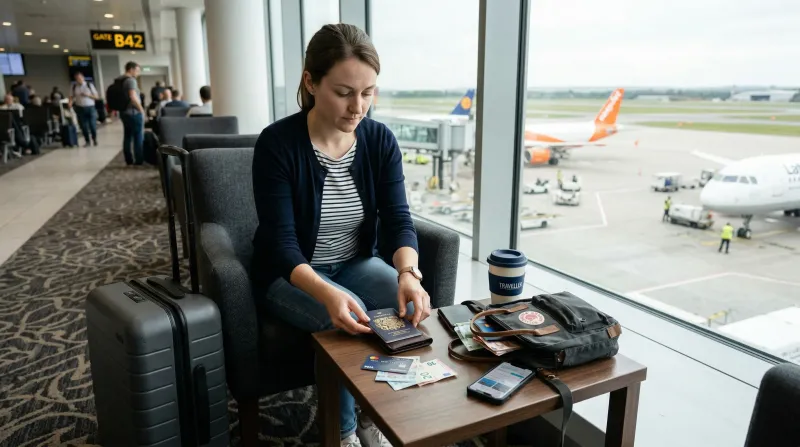
A smarter move is to split risk. Keep your passport or primary ID on you if local conditions make that practical, carry one payment method and leave another hidden separately, and avoid leaving expensive devices out in plain sight. If the hotel requires your passport at the desk for registration, ask for a receipt and make sure you get it back before you leave.
10. Do not open the door for surprise visitors
This sounds obvious until somebody says “housekeeping,” “maintenance,” or “front desk” through the door and you are half asleep.
Canada’s travel advice says never open your door without confirming the person’s identity. The State Department’s hotel guidance says to meet new visitors or strangers in the public lobby, not in your room. Its broader travel security guidance adds that you should be sure of a visitor’s identity before opening the door, refuse unexpected packages, and report suspicious activity to the front desk or hotel security.
Use the peephole. If there is any doubt, call the desk yourself. Real staff can wait an extra twenty seconds while you verify who they are.
11. Trust your gut and change rooms if the setup feels wrong
You do not need courtroom-level proof to ask for a different room.
If the lock is faulty, the phone is dead, the curtain will not close, the hallway exit is confusing, or there is unusual equipment in the room, move. The State Department repeatedly frames hotel safety around quick action: report suspicious activity, deal with issues immediately, and have backup options when necessary.
Most of the time, this checklist will confirm that the room is fine. Good. That is the best outcome. But if something feels off in the first five minutes, it usually does not get more comfortable after midnight.
The 30-Second Version
If you want the shortest possible version, do this:
- Keep your room number off display.
- Test the door and window locks.
- Check under the bed, behind curtains, and around obvious electronics.
- Read the evacuation map and find two exits.
- Confirm the room phone, smoke alarm, and privacy setup.
- Keep strangers out of the room and valuables out of sight.
That covers the big stuff fast.
Final Thoughts
A hotel room safety checklist is not about being paranoid. It is about catching ordinary problems before they become stressful ones.
Most rooms will pass these checks without drama. That is great. You spend five minutes, confirm the basics, and get on with the trip. If something does fail, you find out early enough to fix it while the front desk can still do something useful.
If you are building a smoother travel routine, pair this with our Airport Security: How to Get Through Faster and Carry-On Packing Tips: How to Pack Light and Travel Smart in 2026. One gets you to the hotel with less hassle. The other helps make sure the room you end up in is one you feel comfortable using.
Research and References
- Lodging Safety, U.S. Department of State
- Women Travelers, U.S. Department of State, last updated August 11, 2025
- Terrorism, U.S. Department of State, last updated November 22, 2022
- How to Stay Safe on Vacation, American Red Cross, published May 22, 2025
- Hotel and Vacation Rental Fire Safety, U.S. Fire Administration
- Pictographs: Hotels, U.S. Fire Administration
- Sexual assault abroad, Government of Canada, date modified June 12, 2024
- FBI Business Travel Brochure, U.S. Department of State / FBI
Discussion
Comments
Share a helpful tip, question, or takeaway from Hotel Room Safety Checklist: 11 Things to Check in the First 5 Minutes.
0 Comments
Loading comments…