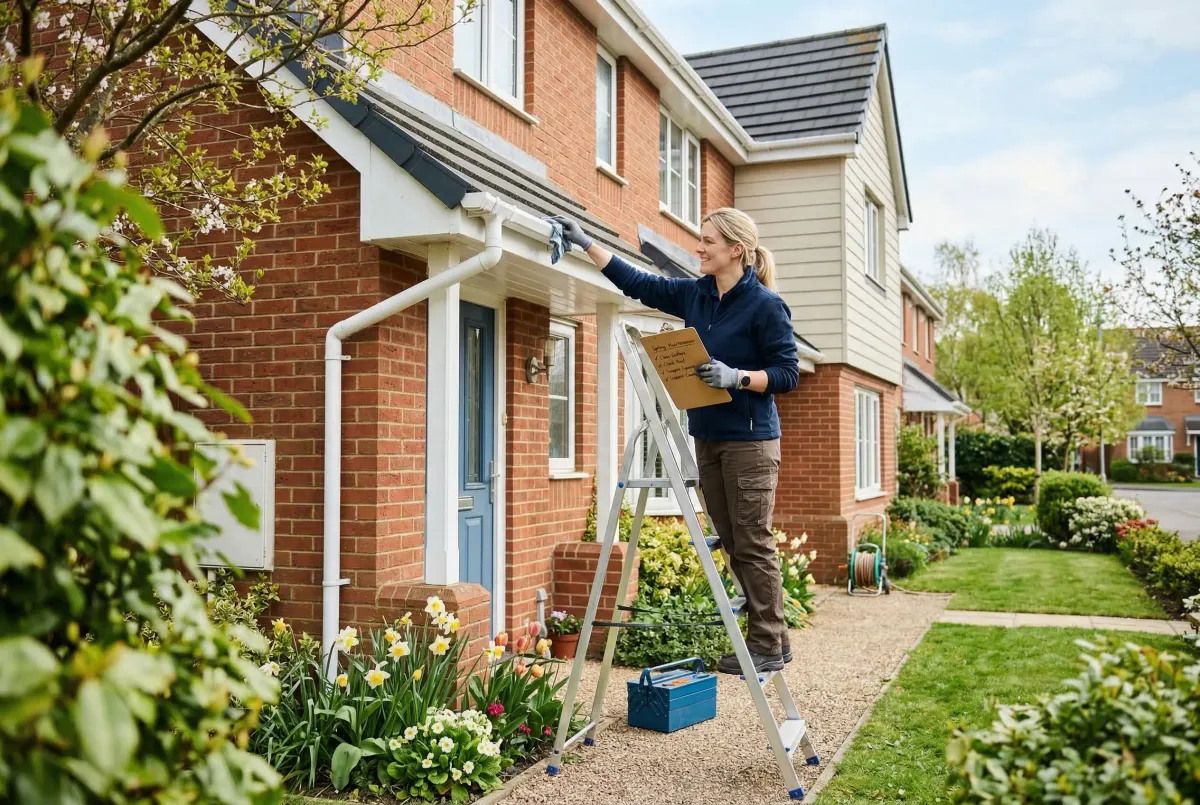
Spring has a way of exposing everything winter managed to hide. Gutters fill up, caulk shrinks, outdoor drains clog, and the air conditioner you forgot about suddenly has to earn its keep again.
A good spring home maintenance checklist is not about feeling productive. It is about catching cheap problems before they turn into expensive ones. A blocked condensate drain can stain ceilings. A loose downspout can push water toward the foundation. A silent toilet leak can keep running until the utility bill finally gets your attention.
This list is built from guidance published by the U.S. Department of Energy, EPA WaterSense, ENERGY STAR, FEMA, Ready.gov, and the U.S. Consumer Product Safety Commission. I kept it centered on the jobs most likely to save you from an ugly repair later.
How We Picked These Tasks
I kept the list focused on three things:
- Jobs that can prevent water damage, equipment failure, or safety problems
- Tasks most homeowners can either do themselves or schedule quickly in spring
- Items backed by official maintenance or preparedness guidance
Some of these take ten minutes. A few call for a contractor. Every one of them is easier to deal with on a mild spring weekend than during the first heat wave or the first basement leak.
15 Spring Home Maintenance Tasks That Prevent Expensive Repairs
1. Clean gutters and make sure downspouts move water away from the house
This is the classic spring task for a reason. When gutters stay packed with leaves and grit, water spills over the edge instead of moving through the system. That overflow can soak fascia boards, stain siding, and dump water right next to the foundation.
FEMA recommends keeping drainage systems such as downspouts in working order, and that advice is not theoretical. If runoff keeps landing near the house, you are inviting basement dampness, erosion, and in some cases foundation trouble. Make sure downspouts discharge well away from the home, not right at the base of the wall.
2. Check the grading around your foundation after winter storms
Winter freeze-thaw cycles can shift mulch, soil, and gravel. What looked fine in November may now slope toward the house.
FEMA advises landscaping and grading to move runoff away from the home. Walk the perimeter after rain and look for pooling water, muddy spots, or splash marks on the foundation. If water sits near the house, add and compact soil as needed so the grade pitches away instead of back toward the structure.
3. Seal small foundation cracks and exterior openings before they grow
Spring is a good time to inspect the outside shell of the house before heat, insects, and heavy rain pick up. Look for small foundation cracks, gaps where cables or pipes enter the home, and failed exterior sealant.
FEMA specifically recommends sealing foundation cracks and exterior openings with the right materials. You are not trying to solve a major structural problem with a tube of caulk. You are stopping the small, common entry points that let in water, humid air, or pests and turn an easy fix into a larger one.
4. Test the sump pump and confirm the backup still works
If you have a basement or crawlspace that ever gets damp, this task belongs near the top of the list. A sump pump that fails during the first hard spring storm is one of those problems that gets expensive fast.
FEMA recommends a sump pump with a battery backup in homes where basement flooding is a recurring risk. Pour water into the pit to make sure the pump activates, empties properly, and shuts off as expected. If you have a battery backup, test that too. A sump pump without a working backup is only half a plan.
5. Schedule the air conditioner tune-up before the first heat wave
ENERGY STAR recommends annual pre-season checkups, with cooling equipment checked in the spring and heating equipment in the fall. That timing matters because contractors get booked once the weather turns hot.
The maintenance checklist also notes that a proper tune-up should include inspecting the condensate drain, checking controls, and cleaning components tied to airflow and cooling performance. This is one of the easiest ways to reduce the odds of an early-summer breakdown when service calls are slow, expensive, and hard to book.
6. Replace the HVAC filter and inspect the condensate drain
Some homeowners wait for the annual service visit and ignore the filter the rest of the year. That is a mistake. ENERGY STAR says you should inspect, clean, or change filters once a month in your central air conditioner, furnace, or heat pump, depending on use and conditions.
It also warns that a dirty filter can raise energy costs and damage equipment, while a clogged condensate drain can cause water damage and humidity problems inside the house. If you already read our guide on how to lower your electric bill this summer, this is one of the same high-payoff tasks for a reason.
7. Walk the house for air leaks and failed caulk
The Department of Energy says the potential energy savings from reducing drafts may range from 10% to 20% per year. Spring is a practical time to look for those leaks because you are already outside checking trim, windows, doors, and utility penetrations.
Pay attention to cracked caulk, gaps around hose bibbs, loose weatherstripping, and spots where different materials meet. This is not only an energy issue. Failed sealant also lets in water, which is what turns trim repairs and interior touch-ups into rot, staining, and mold trouble.
8. Inspect the roof from the ground and look for winter damage
You do not need to climb onto the roof to do a useful spring check. Stand back with binoculars if needed and look for missing shingles, lifted flashing, sagging gutters, bent drip edges, or debris that stayed put after winter.
The main goal is to catch obvious warning signs early enough to call a roofer before a leak shows up in the attic or on a bedroom ceiling. If anything looks off, stop at inspection and bring in a pro. Spring is the cheaper time to discover a roof problem. During a storm is not.
9. Trim branches that can scrape the roof or fall in severe weather
Ready.gov advises cutting down or trimming trees that may be in danger of falling on your home. Spring is the right time to deal with limbs that hang over the roof, rub against siding, or threaten gutters and service lines.
This task prevents more than storm damage. Branches that constantly scrape shingles shorten roof life, and dense tree cover can keep areas damp longer than they should be. If a limb is large or close to power lines, hire an arborist instead of turning it into a weekend project.
10. Test smoke alarms and carbon monoxide alarms
Spring maintenance is not only about the structure. It is also a good checkpoint for home safety equipment. CPSC recommends testing smoke and carbon monoxide alarms monthly. It also recommends replacing batteries annually unless you have sealed 10-year units.
If an alarm is old, do not just swap the battery and call it done. CPSC has also urged homeowners to consider 10-year sealed battery alarms and to keep smoke alarms on every level of the home, outside sleeping areas, and inside each bedroom. This job takes minutes and protects you from the kind of house emergency no repair budget can soften.
11. Flush the water heater and inspect for leaks or corrosion
EPA WaterSense recommends servicing the water heater at least once a year, and it notes that flushing the tank can reduce sediment buildup that hurts efficiency. It also recommends checking the temperature and pressure valve and visually inspecting for leaks, corrosion, or aging connections.
A neglected water heater often gives small warnings before it gives you a wet floor. Look around the base, scan fittings and valves, and pay attention to rust streaks or moisture. If you prefer a broader annual maintenance rhythm, pair this with the checklist in our appliance maintenance guide.
12. Check toilets for silent leaks
EPA WaterSense says the average household can lose nearly 10,000 gallons of water each year from leaks, and that can show up as an extra 10% on water bills. Toilets are one of the easiest places to miss because a flapper can leak quietly for a long time.
Use the food coloring test once a year. Put a few drops in the tank, wait about 10 minutes, and see whether color appears in the bowl. If it does, you likely have a leak. WaterSense also recommends replacing toilet flappers at least every five years to keep a good seal.
13. Look under sinks and around faucets for drips before they stain cabinets
This is another quick check that pays for itself. WaterSense recommends monitoring faucets for leaks and checking under sinks for wet connections, puddling, or water spots.
Cabinet bottoms do not need much moisture to start warping or staining. Catching a slow drip now is the difference between a quick washer replacement and replacing part of the vanity later. If your monthly bills have been creeping up, this is also a good moment to compare recent usage with the same month last year.
14. Run an irrigation and outdoor water check before summer starts
If you have sprinklers, hose lines, or drip irrigation, spring is the moment to check them before steady watering season begins. EPA WaterSense specifically recommends a spring “Sprinkler Spruce-Up” so homeowners can catch winter damage, overspray, clogs, and leaks.
Run each zone and watch what happens. You are looking for broken heads, spray hitting pavement, soggy patches, and weak coverage. Small irrigation leaks waste water, raise bills, and can create mushy soil along walks and foundations. None of that gets cheaper if you wait until July.
15. Do a slow attic and basement walk for moisture, stains, and insulation problems
The Department of Energy recommends checking attics, basements, and crawlspaces for insulation issues, air leaks, and moisture-related trouble. That makes spring a smart time for one careful walk-through after winter stress and before summer humidity ramps up.
In the attic, look for staining, damp insulation, blocked vents, and gaps around penetrations. In the basement, look for musty smells, damp walls, fresh efflorescence, and signs that water entered and dried. These spaces usually tell you a problem exists long before the main living area does.
What to Do First if You Only Have One Weekend
If your list feels too long, start here:
- Clean the gutters and check downspouts.
- Test the sump pump.
- Replace the HVAC filter.
- Walk the house for leaks, cracks, and failed caulk.
- Test smoke and carbon monoxide alarms.
That group covers the most common spring repair triggers: water where it should not be, equipment that fails under load, and safety devices that go ignored.
Final Thoughts
Good spring maintenance is boring in the best possible way. Most of these jobs do not make the house look better on the same day. They just lower the odds that you end up paying for emergency drying, a dead AC, rotten trim, or a flooded basement.
Do the water jobs first. Then handle HVAC, alarms, and the attic-basement walk. If you track household spending, it also helps to treat these checks like part of routine prevention, not random chores. Our smart budgeting for beginners guide can help if you want a simpler way to plan for maintenance before a repair bill lands without warning.
Research and References
- Home Energy Checklist, U.S. Department of Energy
- Do-It-Yourself Home Energy Assessments, U.S. Department of Energy, published May 30, 2014
- Maintenance Checklist, ENERGY STAR
- Home Maintenance, U.S. EPA WaterSense, last updated March 2, 2026
- Be Flood Smart. Protect Your Property, FEMA, released July 16, 2024
- CO Alarms, U.S. Consumer Product Safety Commission
- Thunderstorms & Lightning, Ready.gov, last updated July 10, 2025

Discussion
Comments
Share a helpful tip, question, or takeaway from Spring Home Maintenance Checklist: 15 Tasks That Prevent Expensive Repairs.
0 Comments
Loading comments…