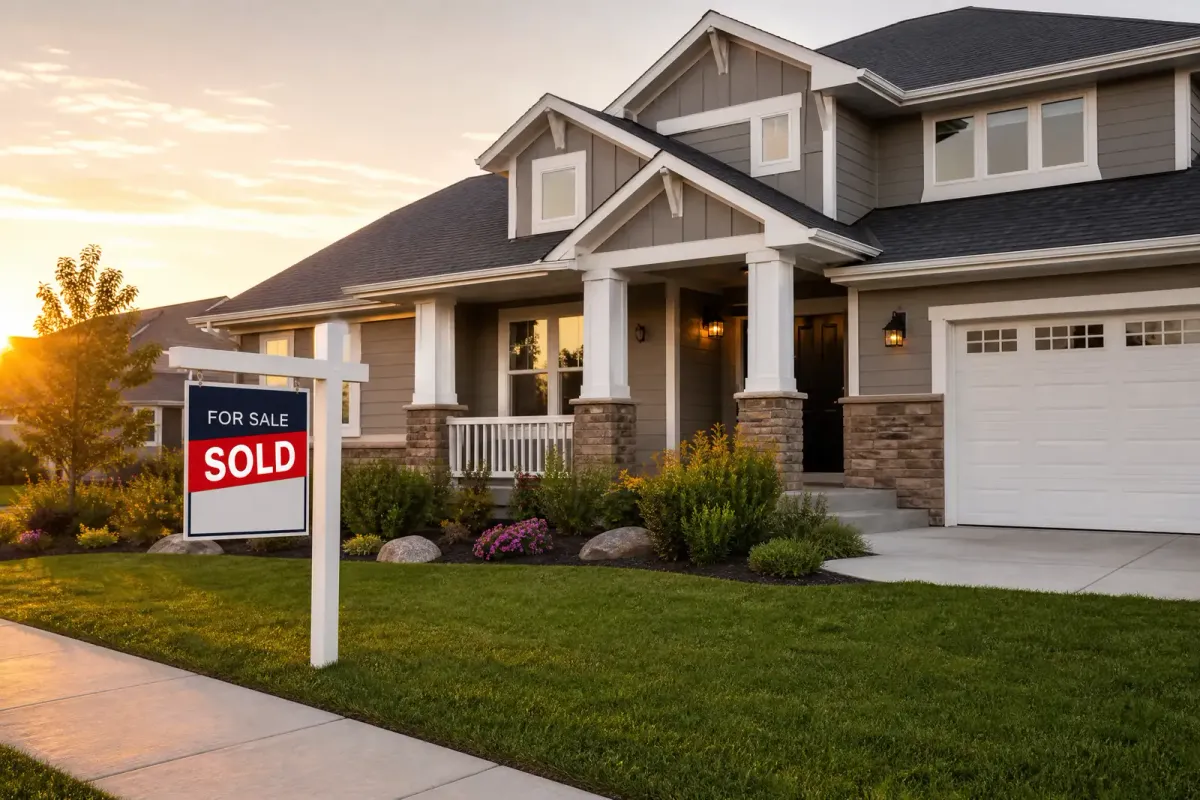
After years of watching home prices climb faster than wages, a handful of US housing markets are finally moving in the other direction. Realtor.com’s 2026 Housing Forecast flags several cities across the Southeast and West where prices are expected to fall through the end of the year. The shift traces back to a straightforward story: pandemic-era demand is cooling off, new inventory is coming online, and buyers who waited are starting to see leverage return to the negotiation table.
This isn’t a crash. It’s a recalibration. And for anyone sitting on a down payment or pre-approval letter, recalibration is exactly the moment that rewards patience.
The Markets Where Prices Are Pulling Back
The cities on this list aren’t shrinking or dying. Most of them are growing, just at a more normal pace after the frenzied migration years. The price softness comes from a mix of factors — oversupply from speculative building, return-to-office trends reversing remote-work migration, and local economic headwinds. Here are the eight markets where realtors expect the steepest corrections, with data from Zillow unless noted otherwise.
1. Houston, Texas — Average Home Price: $265,062
Houston seems like an unlikely candidate for a price drop, given its robust job market and comparatively affordable housing. But the same forces that made the city attractive during the pandemic are now working in reverse. As real estate analyst Gardner put it, “areas that saw aggressive speculative building or long commuter growth during the remote-work era could see price pressure if energy slows down or return-to-office trends continue.”
Houston’s housing stock expanded quickly to meet pandemic demand. Now that some of that demand has normalized, the new builds are competing for fewer buyers. For a buyer, that means sellers are more willing to negotiate, and builders are offering incentives they wouldn’t have touched two years ago.
2. San Francisco, California — Average Home Price: $1,369,171
San Francisco has been in what Blaz Korosec, licensed realtor and founder of Investorade, calls a “slow bleed” correction. The city’s condo market has been hit particularly hard — Korosec reports prices dropping 25% to 30% from peak levels on the ground. That kind of correction is rare in a city this expensive, and it opens a window for buyers who were previously priced out entirely.
The tech sector’s shift toward hybrid work reduced the premium on living within walking distance of a downtown office. That structural change isn’t reversing. Condos that once sold for well over a million at asking are now sitting on the market, and motivated sellers are adjusting expectations.
3. Cape Coral, Florida — Average Home Price: $339,638
Cape Coral rode the Florida migration wave hard. The city’s waterfront properties and warm-weather appeal attracted buyers from the Northeast and Midwest during the peak of remote-work relocation. But the flood of new construction that followed has left the market with more supply than current demand can absorb. Insurance costs in coastal Florida have also climbed, adding another drag on buyer enthusiasm.
For a patient buyer, the dynamic is favorable. Sellers who bought investment properties during the boom are now holding inventory in a market where the competition has thinned out. That’s when you make an offer below asking and ask for concessions.
4. Boise, Idaho
Boise was the poster child for pandemic-era migration, with prices surging as remote workers fled expensive coastal cities. The problem for sellers is that the same remote-work flexibility that brought people in can take them out. As some companies tighten return-to-office policies, the incentive to live in Boise weakens, and the speculative buyers who bet on continued appreciation are starting to exit. Prices that climbed dramatically are now coming back down, returning to a range that’s closer to what local incomes can actually support.
5. Austin, Texas
Austin’s story mirrors Houston’s but with higher stakes. The city saw an unprecedented influx of tech workers and remote professionals, driving prices up by double digits for two straight years. Now, with tech layoffs making headlines and some companies recalling staff to other headquarters, the buyer pool has contracted. Inventory is up, days on market are stretching out, and sellers who listed at peak prices are discovering the market has moved beneath them.
6. Phoenix, Arizona
Phoenix built aggressively during the pandemic boom, particularly in suburban corridors. The new supply is now hitting a market where migration from California has slowed and local affordability is straining. Phoenix remains one of the country’s fastest-growing metros, but the pace of price appreciation has stalled and tipped negative in several ZIP codes. Buyers can take advantage of this by targeting the newer developments where builders are most eager to move units.
7. Las Vegas, Nevada
Las Vegas depends heavily on tourism and hospitality employment, both of which have been uneven as the economy shifts. The housing market followed the national surge upward, but the correction here is sharper because the buyer base is narrower. Investors who bought rental properties during the boom are facing softer rental demand, and some are listing to cut losses. That creates an opening for owner-occupant buyers to pick up properties at lower prices with less competition from cash investors.
8. Tampa, Florida
Like Cape Coral, Tampa absorbed a large share of pandemic migration and has been working through the supply it generated. The city’s strong fundamentals — no state income tax, growing healthcare and finance sectors — keep it from a full-blown downturn. But the price trajectory has softened, and the market has shifted from multiple-offer bidding wars to negotiations. Buyers who can wait for the right listing have negotiating room that didn’t exist eighteen months ago.
What Price Drops Actually Mean for Your Purchase
A dropping market doesn’t mean you should buy the first house you see at the first discount you notice. It means the balance of power has shifted, and you have choices you didn’t have before. Here’s how to use that shift.
Stop Competing on Speed, Start Competing on Terms
In a hot market, the buyer who moves fastest wins. In a cooling market, the buyer who structures the best deal wins. That means:
- Ask for closing cost contributions. When a seller won’t budge on price, ask them to cover two to three percent of closing costs. The net effect on your out-of-pocket spending is the same as a price cut, but sellers often find it psychologically easier to accept.
- Request repair credits instead of making the seller fix things. Sellers in a slowing market don’t want to delay closing with repair negotiations. Ask for a credit at closing and handle the work on your own timeline.
- Negotiate a longer closing window. A 45- or 60-day closing can be a selling point for sellers who need time to relocate, and it gives you extra weeks to lock in a favorable mortgage rate.
Watch Days on Market, Not Just List Price
The list price tells you what the seller wants. Days on market tells you how motivated they actually are. In most of the cities above, the threshold to start paying attention is 60 days on market. By 90 days, many sellers have already adjusted their expectations privately, and that’s when the most productive negotiations happen. The seller who has watched their listing sit through two open houses with no offers is a different person than the one who posted it on day one.
Target New Construction Where Builders Are Motivated
Builders carry financing costs on every unsold home. When inventory builds up, those costs compound, and builders start offering incentives that individual sellers rarely match. In Houston, Phoenix, and Cape Coral specifically, new construction communities are offering rate buydowns, closing cost assistance, and included upgrades. A builder-paid rate buydown that drops your mortgage rate by a full percentage point saves more over the life of a loan than a $10,000 price cut on the purchase price.
Get Pre-Approved, Not Just Pre-Qualified
In a buyer’s market, a pre-approval letter carries weight because it signals you’re ready to close, not just window shopping. Sellers dealing with stale listings prefer certainty over a slightly higher offer from someone whose financing might fall through. A pre-approval takes more documentation than a pre-qualification, and the extra effort pays off when you’re the most reliable buyer at the table.
The Timing Question: When to Buy in a Falling Market
Here’s the uncomfortable part about buying in a declining market: prices might drop further after you buy. That’s unavoidable. Trying to catch the exact bottom is a fool’s errand that keeps people renting forever while they wait for a number that keeps moving.
The better framework is this: buy when the monthly cost of owning becomes cheaper than renting a comparable home, and when you plan to stay put for at least five years. In the cities listed above, that crossover point is arriving for the first time in years. A couple of percentage points off peak prices, combined with mortgage rates that have stabilized below their 2023 highs, creates a window where monthly payments start to make sense again.
If you’re stretching your budget to buy at the top of a correction, you’re taking on unnecessary risk. If you’re buying within your means at a price that makes the monthly math work, the market moving another five percent in either direction shouldn’t change your decision. You’re buying a home, not a stock.
Red Flags That Signal You Should Wait
Not every price drop is a buying opportunity. Watch for these warning signs:
- Rising unemployment in the metro. A housing price drop driven by job losses is different from one driven by inventory normalization. Check local unemployment trends before committing.
- Massive new development pipelines. If the city has thousands of units still under construction, the oversupply problem hasn’t bottomed out yet.
- Insurance or tax shocks. Florida markets face climbing insurance costs that can erase any savings from a lower purchase price. Factor the full carrying cost, not just the mortgage.
- Your personal timeline doesn’t align. If you’re planning to move again within three years, the transaction costs of buying and selling will eat any price advantage you captured.
Where This Leaves You
The housing market is not going to feel like a fire sale. Prices in these eight cities are softening, not collapsing. But softening is enough to shift the dynamic from a seller’s market where buyers overpay and waive inspections to a market where buyers can negotiate, take their time, and make offers based on data rather than panic.
If you’ve been sitting on the sidelines waiting for conditions to improve, this is what improved looks like. It doesn’t look like a headline declaring the market dead. It looks like a seller who finally responds to your offer, a builder who throws in a rate buydown, and a closing process where the buyer holds some leverage for once. The cities on this list are where that shift is happening first. Whether you take advantage of it depends on your timeline, your budget, and your willingness to act when the moment arrives instead of waiting for perfect conditions that will never come.


Discussion
Comments
Share a helpful tip, question, or takeaway from 8 Cities Where Home Prices Are Dropping — And How Smart Buyers Can Profit.
0 Comments
Loading comments…