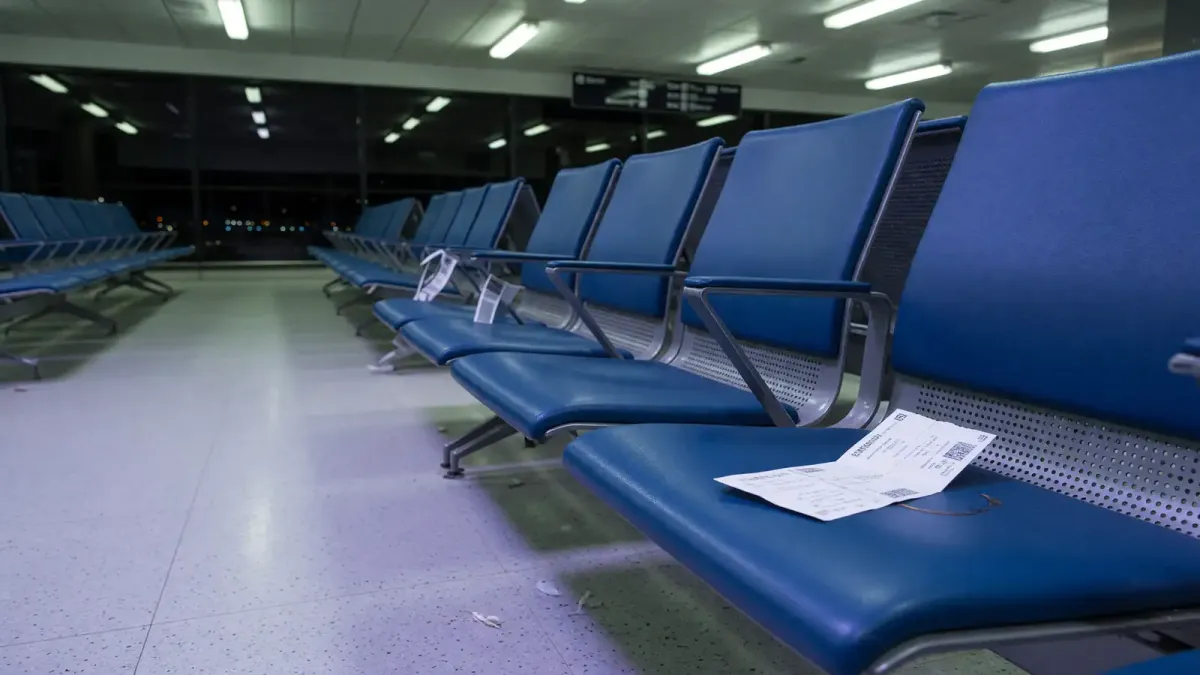
The sandwich voucher was never a law. It was a promise the airline wrote down, and the promise only fired when the delay counted as the airline’s problem.
Matador’s recap of the September 3 rule is the clean version of a messy change. On October 19, 2026, ten causes of delay and cancellation move onto a list the Department of Transportation now treats as outside the carrier’s control. Once they sit on that list, the 2022-era commitments on meals, hotels, and ground transport do not have to fire. The department said the quiet part in its own analysis. It expects the total value of amenities and compensation to fall. It called that a transfer of value from consumers back to air carriers.
If you fly domestic after mid-October, pack the snack you used to assume someone else would buy.
TSA is busy rewriting the checkpoint. This is the other half of the trip: what happens when the plane does not leave.
What actually changes on October 19
Simple Flying laid out the legal hook. The final rule implements Section 511(b) of the FAA Reauthorization Act of 2024. It does not create a federal right to a hotel. The United States still does not require cash for a delay. What it does is redraw the reporting category that airlines use when they decide whether last year’s customer-service sheet applies.
Ten events go into the new bucket. The list is not a weather clause. It includes aircraft damage from extreme weather or foreign object debris, removal of an unruly passenger, medical emergencies, certain system outages, unscheduled maintenance, and cybersecurity attacks. Unscheduled maintenance is the one that will show up in group texts. Until now, a plane that broke was usually the airline’s problem because the airline owns it, staffs it, and signs the logbook. After October 19, a surprise mechanical can be coded as uncontrollable. The overnight delay still exists. The voucher logic may not.
Simple Flying’s roundup of current practice is worth keeping on your phone. The ten largest U.S. airlines still talk about meal vouchers after about three hours. Nine of them, Frontier excepted, still talk about a hotel when the overnight delay is controllable. The new rule does not ban those sentences. It shrinks the set of nights that qualify.
Time Out’s write-up makes the same point in plainer English. If the aircraft “just broke,” that used to be on the airline. After October 19, unscheduled maintenance can sit with weather and medicals. You can still ask. The agent can still say no and point at a category.
This did not start in September
Christopher Elliott has been tracking the consumer office for years. His September 12 note on the Aviation Consumer Protection Advisory Committee is the longer timeline the DOT announcement skips.
Late 2025, the department withdrew a rulemaking that would have made airlines cover cash, rebooking, meals, and hotels for delays they caused. A few months later it stopped enforcing refund rights when a carrier renumbers a flight. In July that pause was extended to July 2027. Early this year the consumer protection office said enforcement would focus on compliance rather than finding and penalizing entities. An airline that reports its own violation can avoid a penalty. Then a federal appeals court tossed the 2024 rule that forced bag and change fees next to the fare, on a technicality. Rather than fix the technicality, DOT restored the 2011 standard in July.
You can read October 19 as a one-page delay taxonomy. You can also read it as the next slide in a deck that has been pointing the same direction for a year.
Elliott’s practical ask is small. The committee’s one-page rights summary is silent about the fact that federal law requires no compensation for a delay, no meal, and no hotel. He wants that silence written down, plus a pointer to the DOT complaint form. Written comments go to docket DOT-OST-2018-0190 at regulations.gov. For three minutes on the record, email [email protected] by September 21. Nobody at that table has to listen. If you have a trip on the books for 2027, it is still worth the three minutes.
What to do in the terminal
Assume the first agent you meet will read the new category, not your night. Ask anyway. Ask for the delay code. Write down the flight number, the scheduled time, the actual time, and the sentence they used. Screenshot the app status. If they offer a voucher, take it before you argue about the legal theory. A $12 sandwich credit in hand beats a blog post in your pocket.
If they refuse, you are not out of tools. You are out of the easy ones.
Rebooking is still the thing that matters. Same-day confirmed on the next metal, even middle seat, beats a hotel argument that lasts until the desk closes. If the airline will not move you, check the same airline’s later flights first, then partners, then buy a confirmed seat on something that leaves and fight the money later. A second ticket is ugly. Missing a wedding is uglier.
Hotels near the airport will be full on the nights this rule was written for. If you can get off airport property, do it. A downtown property with a 5 a.m. airport bus is often cheaper than the “courtesy” rate at the airport Marriott, and you are paying either way if the delay is now uncontrollable.
Food: the three-hour meal voucher was the thing people remembered. After October 19, treat that as a maybe. Pack more than a granola bar. Fill the bottle after the checkpoint if PreCheck still lets you. Airport water is not a per diem.
Credit cards with trip delay insurance still exist. Read the hours trigger and the “common carrier delay” definition before you fly, not at 1 a.m. Travel insurance remains a separate product with its own exclusions for known events and for delays the policy does not treat as covered. Insurance is not a substitute for the voucher you used to get. It is a different contract, and the claims desk will want the same timestamps you should already be writing down.
DOT still takes complaints. The complaint does not print a hotel key. It builds a file. If enough files pile up on the new codes, that is the only political input the next reauthorization will see.
Europe is a different contract
If the trip starts in the UK or EU, do not import the October 19 chart. The Independent’s delayed-flight explainer, updated around the NATS mess, is the reminder. Duty of care (meals, communications, hotels when the night is gone) applies regardless of why the flight stopped. Extraordinary circumstances can block the cash compensation bands. They do not automatically wipe the sandwiches.
The CAA has been signaling that a NATS technical glitch may sit inside extraordinary circumstances, with airlines not all confirming the same line. That fight is about money later. It is not about whether you get a meal tonight. Aviation authorities also tend to ignore airlines that try to treat care as optional. File the form anyway. BA, easyJet, Ryanair, and Wizz all bury the passenger-rights page one extra click down. Compensation, when it is due, is supposed to be a bank transfer or cheque unless you sign for vouchers.
Time Out noted the same split from the U.S. side. Flights departing Europe can still sit under local rules. A domestic Dallas-Chicago mechanical on October 20 does not.
If you are meeting someone at the gate instead of flying, that is a different TSA experiment and it only exists at a handful of airports. Do not plan your delay strategy around a gateside pass. Plan it around a confirmed seat.
How to read the airline’s sentence
“Out of our control” is going to get more use. Ask which of the ten it is. Unscheduled maintenance, medical, unruly, cyber, FOD, weather damage, system outage: those words will start showing up in app banners because they now do work for the carrier.
Weather you already knew. The new list is the stuff that used to look like operations. A crew that times out because a earlier turn ran long can still be a controllable story. A plane that needs a part at 10 p.m. may not be. You will not win that distinction at the desk with a PDF of Section 511(b). You might win a later claim if the code they entered does not match what happened.
Do not perform outrage at the agent. They did not write the rule. They have a drop-down. Be the passenger who has the drop-down name, the clock times, and a backup booking already loading.
If the delay is overnight and the hotel is denied, call the number on the back of the card that advertised trip delay. Then book the room yourself if you need sleep. Receipts are cheaper than a 4 a.m. argument and a missed connection.
What I am changing in my own bag
I used to treat U.S. domestic delays as an inconvenience with a script: wait three hours, ask for food, ask for a room if the night dies. That script assumed the delay would be coded as something the airline did. After October 19 I am not going to stand there waiting for the code to be kind.
I am packing food for a full evening. I am screenshotting the fare rules before I leave home, because rebooking leverage is uglier when the delay is “uncontrollable.” I am checking whether the card on that trip actually pays for delay expenses, and for how many hours. I am not buying a separate insurance policy for every weekend hop. I am buying one for the trip where a missed night blows up a prepaid hotel on the other end.
I am also writing the ACPAC email, which feels like shouting into a docket. Elliott is right that the one-page summary should admit how thin the federal floor is. If the department is going to move value back to carriers, the poster at the airport should not pretend you have a hotel right that never existed in statute.
The rule does not cancel your flight. It changes who pays for the night the flight created. Read the category. Pack for the night. Argue later, with timestamps.

Discussion
Comments
Share a helpful tip, question, or takeaway from October 19, Your Hotel Voucher Depends on a New DOT Category.
0 Comments
Loading comments…