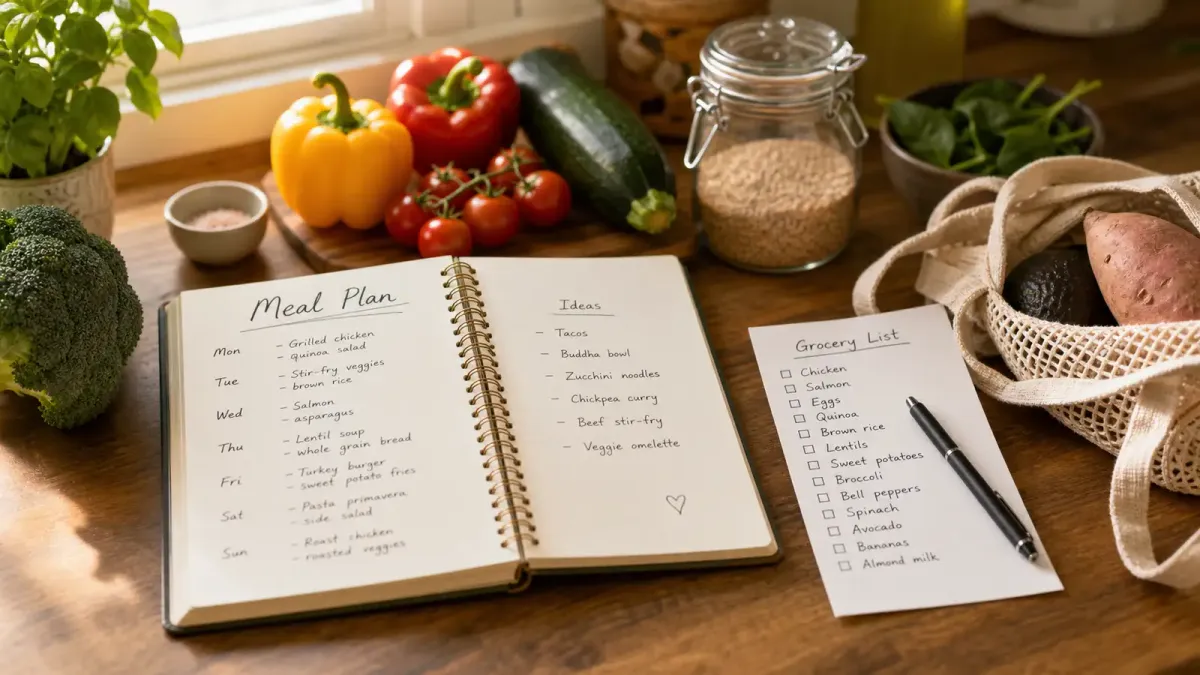
The standard meal planning pitch goes like this: spend three hours on Sunday cooking everything for the week, portion it into matching containers, and watch your grocery bill shrink. For most people, that system lasts about two Sundays before the containers sit empty in the fridge while you order takeout again.
There’s a middle ground between “no plan at all” and “professional meal prep influencer.” It saves real money — $50 to $150 a month for most households — without making you hate your kitchen.
Start With What You Already Have
Before you write a shopping list, open your fridge and pantry. Most people throw away $30 to $50 of food every month because they forgot about the spinach wilting in the crisper drawer or the chicken they bought for a recipe they never made. Take five minutes. Write down what needs to be used soon. Design meals around those items first. This one habit cuts food waste — and your grocery bill — by 20 to 30 percent immediately.
Plan Three Dinners, Not Seven
Planning every meal for the week is exhausting and unrealistic. Something comes up on Wednesday — you work late, a friend invites you out, you’re just too tired. Plan exactly three dinners. Buy ingredients for those three. The other four nights: leftovers, pantry meals (pasta, eggs, frozen veggies), takeout budget, or a “whatever’s in the fridge” night. Three planned meals give you structure without the burnout.
Build a Repeatable Rotation
You don’t need 30 different dinner recipes. You need about eight meals your household actually eats without complaint. Rotate through them. Taco Tuesday is a cliché for a reason — it works. Pick your eight, write them on a list on your fridge, and never stare blankly at a grocery store aisle again.
Shop Your Pantry Before You Shop the Store
The most expensive grocery trip is the one where you buy ingredients for recipes without checking whether you already have half of them. Canned tomatoes, rice, pasta, spices, oils, frozen vegetables — these sit in your kitchen right now. Before you head to the store, pull up your three planned meals and cross off every ingredient you already own. Then buy only what’s left.
Stop Shopping at One Store
Grocery prices vary wildly between stores. The same brand of peanut butter can be $2 more at one chain than another. You don’t need to visit five stores every week, but know your options. Aldi and Lidl are consistently cheaper for staples than traditional supermarkets. Ethnic grocery stores often have better prices on spices, rice, and produce. Warehouse clubs work for non-perishables if you have storage space.
Use your store’s app. Most chains now put their best deals in the loyalty program section of the app. Clipping digital coupons takes 30 seconds and routinely saves $5 to $15 per trip.
The Real Money Is in Breakfast and Lunch
Dinner gets all the meal planning attention, but lunch is where the money disappears. A $12 workday lunch, five days a week, four weeks a month: that’s $240. A packed lunch — leftovers from last night’s planned dinner, a sandwich, a salad with pre-cooked chicken — costs about $3 to $4. That’s an extra $180 to $200 in your pocket every month from one change.
Breakfast is even easier. Oatmeal, eggs, yogurt with granola, or toast with peanut butter all cost under a dollar per serving. Compare that to a $6 coffee shop pastry.
The 10-Minute Sunday Routine
You don’t need to meal prep for hours. Spend 10 minutes on Sunday: pick your three dinners, check the pantry, write the list, wash and chop one or two vegetables that take time on a weeknight (onions, peppers, carrots). That’s it. The rest can happen on the day you cook.
Meal planning doesn’t have to be a lifestyle. It’s just a way to stop opening the fridge at 6 p.m. hoping dinner will materialize, then spending $40 on delivery because it didn’t.

Discussion
Comments
Share a helpful tip, question, or takeaway from Meal Planning That Actually Saves Money Without Making You Miserable.
0 Comments
Loading comments…