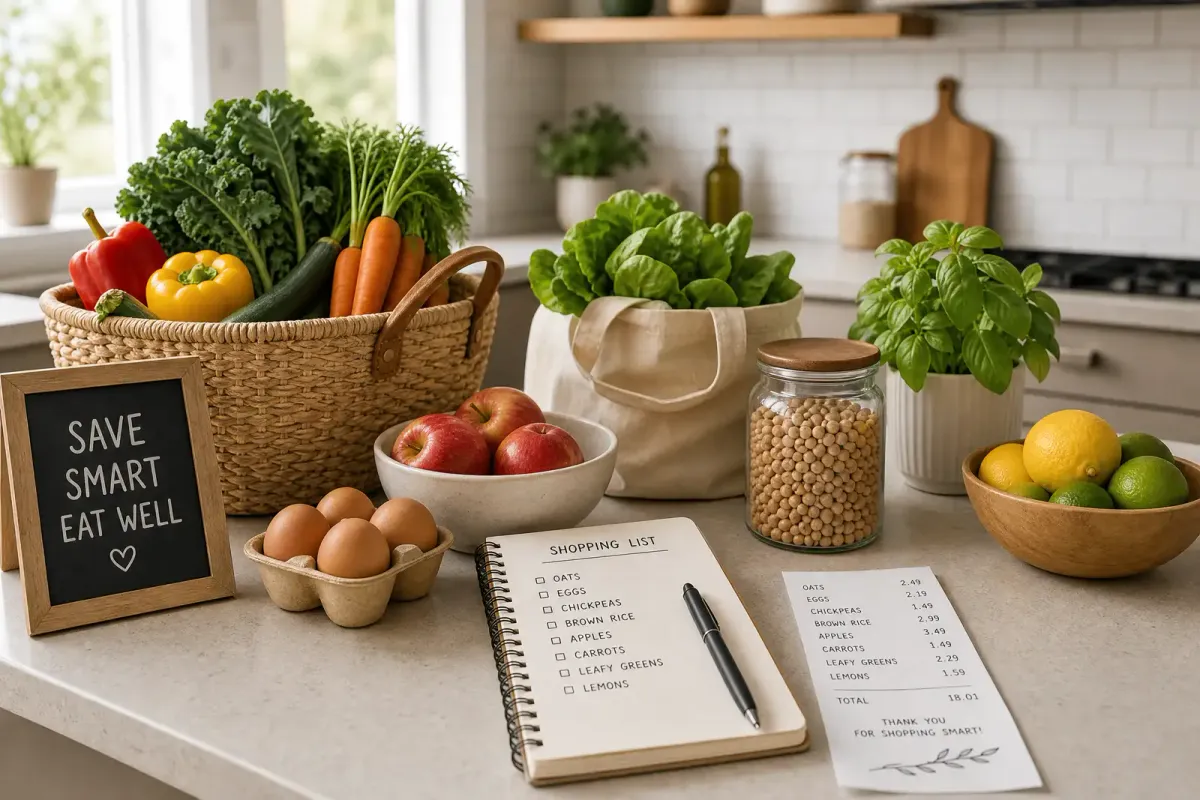
The average U.S. household spent over $9,300 on food at home in 2023, according to the Bureau of Labor Statistics, and those numbers have only climbed through 2025 and 2026. Groceries sit behind housing and transportation as the third-largest monthly expense for most American families. The good news: you do not need to become a coupon-clipping extremist to bring that number down.
Most households can cut their food bill by 20% to 35% within 30 days using a handful of strategies that require almost no upfront investment. A family of four currently spending $1,200 a month at a mid-range chain like Kroger or Safeway could realistically drop to $800 or $950 per month. Single adults often see even sharper percentage drops because convenience-oriented shopping habits carry the most waste.
The strategies below are ranked roughly by savings potential. Start with the biggest lever, where you shop, and layer everything else on top.
Store Switching: The Single Biggest Lever
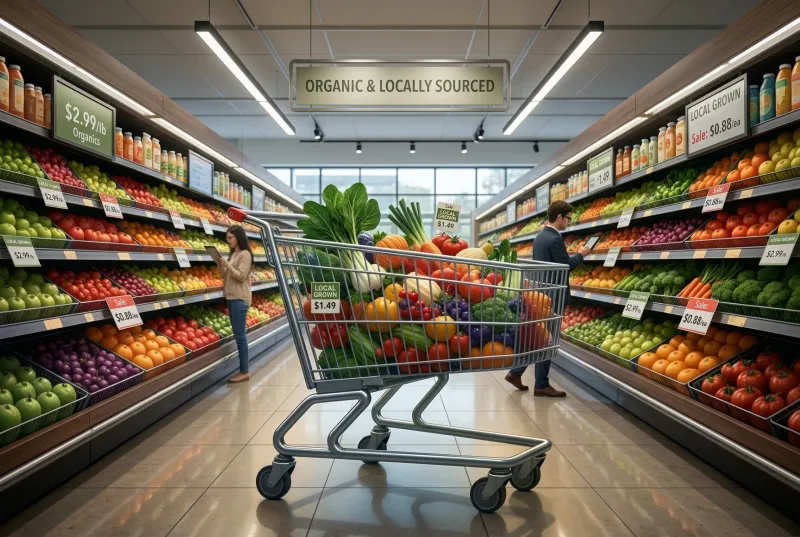
If you are still buying everything at one mid-range or premium chain, switching to a discounter for staples will save more money than any coupon strategy ever could. Aldi consistently prices staples 20% to 30% below traditional supermarkets. Walmart’s grocery section runs similar margins on pantry basics like rice, beans, canned tomatoes, and cooking oil.
You do not need to move your entire cart to save. Buy the items you use every week, the ones that never go on sale, at the discounter and fill in the gaps at your regular store for produce or specialty items you prefer.
Dollar stores deserve a caveat here. They are genuinely cheaper on paper towels, cleaning supplies, and some snack foods. But their unit prices on name-brand groceries often run higher than Aldi’s or Walmart’s. Check the shelf price per ounce before assuming you are saving. The math is simple: a $1.50 bottle of ketchup at the dollar store costs the same as a $1.25 larger bottle at Walmart when you compare price per ounce.
Meal Planning That Does Not Feel Like a Part-Time Job
Meal planning works because it eliminates the two things that bloat grocery bills most: impulse purchases and food waste. The average household throws away roughly 30% of the food it buys. Planning even three dinners a week in advance reduces both problems at once.
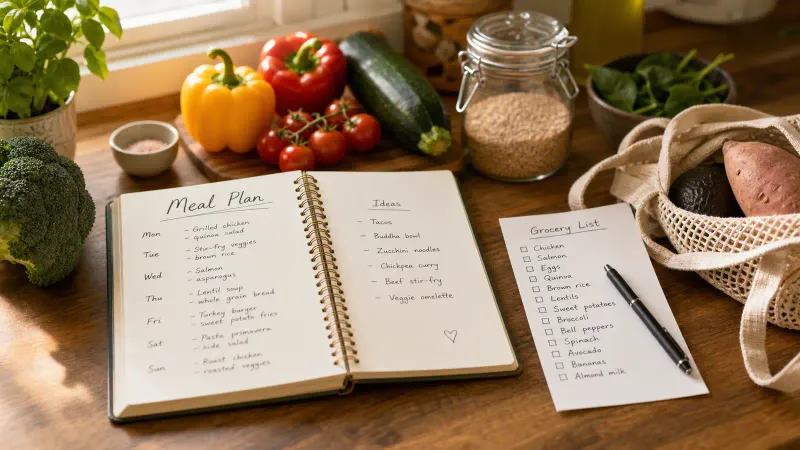
The approach that actually sticks is the simplest one. Write down three dinners for the week, check what you already have in the pantry and fridge, and shop only for the gaps. You do not need a spreadsheet or a fancy app. A phone note or a scrap of paper works fine. The goal is to walk into the store knowing exactly what you need so you do not wander down every aisle picking things up.
Grocery delivery curbs the impulse problem even further. If you can add items to a cart without physically walking past the chip and cookie displays, your total shrinks naturally. Even if you prefer to pick your own produce, using a store’s online ordering system with curbside pickup gives you the discipline of a list without the temptation of the physical aisles.
Cash Back Apps Worth Your Time
Free apps like Ibotta, Fetch Rewards, and Checkout 51 reimburse you for buying specific products. None of them will make you rich. But stacking a few of them on items you would buy anyway adds up to $20 to $50 a month for an average family, enough to cover a week’s worth of produce.
The key is to use these apps only on products you were already going to buy. If an app offers cash back on a brand you would never normally purchase, that is not savings. That is spending.
Some credit cards also offer 3% to 6% cash back on grocery purchases. If you already carry a rewards card, using it for grocery runs compounds the savings from apps and store switching. Just make sure you pay the balance in full each month. Otherwise the interest wipes out every grocery discount you managed to stack.
Price Tracking and the USDA Food Plans
The USDA Economic Research Service publishes four food plan cost tiers that update monthly for inflation. The tiers are thrifty, low-cost, moderate-cost, and liberal. Each one represents a different spending level based on nutrition guidelines and actual food prices. The USDA’s Thrifty Food Plan calculator gives you a realistic baseline for what your household should spend based on its size and composition.
Most households have no idea whether they are overspending on food because they have never measured. The fastest way to find out is to track your grocery receipts for two weeks. Keep them in a shoebox, take photos, whatever works. You will immediately see where the money leaks are, whether it is daily convenience store stops, premium brand loyalty, or simply not knowing what things cost at the store down the street.
A quick example: one reader reported spending $680 a month for a household of two. After two weeks of tracking, they discovered that $120 of that was convenience store and gas station purchases, $80 was premium brand markups on items with identical generic alternatives, and another $60 was food that went bad before it got used. The total waste was $260 a month, nearly 40% of their food budget. That is not an unusual number.
The Real Numbers: What Families Are Actually Saving
A family of four spending $1,200 per month at Kroger or Safeway who switches to Aldi for staples, plans weekly meals, and uses a cash back app like Ibotta for household products could realistically reach $800 to $950 per month. That is $200 to $400 back in your pocket.
Single adults see the sharpest proportional drops. Someone spending $350 a month at a convenience-focused store like Whole Foods or a local organic grocer and shifting to Walmart or Aldi for most items could bring that down to $200 to $250 per month. The percentage saved is higher because single-person shopping tends to include the most convenience premium and food waste.
If you are paying down high-interest credit card debt, redirecting even $150 a month from your grocery bill puts $1,800 a year toward your balance. That is more impactful than almost any other single reallocation in a standard household budget.
What Not to Do
Not every money-saving grocery tip is worth your time. Extreme couponing requires hours of weekly effort for savings that rarely beat simply shopping at Aldi. Buying in bulk at Costco or Sam’s Club only saves money if you actually consume everything before it expires. For small households, it often increases waste rather than reducing it.
Generic save-money lists that tell you to cancel your streaming subscription while ignoring the fact that your grocery bill is twice what it should be are missing the point entirely. A $15 monthly streaming cancellation saves $180 a year. A 25% cut on a $1,200 monthly grocery bill saves $3,600. Focus on where the real money is.
Two More Moves That Compound
Buy generic or store-brand versions of staples whenever possible. The quality difference between name-brand and store-brand rice, pasta, canned goods, and basic spices is either nonexistent or so small that most people cannot tell in a blind taste test. The price difference is consistently 15% to 40%. Store-brand products are often made by the same manufacturers as name brands, just packaged differently and priced lower because they skip the marketing budget.
Shop seasonal produce. Strawberries in January will always cost more than strawberries in May. Building your meal plan around what is in season at your local store, not what is trending on social media, keeps the produce bill manageable year-round. Root vegetables in winter, berries in summer, squash in fall. The pattern is predictable once you notice it.
Where to Start Today
Pick one thing from this list and do it this week. Not all of them. Just one. If you switch your staple shopping to Aldi, you will see the difference on your very next receipt. If you start tracking your receipts, you will know exactly where your money is going within two weeks. If you sign up for Ibotta and scan three receipts, you will have earned enough for a free lunch within a month.
The hardest part is not any of these strategies. The hardest part is deciding that the status quo is costing you more than you think it is. Once you make that decision, everything else is straightforward.

Discussion
Comments
Share a helpful tip, question, or takeaway from How to Save Money on Groceries Without Extreme Couponing.
0 Comments
Loading comments…