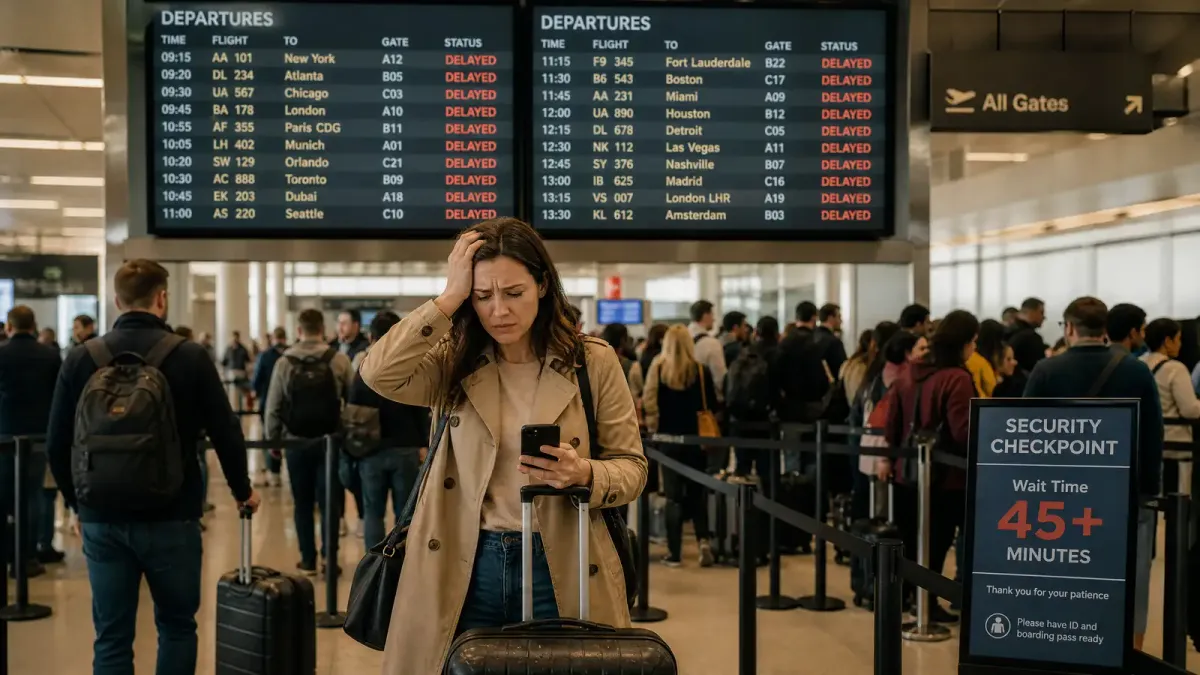
Walking into the airport terminal feels fine. You’re organized, you’ve got your bag, you’re on time. Then something shifts. The security line looks endless. Your gate is a ten-minute walk away. The departure board flashes a delay. Your heart rate climbs, your shoulders tighten, and suddenly the entire trip feels like it’s sliding out of your hands.
Travel and mental health experts have a name for this phenomenon: the airport red zone. It’s that anxious stretch from the moment you step through terminal doors until you finally sink into your airplane seat. And if you’ve ever snapped at a family member over nothing or paced in front of the wrong gate, you already know it’s real.
The good news? The red zone isn’t inevitable. It’s a predictable stress response triggered by specific conditions, and once you understand those triggers, you can prepare for them the same way you pack a toothbrush.
Why the Airport Terminal Triggers Stress
The airport red zone isn’t about flying itself. Most people feel relaxed once they’re buckled in. The problem is the environment between check-in and boarding.
Researchers point to three factors that combine to spike cortisol:
Loss of control. You can’t speed up the TSA line. You can’t make the gate closer. You can’t force a delayed flight to depart on time. Humans hate unpredictability, and airports are designed around it — constantly shifting gates, surprise delays, serpentine queues. Travel psychologists note that this loss of control is a biological stress response, not a personal weakness (USA Today).
Sensory overload. Fluorescent lighting, overlapping announcements, crying babies, rolling luggage on tile floors, the smell of overpriced food court fries. Your nervous system processes all of it simultaneously. Travel psychologists at USA Today note that this constant multi-sensory input exhausts working memory, leaving you more reactive and less patient (USA Today).
Time pressure with no buffer. Even when you arrive early, the red zone compresses time perception. What feels like 45 minutes to get through security, grab coffee, and reach the gate somehow shrinks to 15 minutes in your head. Summer 2026 amplifies this — the America 250 celebration events alone are causing periodic runway closures at Washington-area airports, including Reagan National (DCA) [(USA Today)].
The Red Zone Timeline: Where Stress Peaks
Stress doesn’t hit evenly across the airport experience. It concentrates at specific checkpoints:
-
Entry to terminal (minute 0–5). You transition from the controlled environment of your car or rideshare into the chaos of the terminal. Your brain starts cataloging everything at once: lines, signs, crowds.
-
Security screening (minute 5–25). The highest-stress single checkpoint. You’re being told what to do by strangers, unpacking your carefully organized bag, and facing the uncertainty of whether you’ll trigger a secondary screening.
-
Gate navigation (minute 25–35). That moment when you look up at the departure board and realize Gate B42 is literally at the other end of the concourse, past three food courts and a moving walkway that’s out of service.
-
Pre-boarding wait (minute 35–60). The deceptive calm. You’re at the gate, but boarding hasn’t started. This is when delayed-flight anxiety peaks — staring at the board, refreshing your airline app, wondering if you should grab food or stay put.
Understanding where stress concentrates lets you prepare specifically for those moments instead of trying to stay zen for the entire airport duration.
8 Strategies to Neutralize the Red Zone
1. Map the Terminal Before You Arrive
Download the airport’s terminal map the night before. Know exactly where your airline’s check-in desks are, which security checkpoint has the shortest typical wait, and the walking time from security to your gate. Airports like Hartsfield-Jackson and O’Hare have multiple parallel checkpoints — most passengers default to the one closest to their airline’s signage, but the secondary checkpoint is often half as busy.
2. Build a Buffer You Can Actually Use
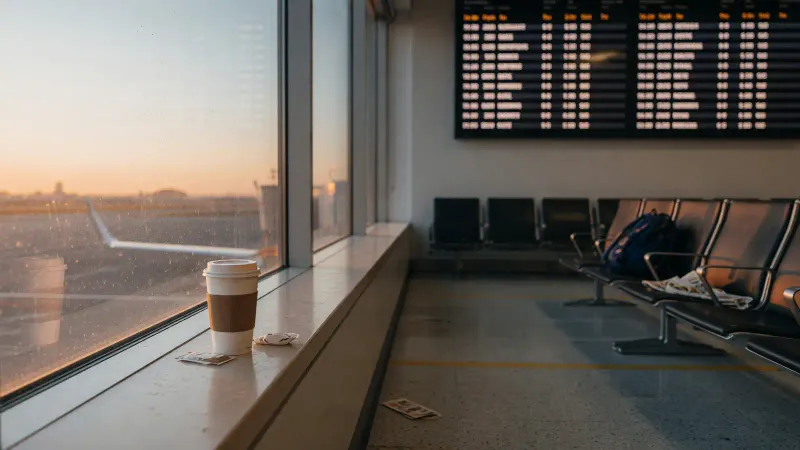
Telling yourself to “arrive two hours early” doesn’t reduce stress if you spend those two hours staring at the departure board. Instead, plan a specific buffer activity at the airport: a coffee shop you actually like, a quiet corner near a window, a stretching routine in a less crowded hallway. The buffer isn’t about having extra time — it’s about having purposeful extra time.
Psychologists note that giving yourself a structured activity during waiting periods restores a sense of agency, which directly counteracts the loss-of-control trigger behind the red zone.
3. Use the “Two-Bag” Security System
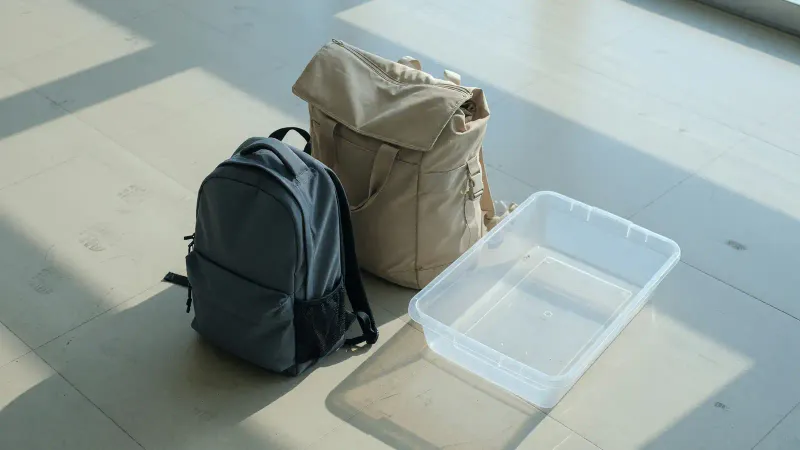
Most security anxiety comes from the fear of holding up the line or forgetting something. Solve it with a two-bag approach:
- Bag 1 (laptop/electronics bag): Only your laptop, tablet, liquids pouch, and any metal objects. Nothing else. This bag gets emptied into the bin in one smooth motion.
- Bag 2 (personal item): Everything else. This goes through the X-ray untouched.
When your electronics are pre-isolated in a dedicated sleeve, you’re not digging through your backpack while three people stare at you. Practice this system at home before your first trip with it — the muscle memory makes a real difference.
4. Pre-Load Entertainment Before You Enter the Terminal
Don’t wait until you’re sitting at the gate to download your podcast or movie. Airport Wi-Fi is notoriously unreliable, and cellular data can be spotty inside concrete-heavy terminal buildings. Download everything before you leave your house or hotel. If your flight has Wi-Fi, great — but treat it as a bonus, not a plan.
5. Use the 4-7-8 Breathing Pattern at Peak Stress Points
When you feel your heart rate climbing at security or when you see a delay notification, try this breathing pattern used by travel psychologists:
- Inhale through your nose for 4 seconds
- Hold for 7 seconds
- Exhale through your mouth for 8 seconds
- Repeat 3–4 times
The extended exhale triggers your parasympathetic nervous system, which physically slows heart rate. It takes about 90 seconds total, which you can do while standing in any line. Nobody will notice.
6. Create a “Delay Protocol” in Advance
The anxiety of a delayed flight is worse than the delay itself because you’re not sure what to do. Pre-decide your protocol:
- Under 30 minutes: Stay at the gate. Not worth the stress of wandering.
- 30–90 minutes: Grab food or find a quiet seating area away from the gate crowd. Set a phone alarm for 15 minutes before the new boarding time.
- Over 90 minutes: Leave the terminal area entirely. Find a nearby restaurant, hotel lounge, or even a quiet outdoor seating area. The terminal environment is what’s driving your stress — remove yourself from it.
7. Pack a Small Sensory Reset Kit
A few items in your personal item can make a dramatic difference during peak red zone moments:
- Earplugs or noise-canceling headphones. Cutting the terminal noise by even 60% reduces sensory overload significantly.
- A familiar scent. A small tube of hand cream or essential oil you recognize. Olfactory input is one of the fastest ways to signal safety to your brain.
- A physical grounding object. A smooth stone, a fidget ring, even a textured phone case. Physical touch input competes with the visual chaos for your brain’s attention.
8. Reframe the Red Zone as Part of the Trip
This isn’t a cheesy mindfulness exercise. Travel researchers point out that the red zone exists because you’re going somewhere. The stress is a byproduct of anticipation — the same neurochemistry that makes you excited about your destination is also making you impatient with the process of getting there.
When you feel the tension rising, name it: “This is the red zone. It means I’m about to go somewhere I want to be.” That simple cognitive reframe doesn’t eliminate the stress, but it stops the secondary anxiety of worrying about why you’re so stressed in the first place.
Summer 2026 Adds New Variables
This year’s travel season comes with complications that intensify the red zone for specific airports:
- World Cup traffic: Host cities are seeing significantly elevated passenger volumes, which means longer security lines, busier terminals, and more competition for seating at gates. USA Today reported that World Cup travelers are packing unique wellness essentials for the tournament, reflecting the overall surge in travel volume (USA Today).
- America 250 events: Fourth of July celebrations, air shows, and related festivities are causing periodic runway closures at Washington-area airports and others hosting events. Monitor your flight status closely and add an extra 30 minutes to your planned arrival time for DCA, BWI, and IAD travelers.
- Airline staffing: Despite higher demand, several regional carriers are still operating with reduced ground staff, which can slow check-in and boarding processes.
These factors don’t change the red zone mechanics — they just make the buffer activities and preparation strategies even more important.
What Frequent Travelers Do Differently
People who fly weekly don’t have lower stress because they’re naturally calmer. They’ve simply automated the decisions that cause friction for occasional travelers. Their playbook:
- Same airport → same checkpoint, same routine. Habit reduces cognitive load.
- Digital boarding passes and checked bags handled in-app before arriving. Fewer touchpoints mean fewer stress moments.
- Familiar snacks and water bottle in their personal item. Hunger and dehydration amplify anxiety, and airport food options aren’t always reliable.
- A “plan B” seat preference. If their flight is full and they can’t get their preferred aisle or window, they’ve already decided they’re fine with whatever they get. Decision fatigue is a major red zone amplifier — pre-decide wherever possible.
When to Seek Additional Help
If airport anxiety is severe enough that you avoid travel altogether, cancel trips, or experience panic attacks in terminals, the self-help strategies above won’t be sufficient on their own. Cognitive behavioral therapy (CBT) has strong evidence for specific phobias including aviophobia and agoraphobia, and many therapists now offer telehealth sessions that can begin before your next trip.
For occasional travelers, though, the red zone is simply a manageable inconvenience. Treat it like turbulence — uncomfortable, temporary, and entirely survivable with the right preparation.
Your next trip doesn’t need to start the moment you buckle into your seat. It starts the moment you decide you won’t let the terminal steal your calm before the journey even begins.

Discussion
Comments
Share a helpful tip, question, or takeaway from The Airport Red Zone: Why Your Stress Peaks Before Boarding and How to Beat It.
0 Comments
Loading comments…