A dishwasher that leaves food particles on “clean” dishes is frustrating. But the fix is rarely the machine itself — it’s usually something you can address without tools or a service call. Here are the eight most common causes and how to fix them.
1. Clean the filter
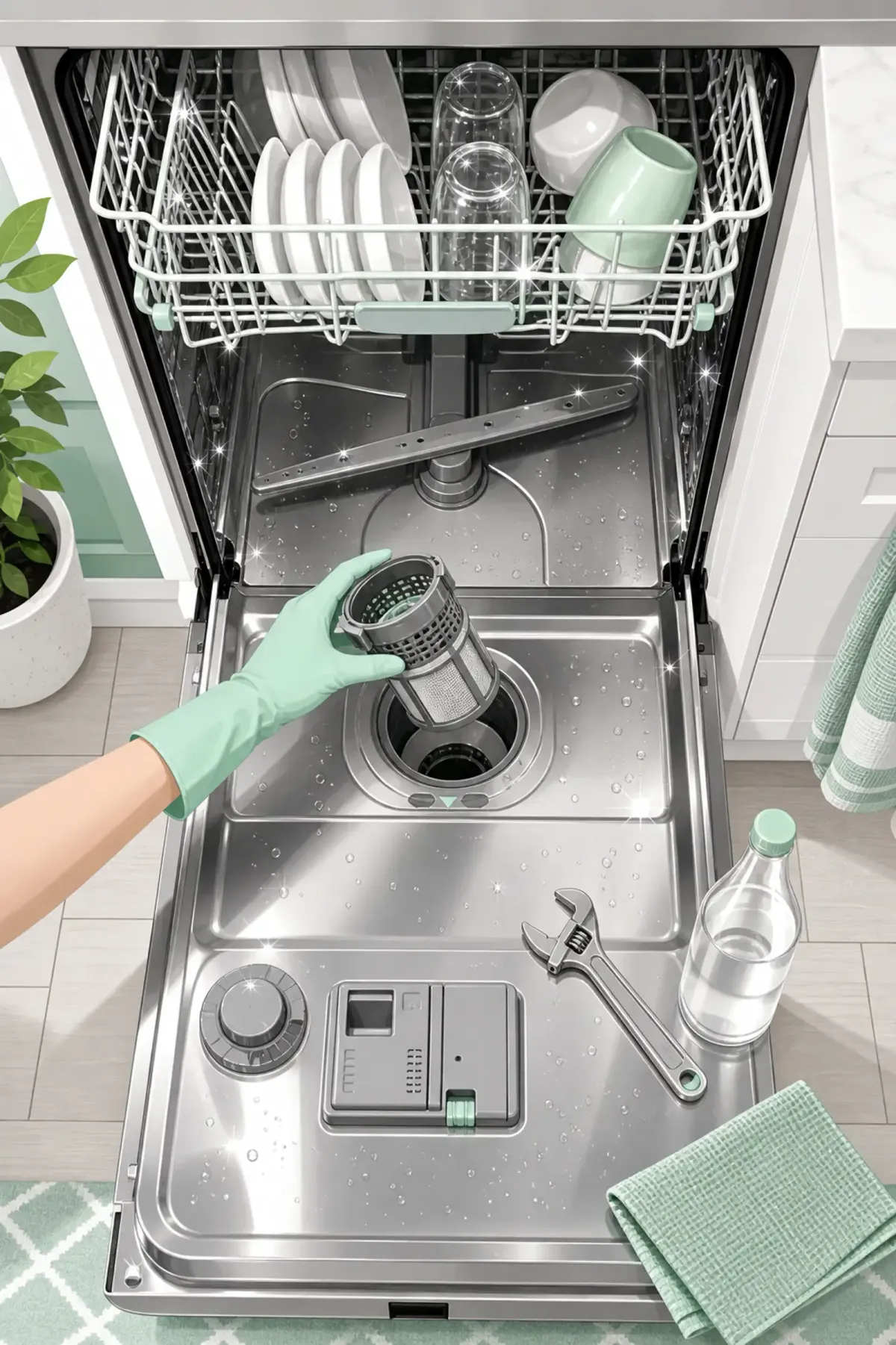
Every dishwasher has a filter at the bottom, and most people never clean it. Unscrew the cylindrical filter (usually below the lower spray arm), rinse it under hot water, and scrub with an old toothbrush if it’s gunky. A clogged filter restricts water flow, which means poor cleaning and longer cycles. Do this monthly.
2. Clear the spray arms
The spinning arms that spray water have tiny holes that clog with mineral deposits and food particles. Remove the arms (most twist off), hold them under running water, and use a toothpick to clear each hole. If you see white crusty buildup, soak the arms in white vinegar for 30 minutes to dissolve hard water minerals. Blocked spray arms are the number one reason dishes on the top rack come out dirty while the bottom rack is fine — or vice versa.
3. Check water temperature
Dishwashers need water at 120-125°F to dissolve detergent and cut grease effectively. Run your kitchen sink hot water until it’s at full temperature, then test it with a thermometer. If it’s below 120°F, turn up your water heater slightly. Some dishwashers have a built-in heater, but they work much better when the incoming water is already hot.
4. Use the right detergent — and the right amount
Powder and gel detergents contain enzymes that break down food. Pods are convenient but sometimes don’t dissolve fully in short cycles or cool water. If you have hard water, you need more detergent, not less — the minerals bind with the detergent and reduce its effectiveness. If you see a white film on glasses, you’re using too much; if dishes come out greasy, you’re using too little.
5. Don’t block the detergent dispenser
Loading a tall baking sheet or cutting board in the front of the lower rack can block the detergent door from opening during the cycle. If the pod or powder is still sitting in the dispenser at the end of the cycle, rearrange your lower rack so nothing is in front of the dispenser door.
6. Run the garbage disposal first
If your dishwasher drains through the same pipe as your kitchen sink and the disposal is full of food, the dishwasher can’t drain properly. Run the disposal for 15 seconds before starting a cycle. A dishwasher that doesn’t drain completely leaves dirty water sitting at the bottom, which gets recirculated onto your dishes.
7. Clean the door seal and edges
Wipe the rubber gasket around the door with a damp cloth and a little white vinegar. Food particles and mold collect there, and if the seal isn’t tight, water leaks during the cycle and reduces pressure. While you’re at it, clean the edges of the door itself — that area traps crumbs and grease that aren’t in the direct wash zone.
8. Run an empty cleaning cycle
Once every three months, place a cup of white vinegar in a dishwasher-safe container on the top rack and run the hottest, longest cycle with no dishes and no detergent. The vinegar dissolves hard water buildup and kills bacteria. For heavier buildup, a commercial dishwasher cleaner like Finish or Affresh works better than vinegar.
When it’s actually time to call a pro
If you’ve done all eight things above and your dishwasher still isn’t cleaning, you might have a failing wash motor, a broken heating element, or a cracked pump — all of which need a technician. But in my experience, 80-90% of “broken” dishwashers just need filter and spray arm cleaning.
For more appliance tips, see our appliance maintenance guide which covers extending the life of your other kitchen and laundry appliances.
Discussion
Comments
Share a helpful tip, question, or takeaway from Dishwasher Not Cleaning? 8 Maintenance Tasks That Fix 90% of Problems.
0 Comments
Loading comments…