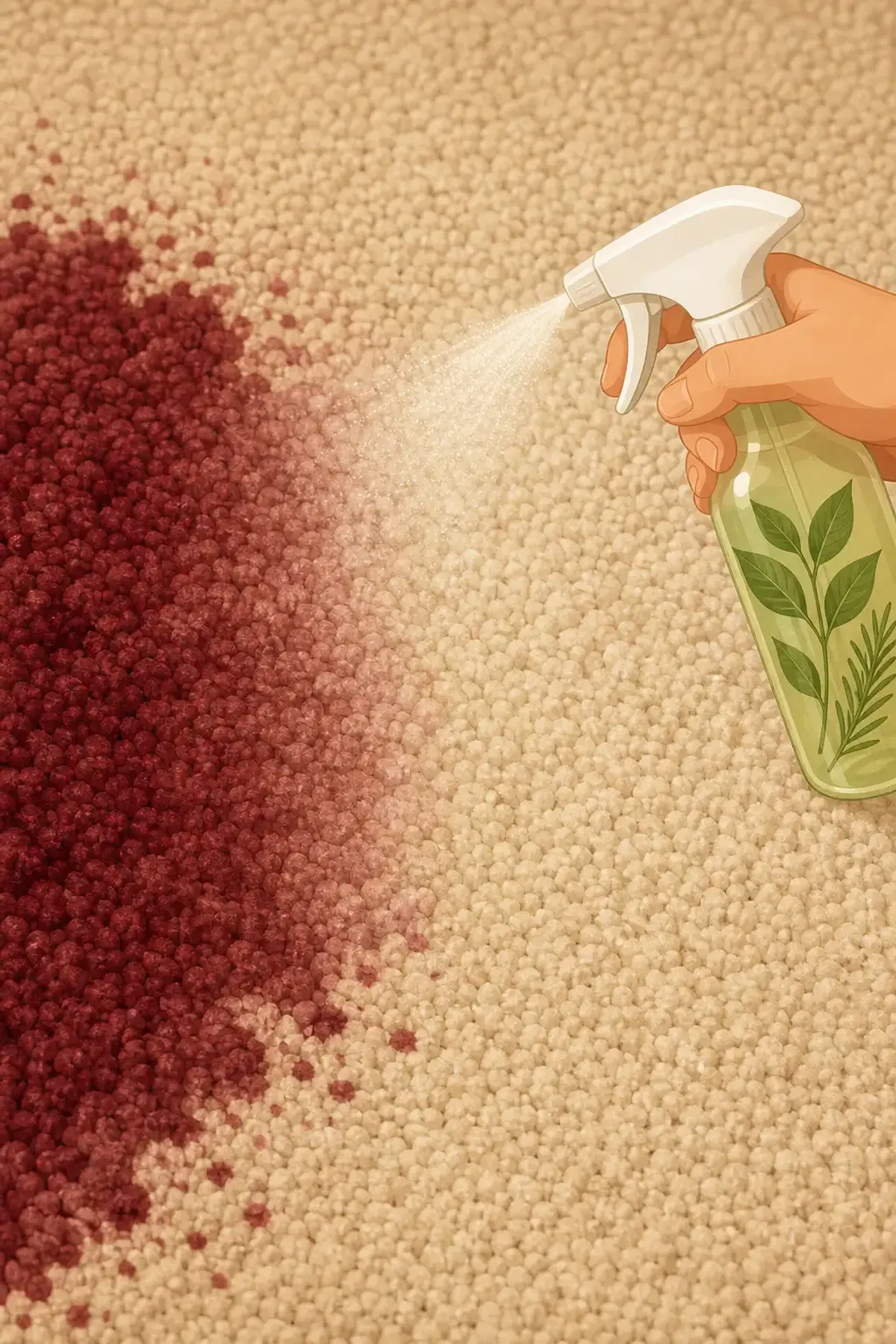
The first 60 seconds of a carpet spill determine whether you’ll have a permanent stain or a temporary panic. Most people grab whatever’s under the sink and scrub — which is exactly backwards. Here’s what works, organized by stain type.
The universal rule: blot, don’t rub
Rubbing pushes the stain deeper into carpet fibers and spreads it laterally. You’re essentially working the liquid into the backing where it becomes nearly impossible to remove. Instead, press a clean white cloth or paper towel straight down, lift, and repeat with a fresh section of cloth. Work from the outside of the stain inward so you don’t spread it.
Red wine
Pour cold water on it immediately — yes, more liquid sounds wrong, but diluting the wine before it sets is your best move. Blot thoroughly, then apply a paste of baking soda and water. Let it dry completely (the baking soda pulls pigment out as it dries), then vacuum. If a faint pink ring remains, dab with hydrogen peroxide — but test on a hidden carpet section first since peroxide can bleach some dyes.
For white or cream carpets that can handle it, a splash of white wine followed by blotting neutralizes red wine surprisingly well. Club soda works too — the carbonation lifts the stain from fibers.
Coffee
Coffee stains are tannin-based, similar to tea and wine. Blot up what you can, then apply a mixture of one tablespoon dish soap, one tablespoon white vinegar, and two cups warm water. Sponge it on, blot, repeat. The vinegar’s acidity breaks down the tannins while the soap lifts the oils.
If the coffee had cream or milk, you have a combination stain — tannin plus protein. After the vinegar-soap treatment, follow up with an enzyme cleaner (like nature’s miracle) to break down the milk proteins that would otherwise go rancid and smell.
Pet urine
This is a two-part problem: the visible stain and the odor that your pet can still smell even if you can’t — which encourages repeat accidents in the same spot.
Blot up as much liquid as possible first. Then saturate the area with an enzymatic cleaner — these contain bacteria that literally digest the uric acid crystals. Regular carpet cleaners mask the smell but don’t break down the crystals. Let the enzyme cleaner sit for the full time on the label, usually 10-15 minutes, then blot dry.
For old set-in pet stains, our appliance maintenance guide covers which carpet cleaning machines are worth the rental fee if the enzyme treatment isn’t enough.
Mud
Wait. Let mud dry completely before touching it. Wet mud smears and pushes deeper. Once dry, scrape off as much as possible with a dull knife or spoon. Vacuum thoroughly, then treat any remaining stain with a drop of dish soap in warm water. The dried mud turns back into dirt that vacuums up — only the very fine particles that have worked into fibers need spot treatment.
Grease and oil
Sprinkle baking soda or cornstarch generously over the spot and let it sit for at least 15 minutes — an hour is better. These powders absorb oil. Vacuum up the powder, then apply a small amount of dish soap (Dawn is particularly effective on grease) directly to any remaining mark, work in gently with fingers, blot with a damp cloth, and dry.
Ink
Dab with rubbing alcohol on a cotton ball — never pour it directly. The alcohol dissolves many ink types. Blot, don’t rub, and switch to clean cotton balls as they absorb ink so you don’t re-deposit it. For ballpoint pen, hairspray sometimes works because the alcohol content is high enough to dissolve the ink — but test first as hairspray can leave its own sticky residue.
Blood
Cold water only. Heat sets blood proteins permanently. Blot with cold water, then apply hydrogen peroxide directly — it will fizz as it breaks down the blood. Blot and repeat until the fizzing stops. For dried blood, make a paste of meat tenderizer (unseasoned) and cold water — the enzymes that break down meat proteins also break down blood proteins.
The one cleaner that handles almost everything
If you only keep one carpet stain product in the house, make it Folex Instant Carpet Spot Remover. It’s odorless, non-toxic, doesn’t need rinsing, and works on red wine, coffee, pet stains, grease, and ink. For the $6 bottle, the effectiveness-per-dollar is hard to beat.
The key with any carpet stain is speed. Even the best methods struggle once a stain has set for hours or days. Keep a stain kit under the kitchen sink — white cloths, baking soda, white vinegar, dish soap, and hydrogen peroxide — and you’ll handle 90% of accidents before they become permanent.

Discussion
Comments
Share a helpful tip, question, or takeaway from DIY Carpet Stain Removal: The 10-Minute Guide That Saves You $200 on Professional Cleaning.
0 Comments
Loading comments…