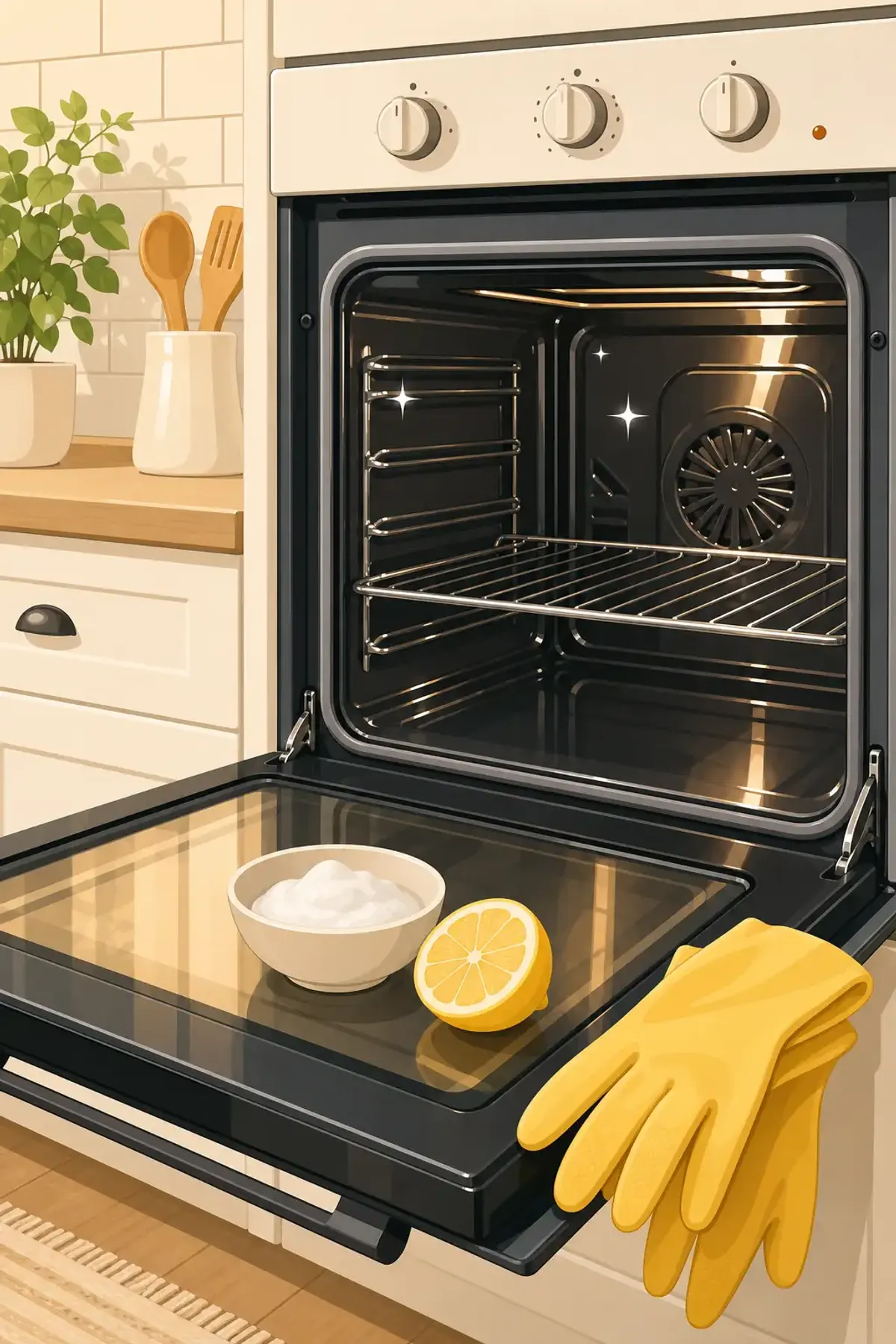
The self-cleaning cycle on most ovens works by cranking the temperature to around 900°F and incinerating everything inside. It works, but it stinks up the house, releases potentially harmful fumes, and can even damage the oven’s electronics or burn out the heating element on older models.
The baking soda method takes longer in clock time but less than 10 minutes of actual work. You probably have everything you need already.
What you need
Baking soda, white vinegar, water, a spray bottle, rubber gloves, a small bowl, a plastic or silicone spatula, and some rags you don’t care about. That’s it.
Step 1: Remove the racks
Take out the oven racks and set them aside. You’ll clean them separately. If they’re really bad, lay them on an old towel in the bathtub and follow the same baking soda paste method.
Step 2: Make and apply the paste
Mix about half a cup of baking soda with a few tablespoons of water until you get a spreadable paste — think thick pancake batter, not soup. Using your gloved fingers or a sponge, spread the paste over every interior surface of the oven except the heating elements. Avoid getting paste on the gas igniter or electric heating elements themselves. The paste will turn brownish as it interacts with the grease.
Step 3: Let it sit overnight
This is the key. Let the paste sit for at least 12 hours, or overnight. The baking soda needs time to break down the polymerized grease. If you only give it an hour, you’ll be scrubbing — which is what we’re trying to avoid.
Step 4: Wipe out
The next morning, use a damp cloth to wipe out as much dried paste as possible. Use the plastic spatula to gently scrape stubborn spots. Most of the gunk will lift with the dried paste.
Step 5: Vinegar spray
Put white vinegar in a spray bottle and spray anywhere there’s still baking soda residue. The vinegar will foam where it contacts baking soda. Wipe with a damp cloth. This neutralizes any remaining alkaline residue and leaves the oven clean.
Step 6: Clean the racks
While the oven interior was soaking, the racks should have been sitting with baking soda paste on them too. Scrub them with a scrubby sponge or steel wool if they’re chrome (not coated), rinse, and dry.
Step 7: Replace racks and admire
Slide the racks back in. Your oven is clean.
How to keep it cleaner longer
Put a sheet of aluminum foil or a silicone oven liner on the bottom rack (not directly on the oven floor, which can cause heat distribution problems in some models). When something drips, replace the liner. For everyday spills on the oven door, wipe them up with a damp cloth while the oven is still warm (not hot).
If you’re doing a full kitchen deep clean, check out our weekly cleaning routine for a schedule that prevents the “everything is dirty at once” problem.
Discussion
Comments
Share a helpful tip, question, or takeaway from How to Clean Your Oven Without Harsh Chemicals: Baking Soda and Vinegar Actually Work.
0 Comments
Loading comments…