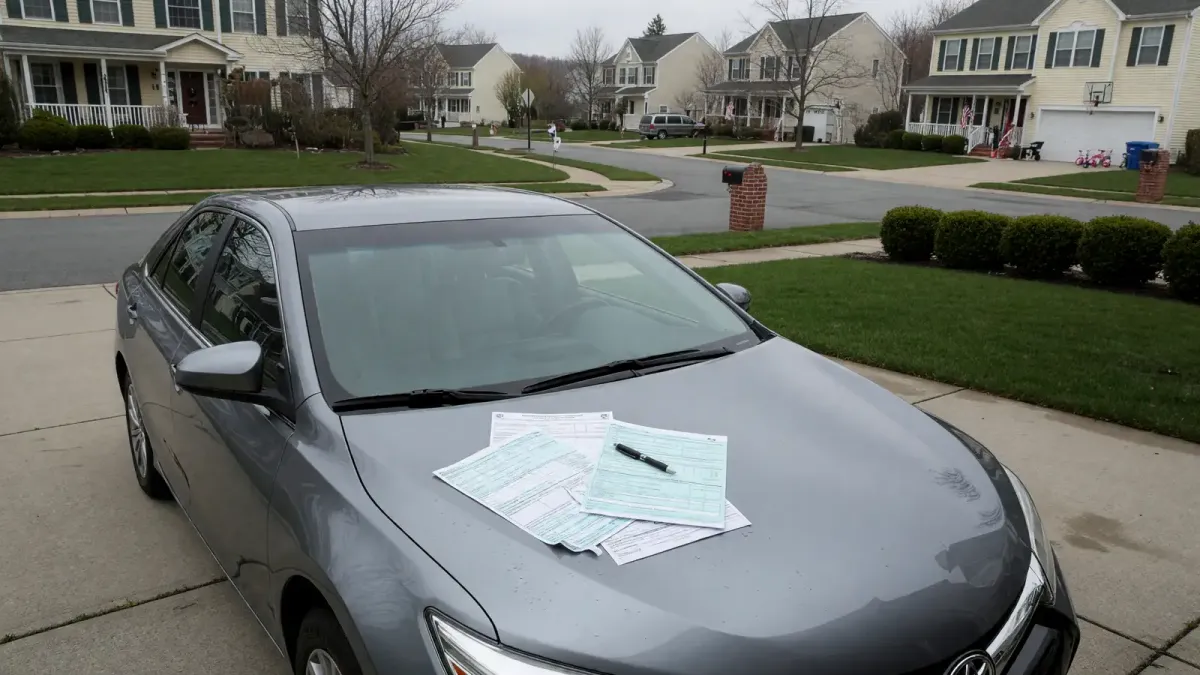
Car insurance in 2026 costs the average American $2,314 per year, according to the Insurance Information Institute. That’s up 12% from last year, and for many households, it’s the third-largest monthly expense after housing and food.
Here’s the thing most people don’t realize: you probably qualify for discounts you’re not using. A Bankrate analysis from June 2026 found that the average driver qualifies for 5 to 8 discounts but only applies for 2 or 3. That gap alone could be costing you $300 to $800 a year.
You don’t need to switch companies to fix this. The strategies below work with your current insurer, and most of them take less than an hour to set up.
Bundle Your Policies for an Immediate Discount
Bundling home and auto insurance with the same provider typically saves 15% to 25% on both policies. For a household paying $2,300 for auto and $1,800 for home, that’s roughly $600 to $1,000 back in your pocket annually.
Call your auto insurer and ask what their home bundle looks like. Even if you rent, some companies offer a renter’s insurance bundle that saves 5% to 10% on your auto premium. A renter’s policy costs $15 to $30 a month, so the math works out in your favor.
One thing to watch: the bundle discount sometimes disappears if one policy renews at a different time. Ask your agent to align the renewal dates so the discount stays consistent across both policies.
Raise Your Deductible (But Keep an Emergency Fund)
Moving your collision and comprehensive deductible from $500 to $1,000 saves the average driver $300 to $400 per year, according to Consumer Reports’ 2026 data. Going from $500 to $2,000 can save even more, though the marginal benefit drops.
The catch is obvious: if you file a claim, you’re paying more out of pocket. That’s why this strategy only works if you have an emergency fund that covers the higher deductible. If you’d have to put the $1,000 on a credit card after an accident, don’t raise the deductible.
A reasonable middle ground: set your deductible to whatever amount you could comfortably pay from savings without stress. For most people, that’s $1,000. For households with tighter budgets, $500 might be the right ceiling.
Take a Defensive Driving Course
Most states require insurers to offer a discount for completing an approved defensive driving course. The discount ranges from 5% to 10% and typically lasts three years before you need to retake the course.
The course itself costs $25 to $50 and takes four to eight hours online. Even at the low end, a 5% discount on a $2,300 premium saves $115 a year. Over three years, that’s $345 against a one-time $40 expense.
Check your state’s approved course list through the National Safety Council or the Insurance Information Institute. Many courses are available entirely online, so you can knock it out on a weekend without leaving your couch.
Opt Into Usage-Based Insurance Programs
Telematics programs track your driving habits through a smartphone app or a small device plugged into your car. Safe drivers who don’t brake hard, don’t speed, and avoid late-night driving can save 10% to 30% on their premiums.
State Farm’s Drive Safe & Save, Progressive’s Snapshot, and Allstate’s Drivewise are the three largest programs. Progressive reports that Snapshot users save an average of $145 per year. State Farm claims savings up to 30% for their safest drivers.
Privacy is the obvious concern. These programs collect location data, speed information, and braking patterns. If that bothers you, check the privacy policy before enrolling. Most programs let you opt out at any time, though you’ll lose the discount.
The tradeoff is straightforward: if you’re a careful driver, the program rewards you. If you’re a lead-foot who hits the brakes hard, it might actually raise your rate. Progressive explicitly states that Snapshot won’t increase your premium, but State Farm and Allstate have been less specific about rate protection.
Drop Coverage on Older Cars
If your car is worth less than $4,000, collision and comprehensive coverage might not be worth the cost. These coverages pay to repair or replace your car after an accident or theft, but the annual premium for both can run $400 to $800 on an older vehicle.
Run your car through Kelley Blue Book or Edmunds to check its current value. If the total annual cost of collision and comprehensive exceeds 10% of the car’s value, you’re probably better off pocketing that money and self-insuring. A car worth $3,000 with $600 a year in collision and comprehensive premiums is a bad deal. You’re paying 20% of the car’s value annually for coverage you’ll likely never use.
This doesn’t mean dropping liability coverage. Liability protects you if you cause an accident, and driving without it is illegal in most states. Keep your liability limits high enough to protect your assets. For most people, 100/300/100 is a reasonable minimum. The extra $20 to $40 a year for higher liability limits is worth the peace of mind.
Improve Your Credit Score
In most states, insurers use credit-based insurance scores to set rates. The reasoning is that people with better credit file fewer claims. The impact is significant: Bankrate’s 2026 analysis found a 17% to 36% rate difference between drivers with a 650 credit score and those with a 750.
Improving your credit score takes time, but even small gains matter. Pay down credit card balances below 30% of your limit. Dispute any errors on your credit report, which Equifax, Experian, and TransUnion let you do for free. Set up autopay for all bills to avoid late payments, which are the single biggest drag on credit scores.
Give it three to six months, then call your insurer and ask for a rate review based on your improved credit. Some companies automatically re-run credit checks at renewal; others require you to request it.
Ask for Every Discount You Qualify For
Beyond the big ones like bundling and telematics, most insurers offer a laundry list of smaller discounts that drivers overlook:
- Paid-in-full discount (5% to 9%): Paying your six-month or annual premium upfront instead of monthly. If you have the cash, this is free money.
- Paperless billing and autopay (2% to 5%): Switching to electronic statements and automatic payments. Takes five minutes to set up.
- Low-mileage discount (5% to 15%): If you drive less than 7,500 miles a year, you qualify. Remote workers and people with short commutes are the biggest beneficiaries.
- Professional association or alumni discounts (3% to 8%): Check if your employer, university, or any organization you belong to has a group rate with your insurer.
- Good student discount (7% to 15%): For drivers under 25 on a parent’s policy. Requires a B average or better.
Call your insurer and ask them to run a full discount audit on your policy. A 15-minute phone call could save you hundreds.
Review and Adjust Your Coverage Annually
Your insurance needs change, but your policy might not be keeping up. If you paid off your car loan, you might no longer need gap insurance. If you added a home security system, you might qualify for additional discounts. If your commute changed, your mileage estimate should be updated.
Set a calendar reminder to review your policy once a year, about a month before renewal. Compare your current coverage to what you actually need. Ask your agent about any new discounts or programs that launched since your last review.
This also gives you leverage. If a competitor offers a better rate, tell your current insurer. Many companies will match or come close to competitive quotes to keep your business. The key is having the quote in hand before you call.
Remove Unnecessary Add-Ons
Over time, policies accumulate extras that you might not need anymore. Roadside assistance, rental car reimbursement, and mechanical breakdown insurance are common add-ons that sound useful but rarely pay for themselves.
Roadside assistance through your insurer typically costs $2 to $5 per month. If you already have AAA or coverage through your car manufacturer, you’re paying twice. Rental car reimbursement runs $2 to $4 per month. If you have a second car or can borrow one from family, this coverage sits unused. Mechanical breakdown insurance sounds appealing but often duplicates what your manufacturer’s warranty already covers, especially on newer vehicles.
Check your declarations page for every line item. If you haven’t used an add-on in the past two years, cancel it. You can always add it back later if your situation changes. Most add-ons can be removed with a single phone call, and the savings start immediately on your next billing cycle.
Shop Around (Even Within Your Current Company)
This might sound contradictory since the whole point is avoiding a provider switch, but many insurers offer different products under the same brand. State Farm’s Select Products division, for example, has different pricing than their standard market. Progressive has their Name Your Price tool that structures coverage differently.
Call your current insurer and ask if there’s a different product or tier that better fits your current needs. You might find that a restructured policy with the same company saves 10% or more compared to your existing plan.
If you do find a better rate elsewhere, don’t just switch. Call your current insurer with the quote. Most companies have retention departments authorized to match competitive rates. You keep your agent, your history, and your loyalty benefits while paying less.
The Bottom Line
Lowering your car insurance isn’t about finding one magic trick. It’s about stacking small savings until they add up to something meaningful. Bundle your policies, raise your deductible if you can afford it, take a defensive driving course, and audit your discounts every year.
A driver who bundles, raises their deductible, takes a defensive course, enrolls in telematics, and drops an unnecessary add-on could save $800 to $1,200 a year. That’s real money back in your budget.
If you’re also looking to cut costs elsewhere, check out our guides on lowering your home insurance and fixing the recurring bills you’re overpaying on. Small reductions across multiple bills add up fast.



Discussion
Comments
Share a helpful tip, question, or takeaway from How to Lower Your Car Insurance in 2026.
0 Comments
Loading comments…