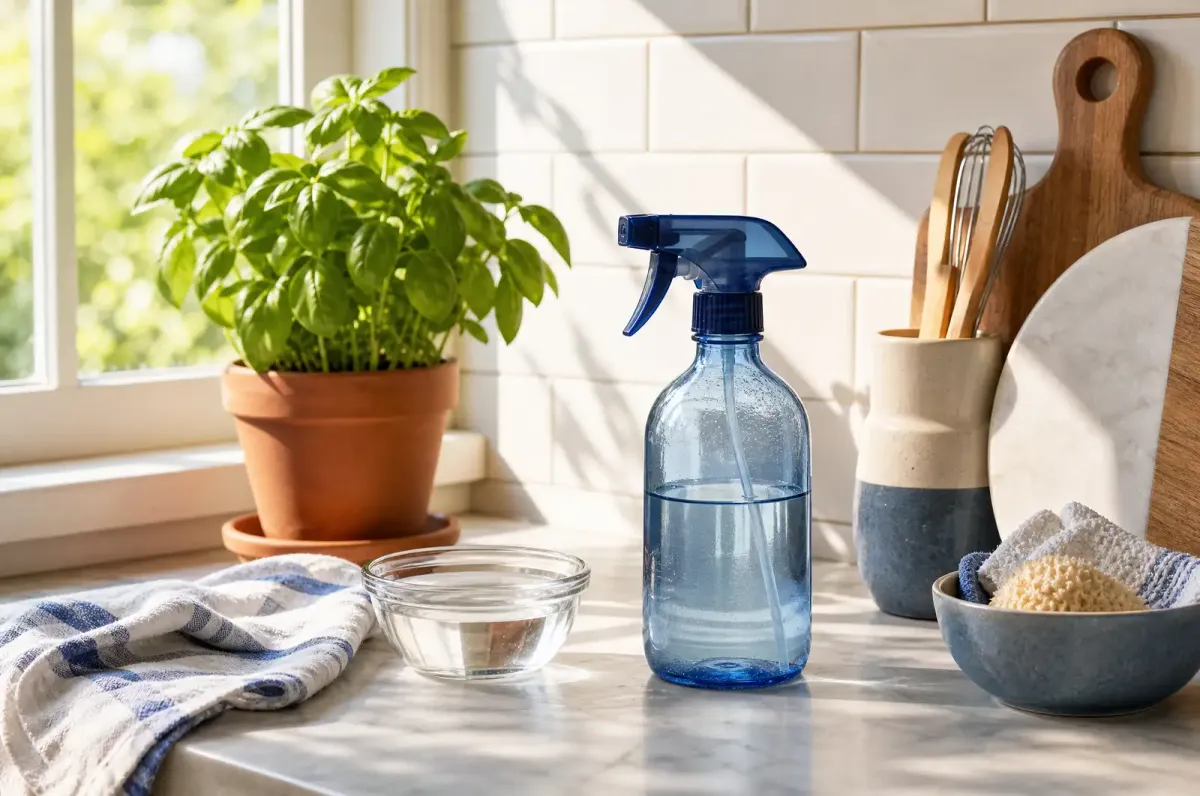
If your kitchen has turned into a fly airport this summer, you’re not imagining it. Flies breed faster in warm weather, and with windows open and doors swinging, they have more ways in than ever. The good news: you don’t need a can of toxic spray or an expensive exterminator visit. A bottle of white vinegar sitting in your pantry right now is enough to start fighting back—and pest control professionals say it works differently than most people think.
Why Vinegar Actually Works Against Flies
Most people assume vinegar kills flies. It usually doesn’t. What it does is more interesting.
“Vinegar doesn’t just repel pests, it hijacks their chemical instincts,” explains Nicole Carpenter, president of Black Pest Prevention. Flies navigate by smell, following scent trails toward food, moisture, and breeding sites. White vinegar’s acetic acid vapor overwhelms those finely tuned receptors and jams their navigation system.
The effect varies by species. Ants and house flies both get disoriented by the scent and can’t follow what Carpenter calls their “natural GPS” toward your fruit bowl or trash can. But if a fly pushes through the smell barrier anyway, vinegar has a backup mechanism: surface tension.
“When flies attempt to land in the vinegar, they can become trapped in it and drown,” says Greg McKendall, CEO of Kilter Termite and Pest Control. That’s why open bowls of vinegar placed strategically around problem areas do two things at once: they repel most flies by smell and catch the persistent ones that ignore the warning.
The key detail: you need white vinegar, not apple cider vinegar for this repelling effect. Apple cider vinegar has a sweeter, fermented scent that actually attracts some fly species. We’ll use that property deliberately in the trap section below.
3 DIY Vinegar Traps That Cost Pennies
The Classic Dish Soap Trap
Fill a small bowl halfway with apple cider vinegar, add three drops of liquid dish soap, and stir gently. The vinegar’s fermented smell draws flies in. The soap breaks the liquid’s surface tension, so when a fly lands expecting to rest on the surface, it sinks and drowns immediately. Place this near fruit bowls, trash bins, or anywhere you see the most activity.
Replace the mixture every two to three days. After 48 hours, the vinegar loses some of its punch and the soap film breaks down.
The Funnel Bottle Trap
Cut a plastic water bottle in half, flip the top section upside down to create a funnel, and tape it into the bottom half. Pour an inch of apple cider vinegar mixed with a squirt of dish soap into the bottom. Flies fly down the funnel toward the scent but can’t figure out how to fly back up the narrow opening. This design works especially well for fruit flies, which tend to cluster around overripe produce.
The Strategic Open Bowl
Fill shallow bowls with plain white vinegar and place them on windowsills and near doorways. These aren’t traps—they’re scent barriers. The vinegar vapor creates an invisible wall that most flies won’t cross. Change the vinegar daily when the smell fades. A single bowl covers roughly a six-foot radius in still indoor air.
Essential Oil Sprays: 4 Scents Flies Can’t Stand
If the vinegar smell bothers you (it does fade quickly, but some people hate it), essential oils give you a better-smelling alternative. Flies hate strong botanical scents for the same reason vinegar works—it overwhelms their sensory system.
Mix 15 drops of essential oil with one cup of water and a teaspoon of liquid castile soap in a spray bottle. The soap helps the oil disperse in water instead of floating on top. Shake before each use and spray around door frames, window sills, and garbage can lids.
The four most effective oils, ranked by pest control consensus:
- Peppermint — strongest repellent effect across multiple fly species. Bonus: mice and spiders also avoid it.
- Lemongrass — contains citronella compounds similar to commercial repellents but without the synthetic additives.
- Lavender — mild enough for kitchens, strong enough to deter flies. Also masks food odors that attract them.
- Eucalyptus — particularly effective against house flies and blow flies. Use sparingly indoors; the scent is intense.
Apply the spray every two to three days, or whenever you notice the scent fading. In high-traffic areas like kitchen doorways, you might need daily reapplication during peak summer weeks. A small 4-ounce spray bottle lasts about two weeks with regular use, making this one of the cheapest fly deterrents you can make at home—the cost per application works out to roughly 15 cents.
A note on safety: essential oils are potent. Keep spray bottles labeled and out of reach of children. Some oils, particularly peppermint and eucalyptus, can irritate skin at full concentration. If you’re spraying near areas where pets eat or sleep, check which oils are safe for your specific animals—cats, for example, have liver enzymes that can’t process certain essential oil compounds. Don’t spray directly on food surfaces—target the perimeter around them.
Stop Them Before They Enter
Fix Your Screens
Walk around your house and check every window screen. A hole the size of a pencil eraser is a fly highway. Patch kits cost under ten dollars at any hardware store and take about two minutes per hole. For door gaps, adhesive weatherstripping along the bottom edge closes the gap that most fly entry happens through.
Manage Your Trash Differently in Summer
Flies can smell a ripe trash bag from surprising distances—some species detect odors from over 4 miles away, according to entomology research. During hot months, take kitchen trash out every night instead of waiting for the bin to fill. If that’s not practical, at minimum rinse food packaging before tossing it—a pizza box with cheese residue or a yogurt container with a few spoonfuls left is a fly magnet. Keep your outdoor bins at least 15 feet from the house and make sure lids seal tightly. A bin with a cracked lid or one that sits in direct afternoon sun is basically a fly incubator.
Watch the Fruit Bowl
That decorative bowl of bananas and apples on your counter is ground zero for fruit flies. As fruit ripens, it releases ethylene gas and aromatic compounds that flies detect from rooms away. Either eat fruit before it gets too ripe, move the bowl to the refrigerator during peak summer weeks, or cover it with a mesh food tent.
Eliminate Standing Moisture
Flies need water to breed. Check under sinks for slow drips, empty pet water bowls that sit out overnight, and don’t leave wet dishcloths or sponges in the sink. House flies can complete their breeding cycle in as little as a week under ideal conditions, so a damp sponge that sits for a few days is enough to start the next generation.
Plant a Fly-Repelling Barrier
If you have outdoor space near entry doors or kitchen windows, a few potted plants can act as a living fly deterrent. Basil and mint are the top choices—they’re easy to grow, useful in cooking, and their oils create a scent zone that flies avoid. Lavender and rosemary work too, though they need more sun. A row of three to five pots on a windowsill or porch creates enough aromatic interference that many flies choose an easier target. This doesn’t replace traps or sprays indoors, but it cuts down how many flies reach your door in the first place.
What Not to Do
Some popular fly-fighting advice backfires or creates new problems.
Skip the chemical foggers. Bug bombs disperse insecticide everywhere, including on kitchen counters, utensils, and surfaces where you prepare food. They also kill beneficial insects like spiders that actually eat flies. For an indoor fly problem, targeted methods work better and don’t leave residue.
Don’t rely on fly swatters as your primary defense. Yes, the satisfying crack of a well-aimed swat has its place. But you’re fighting an endless wave if you don’t also remove what’s attracting them. Every fly you swat already laid eggs somewhere in or near your home.
Avoid sticky hanging traps in visible areas. The long, ribbon-like fly strips that dangle from ceilings work mechanically but are genuinely unpleasant to look at—nobody wants their kitchen to double as a bug morgue. They’re also indiscriminate—small birds have been known to get caught in them when installed near open windows. If you use them at all, keep them in basements, garages, and utility rooms, not in living spaces where you eat or host guests.
Apple cider vinegar and white vinegar are not interchangeable. ACV attracts; white vinegar repels. Using the wrong one in the wrong context makes your problem worse.
When to Call a Professional
A few flies in July is normal. These situations aren’t:
- You’re killing more than 20 flies per day inside your home for more than three consecutive days.
- Flies are concentrated in one room with no obvious food or moisture source—this can signal a dead animal in a wall void or chimney.
- You notice clusters of small, dark spots on walls or ceilings near windows. These are fly specks (waste), and a large cluster suggests a breeding site somewhere inside the structure.
- You’ve tried all the methods above consistently for a week and the population isn’t decreasing.
A pest control professional can locate hidden breeding sites, apply targeted treatments that won’t contaminate your living space, and identify structural issues—like a broken vent screen or foundation crack—that are letting flies in at scale.
Flies are annoying but they’re also a solvable problem. Unlike ants, which build colonies inside your walls, or termites, which eat your house from the inside out, flies are surface-level pests. Remove the attractants, block the entry points, and deploy vinegar-based traps for the stubborn ones that get through. Most homes can cut their indoor fly population by 80% or more within three days using just the methods above—no exterminator, no toxic residue, no mystery chemicals.


Discussion
Comments
Share a helpful tip, question, or takeaway from House Flies Taking Over? Vinegar and 7 Other Natural Fixes That Pest Pros Swear By.
0 Comments
Loading comments…