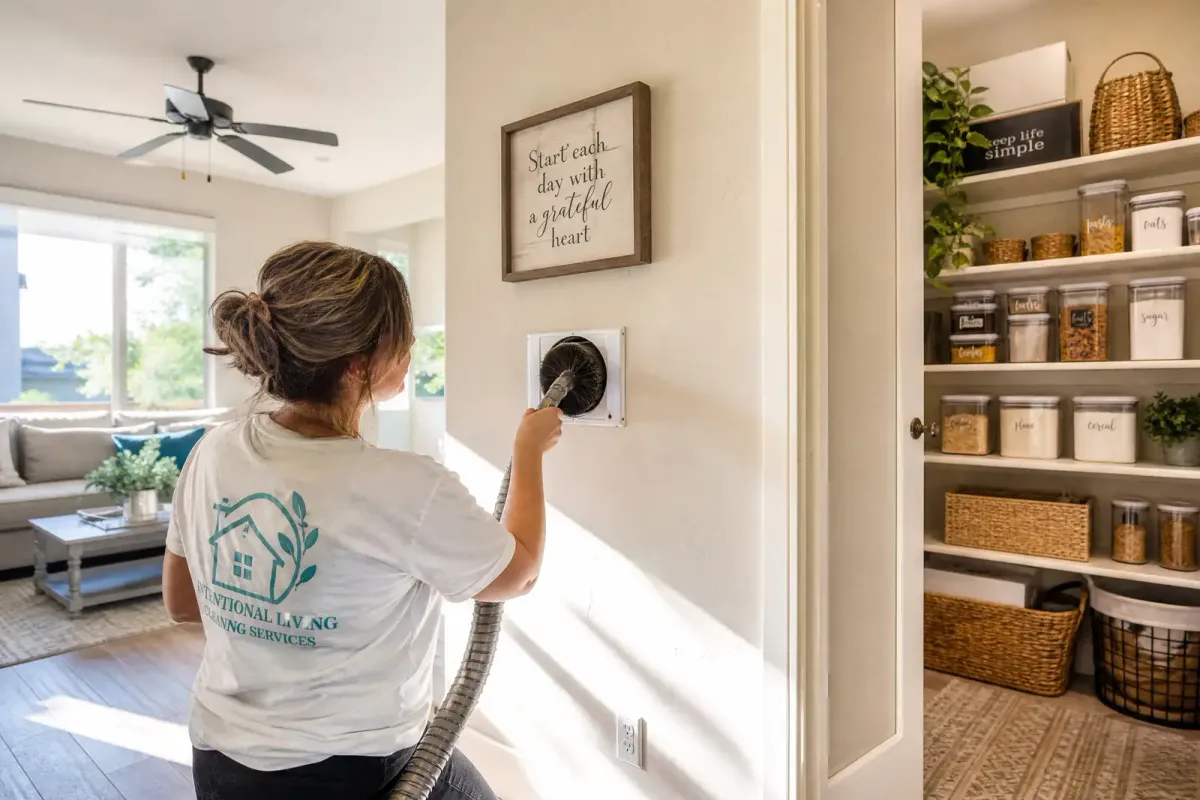
Summer heat doesn’t just make cleaning harder — it creates new problems that spring routines don’t cover. Dust fans that ran all winter are now recirculating lint. Humid air turns pantry corners into spice-caking zones. And dryers that worked fine in March become fire hazards by July because lint accumulates faster when machines run more often.
The tasks below aren’t glamorous. You won’t find them on any aesthetic cleaning checklist. But they’re the ones that actually prevent breakdowns, save money, and keep a house from feeling perpetually sticky in August.
1. Clean the Dryer Vent (Not Just the Lint Screen)
Everyone wipes the lint screen. Almost nobody touches the vent.
A typical household dryer exhausts roughly twelve pounds of lint per year through the duct that runs to the outside wall (HuffPost). The screen catches most of it. The rest builds up inside the flexible hose and the wall duct. Summer means more laundry — towels after the pool, sweaty workout clothes, kids’ camp gear — which accelerates the accumulation.
The U.S. Fire Administration lists clothes dryers as a leading cause of residential fires, and failure to clean the dryer is the leading factor. A vent brush kit costs under fifteen dollars on Amazon and takes ten minutes to push through the hose from the dryer side. If the exterior vent flap doesn’t open fully when the dryer runs, that’s the moment to pull the hose off and vacuum out the wall duct too.
2. Run a Washing Machine Clean Cycle with Vinegar
Washing machines clean clothes, but the drum itself collects detergent residue, fabric softener buildup, and moisture that breeds mildew. Front-loaders are especially prone because the door seal traps water.
The fix is a hot-water cycle with two cups of white vinegar and an hour of air-drying with the door open afterward. Do this monthly during summer when washer use doubles. If the rubber gasket smells musty, wipe it with a vinegar-soaked cloth and leave the door cracked between loads — oxygen kills the bacteria that cause odors far better than any commercial cleaner.
3. Deep-Clean Upholstery You Sit On Daily
Couches and chairs absorb sweat, skin cells, and outdoor grime all summer long. A portable upholstery cleaner like the Shark StainStriker pulls embedded dirt out of fabric fibers that vacuuming alone can’t reach (HuffPost).
You don’t need a professional service for routine maintenance. The process is straightforward: vacuum thoroughly first, apply a small amount of upholstery-safe cleaner to a test corner, then work in sections with a microfiber pad. Let the cushions dry completely — putting damp cushions back on the frame traps moisture underneath and creates a mildew problem that’s worse than the original stain.
4. Wipe Down Ceiling Fans and Light Fixtures
Ceiling fans running on high all summer collect dust on the top edges of the blades. That dust doesn’t stay there — every time the fan spins, a fraction of it becomes airborne and settles on surfaces you just cleaned.
Wipe each blade with a damp microfiber cloth, top and bottom, before summer use and once more in August. A pillowcase slid over each blade and pulled backward catches the dust without dropping it on the floor below. Don’t forget the light fixture covers — dust baked onto hot bulbs dims the light and creates a faint burning smell people often mistake for an electrical problem.
5. Reorganize the Pantry for Summer Humidity
Spices clump, flour attracts weevils, and crackers go stale within days when humidity hits seventy percent. A viral kitchen hack that circulated this week points out that silica gel packets from shoe boxes actually work well inside spice jars (New York Post).
The broader strategy: move anything paper-packaged into airtight containers before the first humid week of summer. Rice, pasta, cereal, and baking supplies all benefit. Check expiration dates on anything you haven’t touched since winter — summer heat accelerates the degradation of cooking oils and spices, and rancid olive oil is a real thing that ruins otherwise fine meals.
6. Reset Your Cleaning Supply Staging
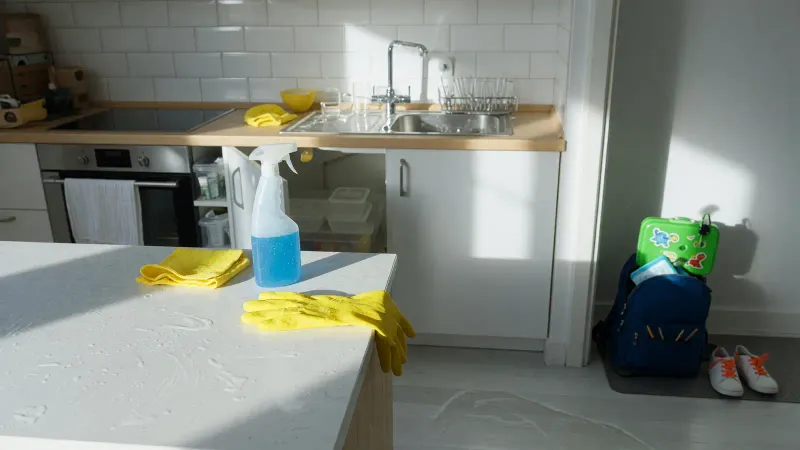
Spring cleaning usually means buying everything at once. By July, half the bottles are in the wrong rooms, the good microfiber cloths migrated to the car, and the all-purpose cleaner is hiding under the bathroom sink.
Take twenty minutes to restock staging areas: one caddy per floor with the essentials (all-purpose spray, glass cleaner, two cloths, a scrub brush). Keep replacements in a single storage closet rather than scattered around. When supplies are where you expect them to be, you’re more likely to do the quick wipe-down instead of deferring it because the right bottle is upstairs.
The Takeaway
Summer cleaning isn’t about working harder. It’s about addressing the specific ways heat and humidity break the systems you set up in spring. A dryer vent cleaned in June prevents a fire in August. A pantry reorganized in July saves wasted groceries. These tasks take an hour total per month, and they compound into a house that actually stays clean instead of fighting a losing battle against the season.

Discussion
Comments
Share a helpful tip, question, or takeaway from 6 Summer Cleaning Tasks You're Probably Skipping — And Why They Matter.
0 Comments
Loading comments…