Hundreds of millions of Americans from the Midwest to the East Coast are staring down temperatures in the upper 90s and beyond this week, according to AccuWeather. Your air conditioner is about to work harder than it has all year, and if it hasn’t been touched since last September, it’s probably not ready.
The good news: a few maintenance tasks you can do yourself this weekend will keep your AC running efficiently, prevent the mid-July breakdown nobody wants, and knock $100 or more off your summer electric bill. Here’s what to do and why it matters right now.
Why AC maintenance hits your wallet harder in July
An air conditioner that hasn’t been maintained doesn’t just cool less effectively, it costs more to run. A dirty filter forces the blower motor to work harder, a clogged condenser coil reduces heat transfer, and low refrigerant makes the compressor cycle longer than it should. Each of these issues adds to your electric bill, and together they can push cooling costs 15 to 30 percent higher than necessary.
Beyond the monthly bill, there’s the breakdown risk. HVAC professionals consistently report that the majority of emergency service calls in July and August involve systems that skipped annual maintenance. A service visit during a heat wave can run several hundred dollars, and that’s if the technician can get to you the same day. Many can’t.
8 maintenance tasks to tackle this weekend
1. Replace or clean your air filter
This is the one thing nearly every homeowner knows about, and it’s still the most commonly skipped task. A clogged filter restricts airflow, making your system run longer to reach the set temperature. During heavy cooling months, check it every 30 days. If you can’t see light through it when you hold it up, swap it out. Basic pleated filters cost under $10 and take 30 seconds to replace.
2. Clear debris from the outdoor condenser unit
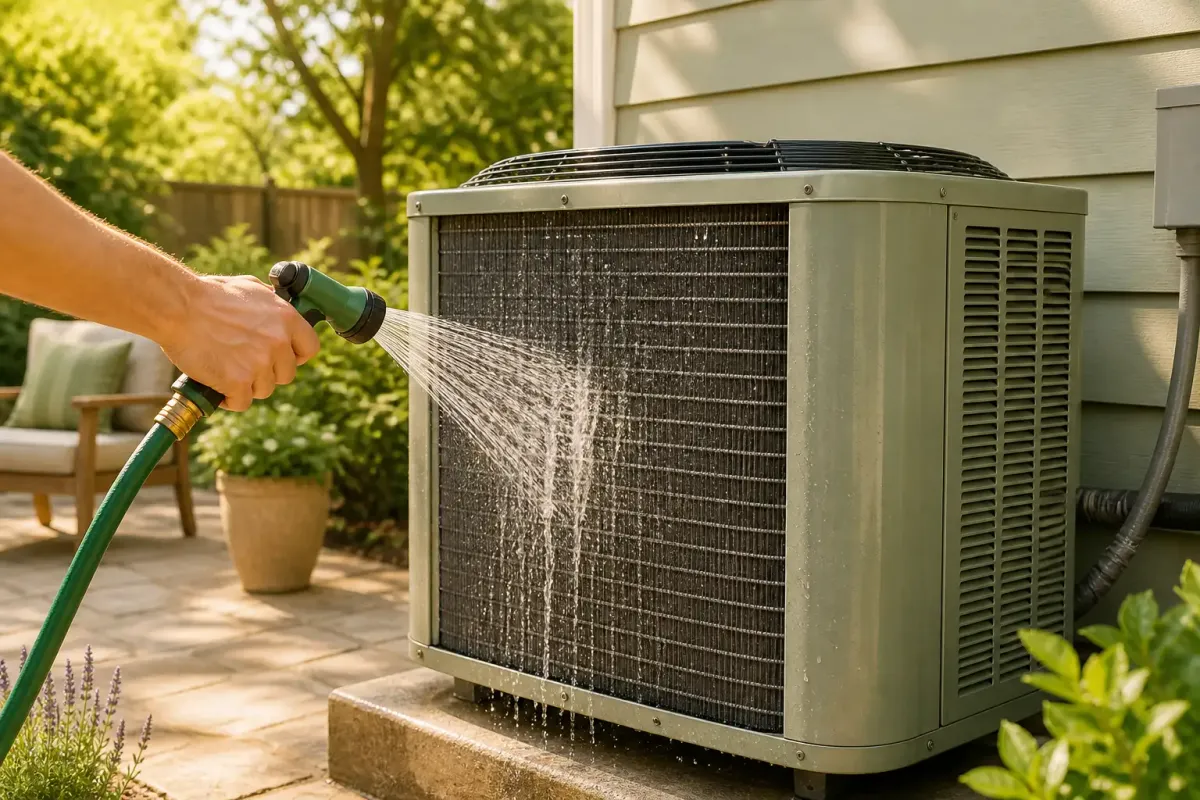
Walk outside and look at your AC’s outdoor unit. Leaves, grass clippings, pollen, and cottonwood fluff collect on the fins and block airflow. Turn off power to the unit at the disconnect box or breaker, then use a garden hose with a gentle spray to wash debris off the fins from the inside out. Don’t use a pressure washer, those fins bend easily and bent fins reduce efficiency just as much as dirt does.
3. Straighten bent condenser fins
While you’re outside, check if any of the thin aluminum fins on the condenser are flattened or bent. You can buy a fin comb at any hardware store for under $15. Run it through the damaged sections to straighten them back out. Even a few square inches of bent fins restrict meaningful airflow for a system that runs hours every day.
4. Clean the evaporator coil (if accessible)
Inside the house, your indoor unit’s evaporator coil can collect dust and mold over a cooling season. If you have access to the coil, some units have a removable panel, spray it with a no-rinse coil cleaner (about $12 at home centers). The foam lifts dirt off the coil and drains away through the condensate line. If your coil isn’t easily accessible, save this one for the annual professional tune-up.
5. Flush the condensate drain line
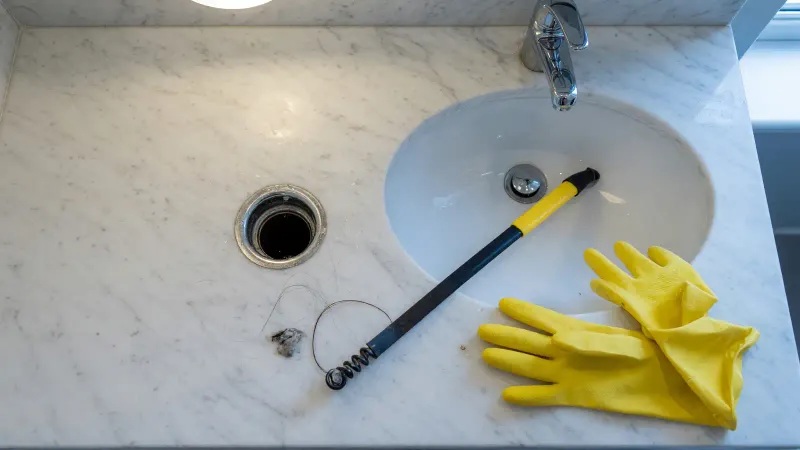
The thin PVC pipe running from your indoor unit to a floor drain or outside is the condensate line. When it clogs, and it will eventually, especially in humid summers, water backs up and can damage your unit or the surrounding drywall. Pour a cup of distilled white vinegar down the line, let it sit for 30 minutes, then flush with water. If it drains slowly, a wet/dry vacuum on the exit end usually clears the blockage.
6. Check and seal duct leaks in accessible areas
Walk through your basement or attic and look at the ductwork you can reach. Feel for cold air escaping at joints and seams while the system is running. Use foil-backed HVAC tape, not duct tape, which dries out and fails, to seal any leaks you find. The Department of Energy estimates that typical homes lose 20 to 30 percent of conditioned air through duct leaks. Every sealed leak is money you’re not sending out the attic vent.
7. Test your thermostat and consider an upgrade
Run your AC and verify the thermostat reads the room temperature accurately. If you’re still using a basic manual thermostat, a programmable model that adjusts temperatures automatically when you’re asleep or away can cut cooling costs by 10 percent annually. Smart thermostats with occupancy sensing go further, but even a $30 programmable unit pays for itself in a single summer.
8. Schedule a professional tune-up if you haven’t had one
HVAC experts like Bob Marquardt, who recently outlined annual maintenance best practices in a homeowner education piece, recommend a professional inspection at least once per cooling season. A technician checks refrigerant levels, low refrigerant means a leak, not just a top-off, inspects electrical connections and contactors, measures motor amperage, and tests the system’s overall performance. The cost runs $75 to $200 depending on your market, but it catches issues before they become $800 emergency repairs.
Small habits that compound into real savings
Beyond the hands-on maintenance work, a few daily habits drop your cooling bill without making your home uncomfortable:
Raise the thermostat when you leave. Setting it to 78°F or higher while you’re out saves more energy than leaving it at 72°F and making the system catch up when you return. The “it takes more energy to cool a hot house” belief is a myth, heat transfer physics works the other way: the larger the temperature difference between inside and outside, the faster heat enters, and the more your AC runs to remove it.
Use ceiling fans with your AC. A ceiling fan doesn’t cool a room, it cools people by moving air across skin. Running a fan lets you raise the thermostat 4 degrees without feeling any warmer. Just turn the fan off when you leave the room; running it in an empty space wastes electricity without any comfort benefit.
Track your usage. New York utilities NYSEG and RG&E recently reminded customers that free tools like Usage Alerts and Energy Manager let you monitor electricity consumption by the hour if you have a smart meter. When you can see which days drive your bill up, you adjust behavior faster than any tip sheet can motivate.
How much you’re actually saving
A well-maintained AC runs 15 to 20 percent more efficiently than a neglected one. For a household spending $200 a month on summer cooling, that’s $30 to $40 per month. Over a four-month cooling season, the savings add up to $120 to $160, which covers the cost of filters, coil cleaner, fin comb, and a professional tune-up, with money left over.
More important than the dollar figure: the maintenance you do in early July prevents the phone call you’d make in late July when the system quits during a 98-degree afternoon. That call almost always costs more than the tune-up you skipped.
Sources: AccuWeather via MarketWatch; NYSEG/RG&E customer communications via Democrat and Chronicle; HVAC maintenance best practices via HelloNation/PR Newswire; U.S. Department of Energy duct leakage estimates.
Discussion
Comments
Share a helpful tip, question, or takeaway from Summer AC Maintenance: 8 Things to Do Right Now Before Your Cooling Bill Doubles.
0 Comments
Loading comments…