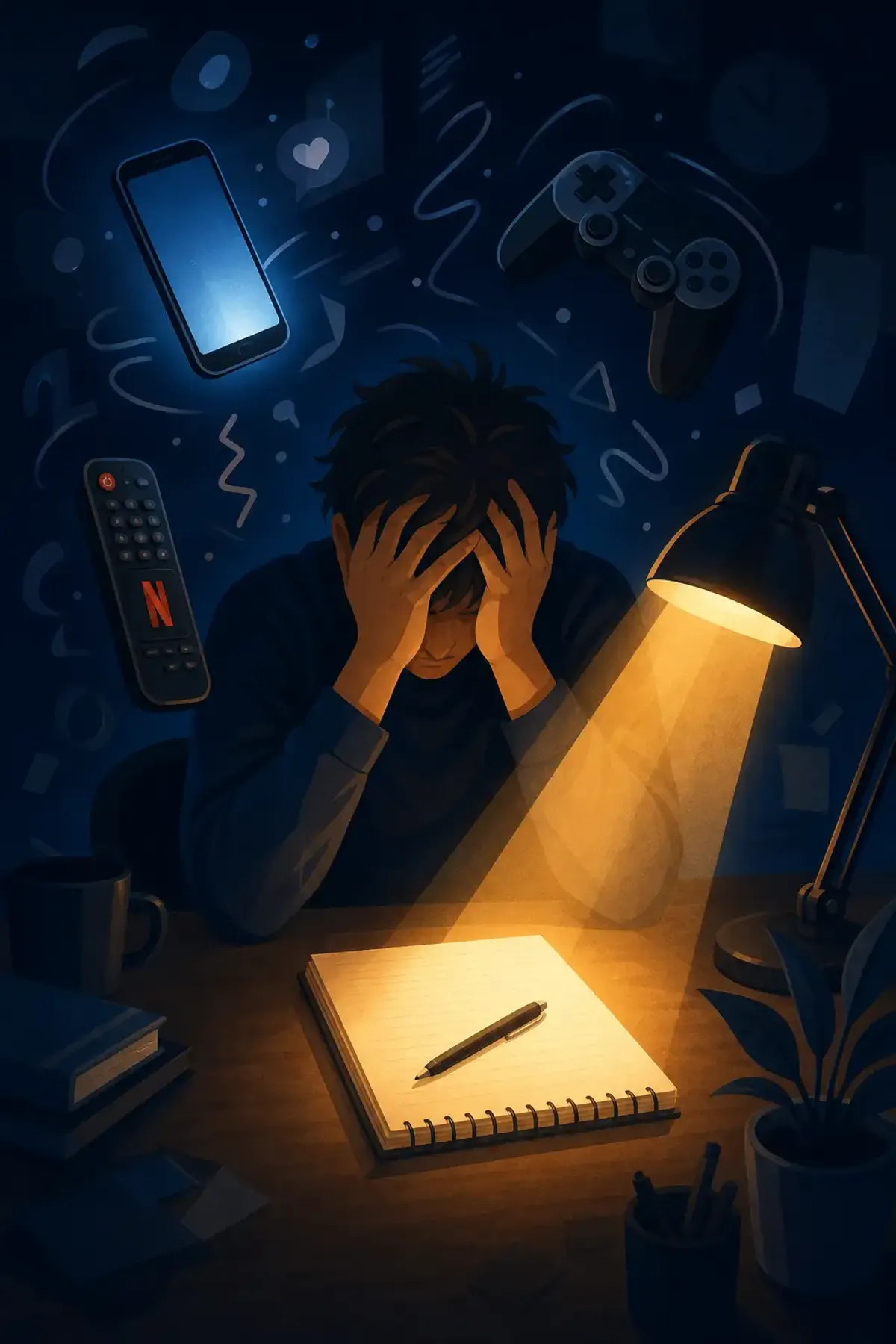
If procrastination were just laziness, deadlines would cure it. But you’ve missed deadlines and still didn’t start until the panic set in. You’ve had a whole weekend to do something and watched Netflix instead, fully aware you were sabotaging yourself. That’s not laziness — laziness doesn’t come with guilt.
Research by Dr. Tim Pychyl at Carleton University frames procrastination as an emotional regulation failure. You’re not avoiding the task; you’re avoiding the negative feeling the task triggers — anxiety about doing it well, boredom with the content, fear of the outcome. The short-term relief of avoidance reinforces the behavior, and the cycle continues.
Strategy 1: The five-minute rule
Tell yourself you’ll work on the task for five minutes. That’s it. After five minutes, you can stop. Almost everyone continues past five minutes because the hardest part of any task is starting. The anticipation of the task is almost always worse than the task itself. Five minutes is short enough to bypass the emotional resistance but long enough to get momentum.
Strategy 2: Make the task smaller
“Write the report” is a project, not a task. Break it down until the next action is so small it feels trivial: “Open the document,” “Type the title,” “Write the first bullet point.” Each completed micro-step builds momentum that makes the next one easier. The friction isn’t the work — it’s the ambiguity about where to start.
Strategy 3: Schedule the dread
If a task is hanging over you all day but you keep putting it off, schedule it for a specific time. “I’ll deal with this at 2pm” lets your brain release it until then. The mental energy spent dreading an unscheduled task is often greater than the energy required to do it.
Strategy 4: Change your environment
Your brain associates locations with behaviors. If you always procrastinate at your desk, move to a different room, a coffee shop, or a library. The novel environment breaks the association between that physical space and avoidance behavior. Even changing something small — facing a different direction, clearing everything off your desk except what you need — can help.
Strategy 5: Forgive yourself for past procrastination
A 2010 study by Dr. Pychyl’s team found that students who forgave themselves for procrastinating on an earlier exam studied more effectively for the next one. Self-criticism — “I’m so lazy, why can’t I just do this” — adds shame to the emotional burden and makes avoidance more likely. Acknowledge that you procrastinated, recognize it as a common human behavior, and refocus on the next small action.
Strategy 6: Make the cost of not doing it immediate
The consequences of procrastination are usually distant — a deadline next week, a performance review next month. Create immediate consequences: tell a friend you’ll send them the draft by tonight, put $50 in an accountability app that donates to a cause you hate if you miss the deadline, block a reward (no Netflix until the task is done). The immediate cost overrides the distant consequence.
Procrastination isn’t a character flaw. It’s a habit pattern that specific, targeted interventions can break. The key is recognizing that you’re not fighting laziness — you’re managing an emotional response. For more strategies, see our morning routine guide and evening review method.


Discussion
Comments
Share a helpful tip, question, or takeaway from How to Stop Procrastinating: 6 Science-Backed Strategies That Address the Real Problem.
0 Comments
Loading comments…