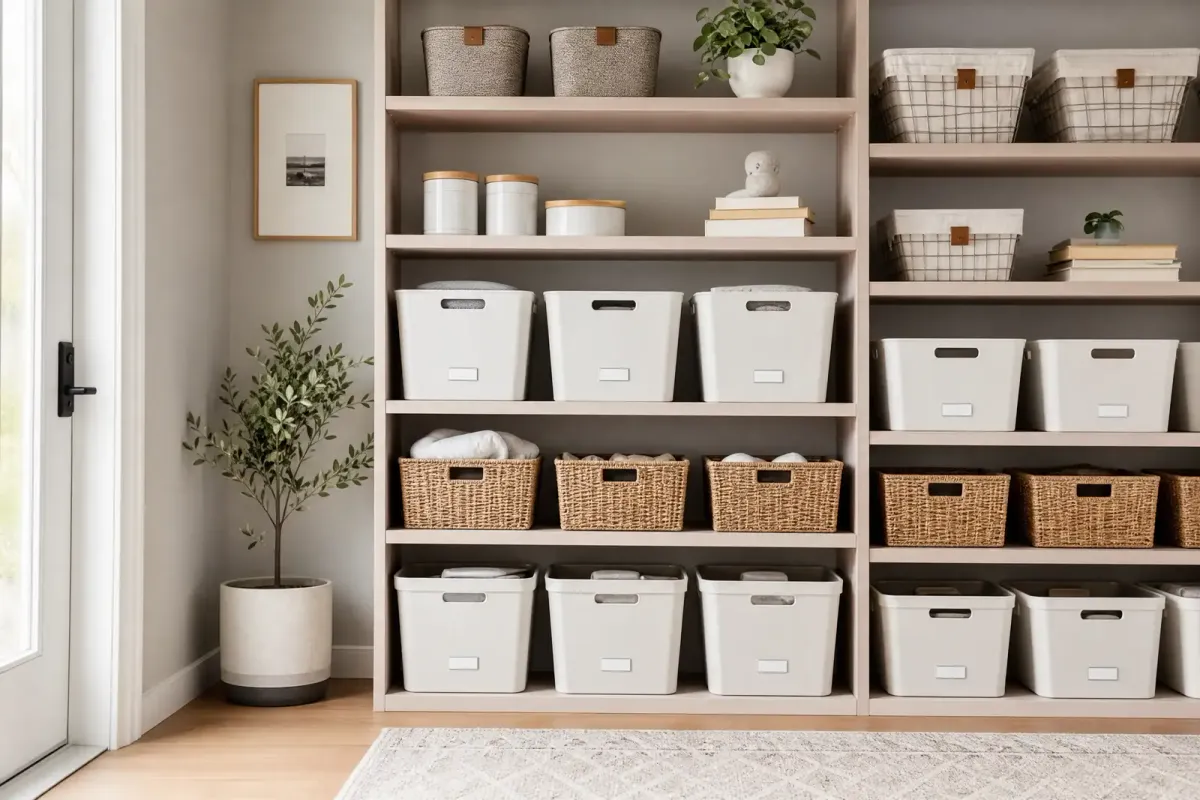
The Real Cost of Cluttered Spaces
American homes hold an average of 300,000 items. Most families spend roughly 2.5 days per year searching for misplaced objects. That is not a minor inconvenience — it adds up to 15 full days over five years, lost to rummaging through junk drawers and digging behind overstuffed shelves.
The home organization market reflects this frustration. Industry reports from 2026 show global storage solution revenues climbing past $138 billion, with North American consumers driving roughly 35% of new purchases. The trend goes beyond buying plastic bins. Buyers want systems that integrate into daily routines, not ones that require a weekend-long setup marathon.
Here are storage approaches tested and refined through real household use, organized room by room.
Living Room: Multifunctional Furniture With Hidden Storage
The living room typically accumulates the most visible clutter — remote controls, magazines, charging cables, blankets, toys, and seasonal decorations competing for surface space.
Lift-Top Coffee Tables
A lift-top coffee table converts dead center-of-room space into a workstation, dining surface, and storage cavity in one piece. The mechanism matters: gas-spring lifts cost $40-$80 more than basic hinge models but hold position at any angle without slipping. Look for a table with at least 3 inches of clearance beneath the lifted surface — enough for a laptop and a notebook side by side.
Leading furniture manufacturers in 2026 have started shipping these pieces fully assembled, eliminating the two-hour assembly process that previously discouraged buyers from purchasing anything with moving parts. This shift matters because poorly assembled lift mechanisms are the single most common point of failure.
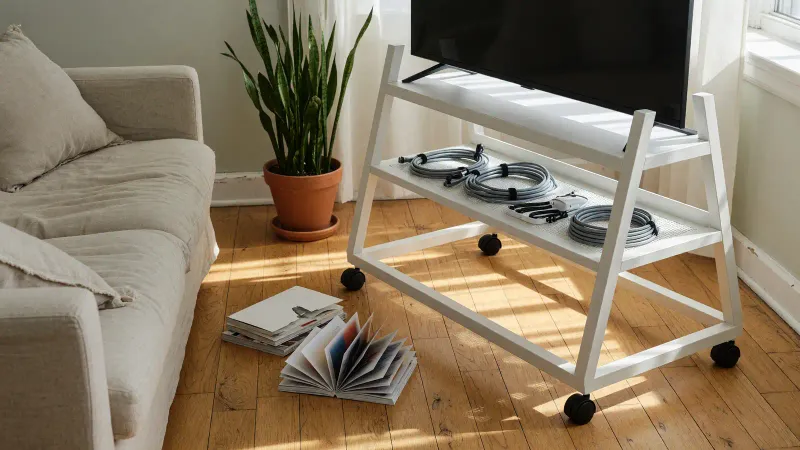
Media Consoles With Cable Management
TV stands now routinely include three features that were premium upgrades five years ago:
- Back panels with brush-grommet cutouts for clean cable routing
- Adjustable shelves with pre-drilled ventilation holes
- Concealed rear compartments for routers, streaming devices, and power strips
A 65-inch TV setup typically needs four to six components in the media cabinet. Measure the tallest device, add 2 inches for heat clearance, and use that as your minimum shelf-height requirement before buying.
Ottoman Storage
A storage ottoman holding 30-40 gallons of volume replaces a side table while stowing throw blankets, board games, or extra pillows. Fabric-covered models with removable lids work best — hinged lids that open 180 degrees tend to warp within two years of regular use.
Kitchen: Vertical Storage and Zone-Based Organization
Kitchen organization works best when you assign zones: prep, cooking, cleaning, and food storage. Each zone gets tools and supplies within one step of where they are used.
Wall-Mounted Magnetic Knife Strips
A 16-inch magnetic strip mounted 4 inches above the counter surface frees 2-3 square feet of counter space by eliminating a traditional knife block. Install into wall studs, not drywall anchors — a loaded knife strip weighs 4-6 pounds and drywall anchors fail under vibration.
Pull-Out Pantry Systems
Retrofitting a standard 15-inch-wide cabinet with a pull-out pantry tower adds accessible storage for roughly 80-120 canned goods and dry items. The difference between a fixed-shelf cabinet and a pull-out system is visibility: you can see every item at once instead of losing things behind the front row.
Under-Sink Organizers
The space beneath the kitchen sink wastes approximately 60% of its volume in most homes due to pipes and disposal units. Tiered sliding organizers that contour around plumbing capture this dead space. Models with adjustable shelves accommodate tall cleaning bottles alongside shorter containers without wasted gaps.
Refrigerator Bin Systems
Clear, stackable bins inside the refrigerator reduce food waste by making contents visible. Group items by type — dairy, produce, condiments, beverages — and label each bin. Studies show households using labeled bins discard 20% less food per month compared to unorganized refrigerators.
Bedroom: Closet Optimization and Under-Bed Storage
The average bedroom closet wastes roughly 40% of its vertical space because standard installations include a single hanging rod at one height.
Double-Rod Closet Systems
Installing two rods — one at 40 inches for shirts and blouses, another at 72 inches for longer garments — doubles hanging capacity. For a standard 6-foot-wide closet, this adds room for approximately 60 additional garments.
Drawer Dividers for Underwear and Accessories
Adjustable bamboo or plastic dividers cost $15-$35 per set and prevent the gradual migration of socks and small items into chaotic piles. One divider set per drawer, sized to the exact interior dimensions, creates a grid that stays organized between laundry cycles.
Under-Bed Rolling Storage
Under-bed storage bins with wheels hold off-season clothing, extra bedding, or shoe collections. The critical spec: measure the clearance between your mattress frame and the floor. Platform beds often leave only 3-4 inches, while box-spring setups typically provide 8-12 inches. Choose bins 1 inch shorter than your available clearance.
Home Office: Document and Supply Management
Remote workers face a unique organizational challenge: office supplies, paperwork, and personal items share the same physical space.
Floating Shelves With Integrated Charging
Wall-mounted shelves 24 inches wide with built-in USB ports eliminate cord clutter on desks. Mount them 12 inches above the desk surface so items on the shelf remain visible without blocking the monitor.
Vertical File Organizers
Desktop file towers holding 8-12 hanging folders take up roughly 12 square inches of desk space. Position them at the far left or right edge of the desk, never in the center working zone. Use color-coded tabs for categories: invoices, receipts, contracts, personal documents.
Cable Management Boxes
A cable management box mounted under the desk hides power strips and excess cable length. Route every cable through the box, leaving only the connector ends visible above the desk surface. This single change reduces visual clutter by an estimated 60%.
Entryway and Mudroom: Transition Zone Organization
The entryway handles the highest traffic volume in most homes and needs storage that works at standing height.
Bench With Shoe Storage
An entryway bench with cubbies underneath stores 6-12 pairs of daily shoes. Mount the bench 18 inches from the floor — standard seating height — and ensure each cubby is at least 6 inches wide for adult shoes.
Wall-Mounted Hooks at Multiple Heights
Install three rows of hooks: one at 60 inches for adult coats, one at 48 inches for children’s items, and one at 36 inches for bags and hats. This arrangement prevents the common problem of lower hooks going unused while the top row becomes overloaded.
Mail Sorting Station
A three-slot wall organizer labeled “Incoming,” “To Process,” and “Filed” prevents mail from accumulating on kitchen counters. Process incoming mail within 48 hours to prevent pile-up. The 48-hour rule is the threshold at which mail stacks transition from manageable to overwhelming.
Bathroom: Counter and Cabinet Maximization
Bathroom organization focuses on moisture-resistant storage solutions and maximizing the space around plumbing fixtures.
Over-the-Toilet Shelving Units
A freestanding shelving unit over the toilet tank adds 2-4 storage shelves in a space that normally sits empty. Ensure at least 24 inches of clearance between the top of the tank and the bottom shelf for comfortable access.
Drawer Organizer Trays for Vanity Cabinets
Vanity drawers typically hold a jumbled mix of makeup, hair accessories, and first-aid supplies. Adjustable tray dividers create separate compartments. The key: measure your drawer’s interior width and depth before purchasing — most organizers assume a standard 14-inch depth that does not match all vanities.
Over-the-Door Towel Racks
An over-the-door rack with 4-5 bars stores bath towels, hand towels, and washcloths without consuming floor or wall space. Choose stainless steel or coated metal to resist rust in humid bathroom environments.
The Maintenance System That Keeps It Working
Organization is not a one-time project. It is a maintenance routine. Here is a schedule that works without consuming your weekends:
Daily (5 minutes): Reset high-traffic surfaces. Return items to their assigned zones before bed.
Weekly (15 minutes): Clear the mail station, empty recycling from kitchen bins, wipe down storage surfaces.
Monthly (30 minutes): Audit one room. Remove items that no longer belong, donate unused objects, restock supplies.
Quarterly (1 hour): Seasonal rotation. Swap out-of-season clothing and decor. Deep-clean storage bins and reorganize shelf labels.
The families that maintain organized spaces long-term are not the ones who buy the most products. They are the ones who assign every object a designated location and enforce a 48-hour rule for new items — if a new purchase does not get assigned a home within two days, it goes back to the store.
Budget Breakdown: What It Actually Costs
A whole-home organization project does not require a massive budget. Here are realistic price ranges for the systems described above:
| Category | Budget Range | Time to Install |
|---|---|---|
| Living room storage | $150-$500 | 2-4 hours |
| Kitchen organization | $100-$350 | 3-5 hours |
| Closet systems | $80-$300 | 2-6 hours |
| Home office setup | $50-$200 | 1-3 hours |
| Entryway solutions | $80-$250 | 1-2 hours |
| Bathroom storage | $40-$150 | 1-2 hours |
The total: $500-$1,750 for a full-house refresh, depending on furniture quality and whether you choose DIY installation or professional help.
Start with the room that causes the most daily friction. One organized space creates momentum for the rest. The systems described here work because they address specific problems with specific solutions — not vague advice to “declutter more.”
Discussion
Comments
Share a helpful tip, question, or takeaway from Smart Home Organization: 15 Storage Solutions That Actually Work in 2026.
0 Comments
Loading comments…