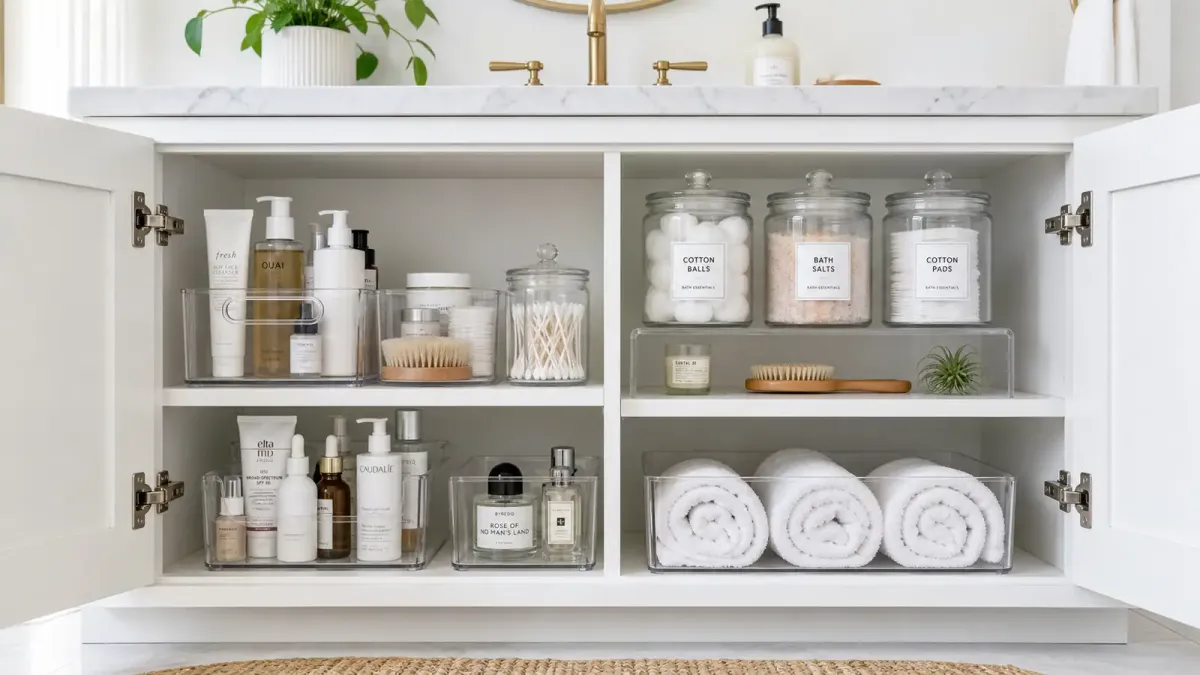
The bathroom vanity is the hardest working cabinet in your house and the most neglected. It stores toothbrushes, razors, medications, hair tools, cleaning supplies, spare toilet paper, and whatever half-used products you bought on impulse at Target. No wonder you can never find anything.
Fixing it doesn’t require custom drawer inserts or a remodel. Just a few rules that change how you think about the space.
Rule 1: Nothing Touches the Cabinet Floor
The bottom surface of a vanity cabinet is the worst place to store anything. It catches drips from leaky pipes, collects dust, and makes small items disappear into the back corner. Put a plastic bin or small shelf riser down there first, then store things on top of that. Even a cheap wire shelf from the dollar store creates a surface that’s easier to wipe and keeps items visible.
Rule 2: Daily Use Goes at Eye Level or Above
The stuff you grab every morning — toothbrush, deodorant, moisturizer — should be in the medicine cabinet or the top drawer. Not buried behind a pile of travel-size shampoos. If your vanity has doors instead of drawers, mount a small basket or magnetic strip inside the door for daily items. The bottom of the cabinet is for backup supplies, not things you reach for twice a day.
Rule 3: Vertical Space Is Your Only Advantage
Vanity cabinets are short but deep. Stackable clear bins let you use the height. Put rarely-used items at the bottom of the stack and daily stuff on top. Lazy Susans work well in corner cabinets under the sink. Tension rods placed front-to-back can create dividers for standing up bottles and spray cans.
Rule 4: No Cardboard, Ever
Cardboard boxes dissolve in bathroom humidity. If you’re currently storing cotton balls in the Amazon box they arrived in, replace it with a plastic bin this weekend. Glass jars with lids work for cotton products. For everything else, clear plastic bins with handles are ideal — you can see what’s inside and pull the whole bin out when you need something.
Rule 5: The Sink Area Is Sacred
Do not store anything around the sink that doesn’t dry quickly. Rolled-up washcloths, fabric pouches, and wooden trays all absorb moisture and grow mildew. The sink counter and the shelf directly above it are for things that can get wet: soap dispenser, toothbrush holder, a small tray for jewelry you took off to wash your hands.
Rule 6: Contain the Chaos Before It Starts
Small items like bobby pins, hair ties, and floss picks need dedicated containers before they enter the cabinet. Not “I’ll sort them later” — the moment they cross the threshold. Tiny bins with dividers, magnetic strips for tweezers and nail clippers, and lidded jars for cotton swabs eliminate the junk-drawer effect in one weekend.
Rule 7: Hair Tools Need Their Own Spot
Hot tools — curling irons, straighteners, blow dryers — are the worst offenders in most vanities. They’re bulky, their cords tangle, and storing them while still warm is a fire risk. Mount a heat-resistant holster or simple metal basket to the inside of the cabinet door. If that’s not an option, use a wire file organizer on its side to stand them up vertically, cords coiled and tucked into the handle.
Rule 8: Purge Every Three Months
Bathroom products expire. Sunscreen loses effectiveness. Mascara grows bacteria. Medications become dangerous after their expiration date. Set a quarterly reminder on your phone to dump everything out of the vanity, check expiration dates, and toss anything you haven’t used in six months. It takes 10 minutes and makes the next three months of mornings noticeably easier.
This all sounds obvious until you’re late for work on a Tuesday, pawing through a drawer of loose cotton balls looking for a single bobby pin. A little structure in the vanity pays back every morning.
Discussion
Comments
Share a helpful tip, question, or takeaway from Bathroom Vanity Organization: 8 Rules for Making a Tiny Cabinet Actually Work.
0 Comments
Loading comments…