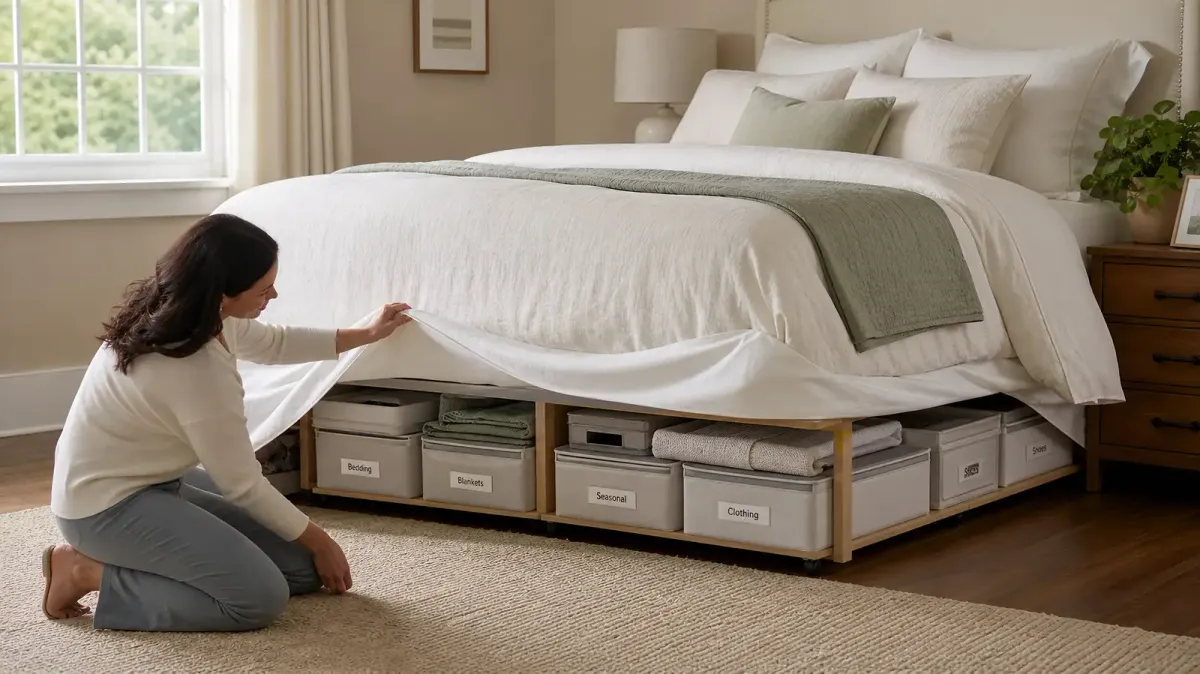
A queen-sized bed occupies about 33 square feet of floor space. If your bed frame sits at least 8 inches off the ground, that’s roughly 22 cubic feet of potential storage directly underneath it — the equivalent of a medium-sized dresser. And most people use that space for dust bunnies and a single sock they lost in 2019.
The key to under-bed storage isn’t cramming more stuff down there. It’s being selective and using the right containers so you can access everything without crawling around on the floor like a raccoon.
Rule One: Nothing Without a Container
Loose items under a bed are lost items. If it doesn’t fit in a designated bin or bag, it doesn’t go under the bed. This rule alone prevents the “out of sight, out of mind” chaos where you stash things and forget they exist.
Rule Two: Clear Bins or Label Everything
Under-bed storage bins need to be identifiable from the edge of the bed. Clear plastic lets you see what’s inside without pulling the bin all the way out. If you’re using fabric bins or bags, label every single one. A Sharpie on masking tape is fine. When you’re looking for spare phone chargers at 11 p.m., you don’t want to open four bins.
What Actually Belongs Under a Bed
Seasonal clothing. Winter coats, heavy sweaters, and boots in summer; shorts and sandals in winter. This is the classic under-bed use case and it’s still the best one. Use vacuum-seal bags for bulky items — they compress down to a fraction of their size and protect against moisture.
Extra bedding. Guest sheets, spare pillows, and the comforter you only use in January. Keep these in zippered fabric bags that breathe. Plastic bins trap moisture and can make linens smell musty.
Shoes. Over-the-door shoe organizers are tacky period pieces from 2007. Under-bed shoe organizers are flat, slide out easily, and hold 12 pairs in a space that would otherwise hold nothing. Look for models with adjustable dividers so boots don’t crush flats.
Gift wrap supplies. Wrapping paper rolls fit perfectly under a bed the long way. Store them in a flat under-bed gift wrap box with compartments for tape, scissors, ribbons, and bows. This frees up a whole closet shelf.
Out-of-season sports gear. Snow gloves, swim goggles, hiking poles — things you use for two months a year and trip over the other ten.
Keepsake boxes and photo albums. Things you want to keep but don’t need to access regularly. Under-bed storage keeps them safe without taking up prime closet real estate.
What Does Not Belong Under a Bed
Electronics. The floor is the dustiest part of any room. Hard drives, gaming consoles, and spare laptops will ingest that dust through their vents.
Food. Even packaged food attracts pests eventually. The kitchen is the only room for food storage.
Things you use weekly. If you’re pulling out a bin every Saturday to grab your yoga mat, the bin should be in your closet, not under your bed. Under-bed storage is for things you access once a season.
If You Don’t Have Under-Bed Clearance
Bed risers are simple and cheap — they lift each leg by 3 to 6 inches and create storage space where none existed. They’re $15 to $25 for a set of four and take 60 seconds to install. Just make sure they’re rated for your bed’s weight and fit securely in the existing leg slots.
The space under your bed isn’t going anywhere. Filling it with intentional storage instead of dust and lost socks is a one-afternoon project that pays off for years.
Discussion
Comments
Share a helpful tip, question, or takeaway from All That Space Under Your Bed: 10 Ways to Use It Without Making Your Room Look Like a Storage Unit.
0 Comments
Loading comments…