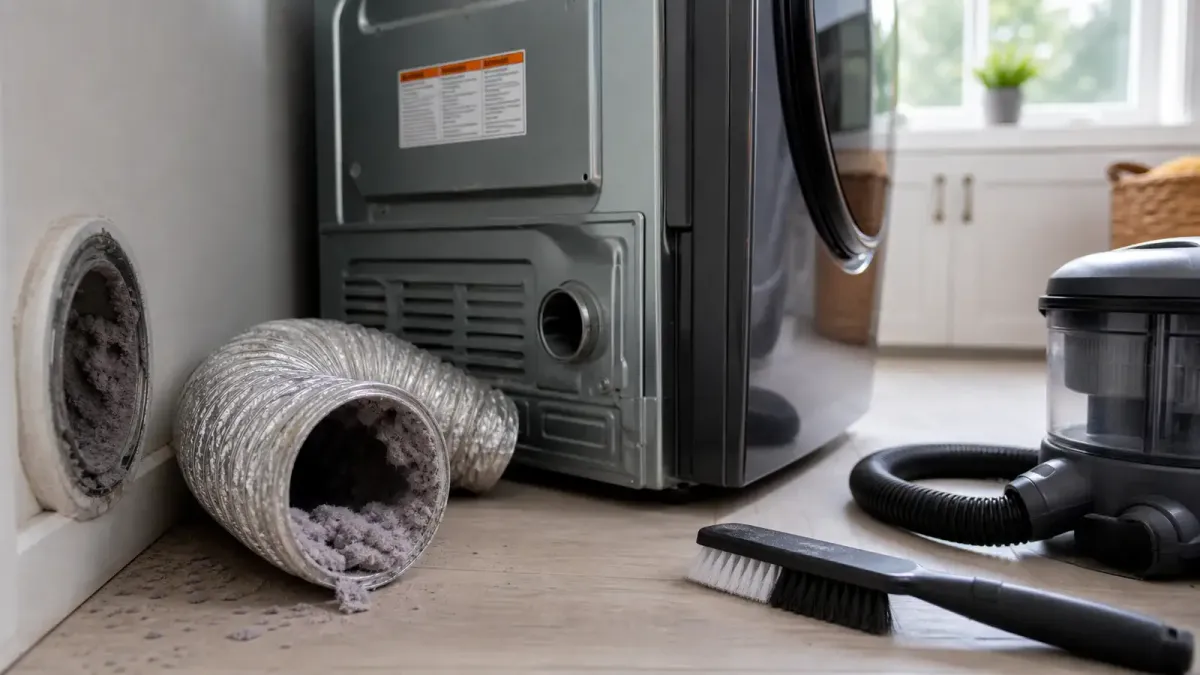
Your dryer works hard. It runs for hours every week, pulling lint off your clothes and pushing hot, moist air outside. But when that vent pipe clogs up — and they all clog eventually — the heat builds. Temperatures in a blocked dryer vent can hit 400 degrees in minutes, and lint is basically kindling. That’s how dryers become the cause of an estimated 2,900 house fires every year in the U.S., according to the National Fire Protection Association.
Here’s the good news: clearing the vent takes about 15 minutes, and you don’t need a professional.
First, Know the Warning Signs
Before you even touch the vent, your dryer probably already told you something was wrong. Clothes take longer than one cycle to dry. The outside of the dryer gets hot to the touch while running. The laundry room feels humid. You notice a burning smell when the dryer is on. Or the vent hood flap outside doesn’t open when the dryer runs. Any one of these means the vent is partially blocked. More than one means it’s bad.
What You Need
A dryer vent cleaning brush kit costs about $20 at any hardware store. Most kits include several 30-inch flexible rods that screw together and a brush head. You also want a vacuum with a crevice tool, a screwdriver or nut driver to remove the vent clamp, and maybe a pair of gloves — the inside of a dryer vent is gross.
Step One: Unplug and Pull Out the Dryer
This isn’t optional. Unplug the dryer from the wall, or flip the breaker if it’s hardwired. If you have a gas dryer, turn off the gas supply valve. Then slide the dryer out far enough to work behind it. Enlist help if it’s heavy — dryers are awkward and easy to drop.
Step Two: Disconnect the Vent
Loosen the clamp where the flexible duct connects to the back of the dryer. Pull the duct off. You’ll probably see a wall of lint right there at the opening — vacuum that out immediately. Then reach inside the dryer’s exhaust port with your hand or the crevice tool and pull out whatever lint is packed in there.
Step Three: Clean the Duct
Now go outside to the vent hood. Remove the cover if it has one. Attach the brush to your first rod and start feeding it into the duct, spinning as you go. Add rods until you reach the other end. Pull the brush back out, remove the lint clump, and repeat. Do this three or four times, or until the rod comes back with barely any lint on it.
Step Four: Clean the Vent Hood
Don’t skip the outside vent hood. If the flaps are stuck open with lint (they usually are), the whole thing is pointless — birds and rodents can get in. Clean the flaps, check they move freely, and make sure the hood cover is secure.
Step Five: Vacuum the Floor and Reconnect
While the dryer is pulled out, vacuum behind it. The floor back there collects dust bunnies the size of small animals. Then reattach the duct, tighten the clamp, and push the dryer back into place.
How Often Should You Do This?
If you have a short, straight vent — maybe once a year. Long runs with bends, or anything over 10 feet: every six months. If you dry multiple loads a day (big family) or use fabric softener sheets (which leave a waxy residue that grabs lint), do it quarterly. Set a calendar reminder. It’s the kind of task that’s easy to forget until your dryer stops working or worse.
When to Call Someone
If the vent runs through a wall, ceiling, or roof and you can’t reach the entire length from either end, hire a professional. Same if you see mold, a bird’s nest, or what looks like a crushed section of duct. A pro cleaning costs $100 to $150 and takes about an hour. Compared to the alternative, that’s cheap.


Discussion
Comments
Share a helpful tip, question, or takeaway from The 15-Minute Task That Could Save Your House From a Fire.
0 Comments
Loading comments…