Every few months, you see the flyer in your mailbox or the postcard stuck to your door: “YOUR AIR DUCTS ARE FILLED WITH DUST, MOLD, AND DEAD SKIN. CALL NOW FOR A $99 CLEANING!” It sounds urgent. It sounds gross. And it sounds cheap enough that you might just pick up the phone.
But here’s the thing most of those flyers won’t tell you: the National Air Duct Cleaners Association (NADCA) says most homes only need duct cleaning every three to five years. Some homes can go even longer. And that $99 price? It’s almost never the real price.
Air duct cleaning is one of those home maintenance tasks that sits in a weird space — genuinely useful for some households, completely unnecessary for others, and surrounded by enough marketing hype to make it hard to tell which category you fall into. This guide breaks down the real costs, the real signs you need it, and the red flags that mean you’re about to get taken for a ride.
What Air Duct Cleaning Actually Involves
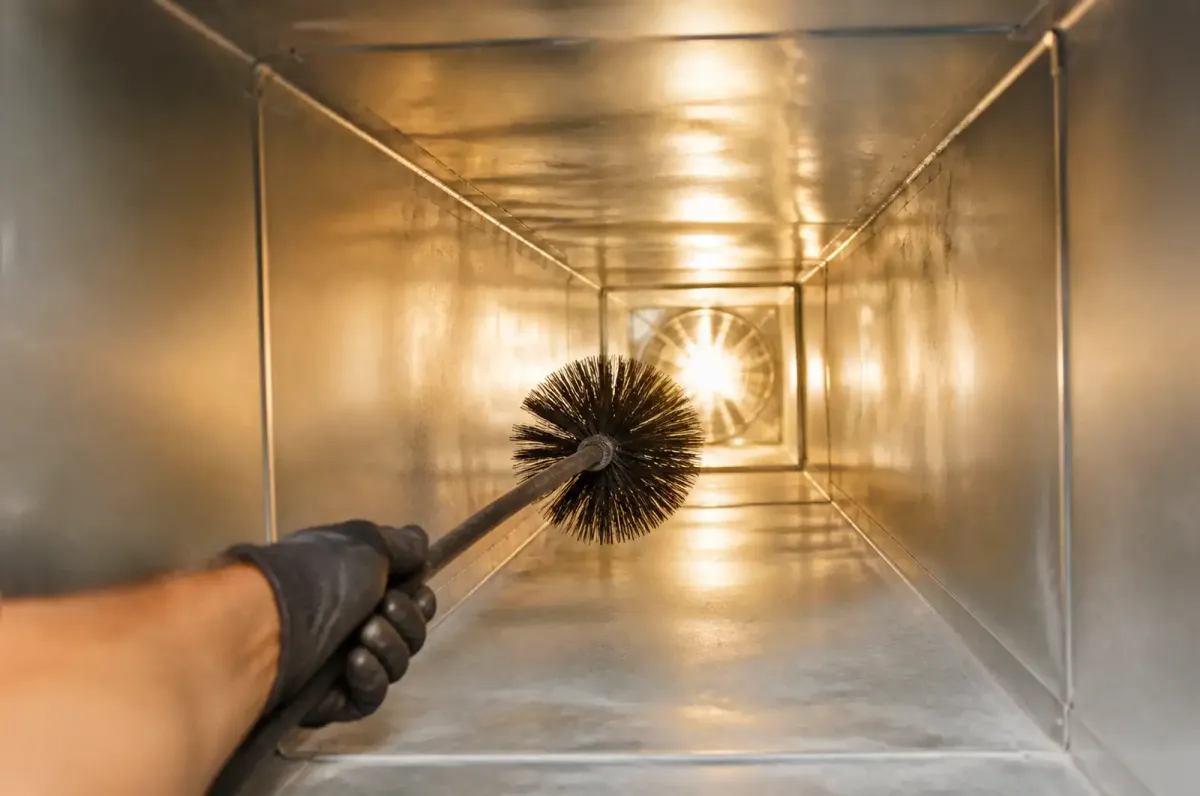
A proper air duct cleaning isn’t someone waving a vacuum hose near your vents. NADCA-certified technicians use specialized equipment: high-powered vacuums that create negative pressure inside the ductwork, rotary brushes that dislodge buildup from duct walls, and compressed air tools that push debris toward the vacuum.
The process typically takes two to four hours for a standard home. The technician accesses your ductwork through supply and return vents, and sometimes through the main trunk line near your HVAC unit. They clean the supply ducts, return ducts, air handler, and registers.
What they don’t do — and what legitimate companies won’t promise — is remove every last particle of dust. Duct cleaning reduces accumulation; it doesn’t sterilize your system. If someone guarantees “100% elimination” of allergens or contaminants, that’s a sales pitch, not a service description.
The Real Cost in 2026
National averages put whole-house duct cleaning between $300 and $600 for a typical single-family home. That range moves based on a few factors:
Home size. A 1,200-square-foot ranch with eight vents will cost less than a 3,000-square-foot two-story with 20+ vents. Most companies price per vent or per square foot, so more ductwork means a higher bill.
Geographic area. Costs run higher in major metros and lower in rural areas. Humid regions like the Gulf Coast and Southeast may see prices toward the upper end because duct contamination tends to be worse — mold and mildew buildup requires more thorough cleaning and sometimes antimicrobial treatment.
Condition of the ducts. Homes that have never had duct cleaning, have pets, or recently completed renovation work will have heavier buildup and may cost more to service. If there’s mold present, expect an upcharge for antimicrobial treatment — typically $100 to $300 on top of the base price.
Add-on services. Companies love to bundle. Common add-ons include:
- Dryer vent cleaning: $100 to $170 as a standalone service, often discounted to around $100 when bundled with duct cleaning. This is genuinely important — clogged dryer vents are a leading cause of house fires, and the Consumer Product Safety Commission recommends cleaning them annually.
- Sanitizing treatments: $50 to $150 for antimicrobial spray application. Useful if there’s confirmed mold; unnecessary as a routine upsell.
- Video inspection: $70 to $130. A camera goes into your ducts so you can see what’s actually in there. This is the single most valuable add-on because it gives you evidence instead of scare tactics.
- Air duct coating: $180 to $630. A protective lining applied to the inside of ductwork. Rarely needed for residential homes.
If a company quotes you $99 for the whole job, ask what that covers. In almost every case, it’s a per-vent price that applies to only the supply side, and the final bill after “discovering” problems will be three to five times higher.
Signs Your Ducts Actually Need Cleaning
Not every home needs annual duct cleaning. But some situations do call for it. Here are the real indicators — not the ones on a marketing flyer, but the ones that show up in your daily life.
Visible mold inside the ducts or on vent covers. If you pull off a vent cover and see dark patches, or if you notice a musty smell when the AC kicks on, that’s a legitimate concern. Mold in ductwork can circulate spores through your entire home. This is the one scenario where you should call a professional immediately rather than waiting for your next scheduled cleaning.
Excessive dust despite regular cleaning. If you’re dusting surfaces every few days and they’re covered again within a day or two, your ducts may be redistributing dust rather than your HVAC filter catching it. Check your filter first — a clogged filter is far more common and far cheaper to fix. If the filter is clean and the dust persists, duct cleaning is worth investigating.
Pest infestation evidence. Droppings, nesting material, or dead insects in or around your vents mean something has been living in your ductwork. Rodents and insects can damage duct insulation and contaminate your air supply. This requires professional cleaning and potentially sealing entry points.
Renovation or construction dust. If you’ve recently remodeled — especially work involving drywall, flooring, or demolition — fine particulate matter gets into your ductwork in large quantities. A single post-renovation duct cleaning makes sense even if you’re nowhere near your regular maintenance schedule.
Uneven heating or cooling. If some rooms in your house are consistently warmer or cooler than others, and you’ve already checked your vents are open and your filter is clean, blockages in the ductwork could be the culprit. Heavy debris accumulation can restrict airflow in certain branches of the system.
When You Don’t Need Duct Cleaning
Here’s where the industry’s marketing gets ahead of the reality. Several common sales pitches push duct cleaning on homeowners who don’t need it.
“You should have your ducts cleaned every year.” The NADCA recommendation is every three to five years for most homes. Annual cleaning is overkill for the vast majority of households and wastes money. Homes with pets, smokers, or family members with severe allergies might benefit from every two years, but even that’s a judgment call, not a rule.
“Your ducts are full of toxic black mold.” Stachybotrys chartarum (the mold people call “toxic black mold”) requires consistently wet conditions to grow. Air ducts are generally dry environments. If a technician pulls out a petri dish and shows you “mold” during a sales pitch, be skeptical. Legitimate mold identification requires lab analysis, not a visual inspection by someone trying to sell you a $500 sanitizing treatment.
“We’ll show you how dirty your ducts are.” Some companies send a camera into your ducts and show you buildup — which they then offer to clean for an additional fee. The problem is that some amount of dust in your ducts is completely normal. A thin layer of dust doesn’t mean your system is contaminated; it means your system is used. Ask the technician what “normal” looks like before accepting their assessment that your ducts are in crisis.
“Duct cleaning will reduce your energy bills.” The EPA has explicitly stated that there is no evidence that routine duct cleaning improves energy efficiency. A clogged system with severely restricted airflow might see marginal improvement, but for most homes, the savings don’t justify the cost.
How to Find a Reputable Company
The air duct cleaning industry has a reputation problem because it attracts fly-by-night operators. Here’s how to protect yourself.
Look for NADCA membership. The National Air Duct Cleaners Association sets standards for the industry. Members agree to follow specific protocols and are more likely to be legitimate operations. Check their directory at nadca.com.
Get a written estimate before work begins. A reputable company will assess your system, explain what they’ll clean, and provide a fixed price before starting. If someone shows up and starts talking about “problems” they found after the work has begun, that’s a red flag.
Ask what equipment they use. Professional duct cleaning requires truck-mounted vacuum equipment or high-powered portable units with HEPA filtration. If someone shows up with a shop vacuum and a household vacuum attachment, they’re not doing a thorough job.
Check for proper insurance. Duct cleaning involves accessing your HVAC system, which means potential damage to ductwork, insulation, or the unit itself. A legitimate company carries liability insurance and workers’ compensation.
Beware of cold calls and door-to-door sales. The $99 coupon, the postcard in the mail, the person who knocks on your door saying they’re “in the neighborhood” — these are classic lead generation tactics for high-pressure upselling operations. The initial $99 is a loss leader designed to get a technician in your home who can then “discover” $500 worth of “problems.”
What to Do Instead of Paying for Duct Cleaning
Before you spend $300 to $600 on professional duct cleaning, try these maintenance steps first. They address the same issues at a fraction of the cost.
Change your HVAC filter regularly. This is the single most effective thing you can do for your air quality and system efficiency. Use a MERV 8 to MERV 11 filter for most homes. Change it every 60 to 90 days, or monthly if you have pets. A clean filter catches dust before it enters your ductwork in the first place.
Keep your vents and registers clean. Remove vent covers periodically and vacuum them. Wipe down the visible portions of the duct openings. This handles the surface-level dust that most people mistake for a duct contamination problem.
Seal and insulate your ducts. Leaky ductwork wastes energy and can pull in dust from attics, crawl spaces, and wall cavities. Mastic sealant or metal tape (not standard duct tape) can seal most accessible joints. Duct insulation in unconditioned spaces prevents condensation, which reduces mold risk.
Maintain proper humidity. Indoor humidity above 50% creates conditions for mold growth in your ductwork. Use a dehumidifier in humid climates, and make sure your AC isn’t oversized — an oversized unit cools the air too quickly without removing enough moisture.
Schedule regular HVAC maintenance. An annual tune-up ($75 to $200) includes filter replacement, coil cleaning, and system inspection. This catches problems before they become expensive and keeps your system running efficiently.
The Bottom Line
Air duct cleaning is a legitimate service that genuinely helps in specific situations — post-renovation, confirmed mold, pest infestation, or homes that have gone a decade or more without attention. For the average home with normal usage, it’s a maintenance task that happens every few years, not annually.
The best approach is straightforward: change your filters, keep your vents clean, and only call in professionals when you see real signs of contamination. If you do need duct cleaning, get multiple quotes, verify NADCA membership, and never let someone start work without a written estimate.
Your ducts probably aren’t as dirty as the postcard says. But they’re not as clean as you’d like, either. The trick is knowing which reality you’re dealing with before you spend the money.

Discussion
Comments
Share a helpful tip, question, or takeaway from Air Duct Cleaning: When It's Worth the Money and When You're Getting Scammed.
0 Comments
Loading comments…