The first freeze is not a personality test. It is a deadline. If water is still sitting in a gutter, if the furnace has not been asked to run since April, if a hose is still screwed onto an outdoor spigot, the house will tell you about it at 11 p.m. on a Tuesday.
Carrier put out an eight-step fall list this week, syndicated as a paid Feature Impact piece through GlobeNewswire on 8 September. It is a manufacturer talking its book. It is also a decent order of operations. Quartz ran a softer Reader’s Digest version on 7 September: same gutters, same heat, same drafts, plus the cozy-month dressing. HomeZada published the jobs people skip on 4 September. Read them together and you get a weekend, not a lifestyle.
This is not a heating-bill strategy. We already covered how to cut the bill once the system is running. This is the cleaning and inspection work that has to happen while you can still stand outside in a sweatshirt.
Gutters first, because ice does not negotiate
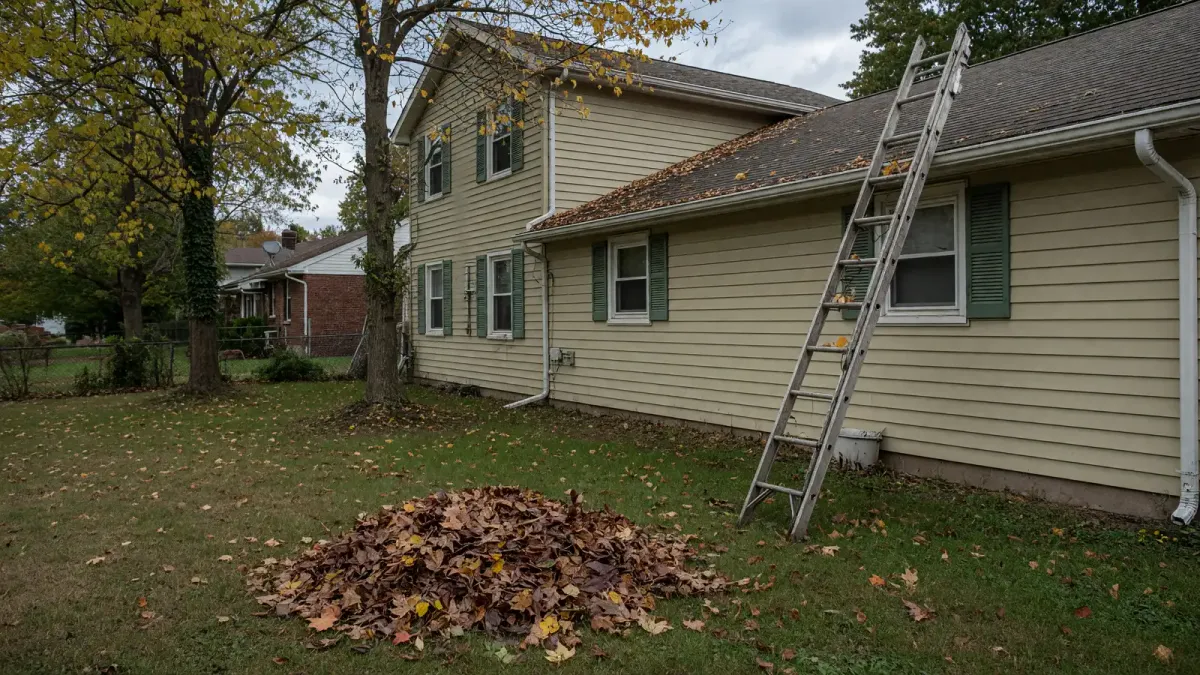
Carrier’s step one is the least glamorous and the most physical: clear gutters and downspouts so water leaves the roof and leaves the foundation. Wait until after the temperature drops and you are looking at ice dams and water where it does not belong.
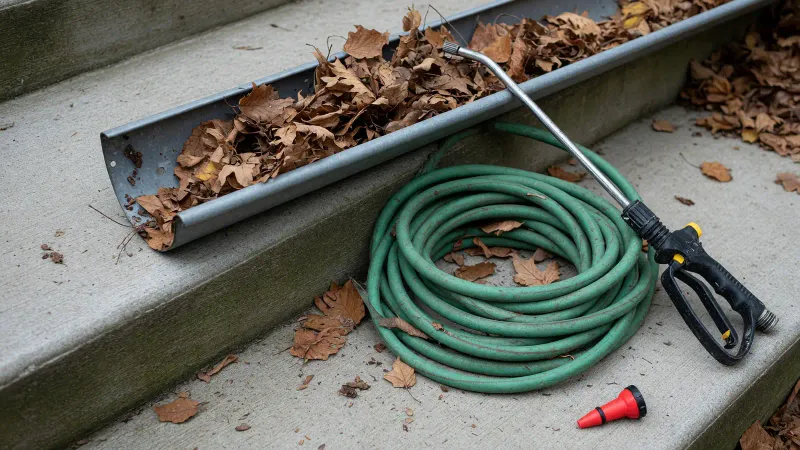
Do it after most of the leaves are down, not the first pretty weekend in September, unless your trees dump early. A second pass in late October is cheaper than a roofer in January. Flush the downspouts with a hose. If water backs up, the clog is in the pipe, not the trough. Stand at the outlet and confirm the splash block still points away from the wall.
If you hate heights, hire it. A clogged gutter is not a DIY loyalty test. What you should not hire is a $4,000 guard system because one autumn felt messy. Clean them. See if they stay clean. Then decide.
Quartz’s roundup makes the same point in milder language: clearing gutters is one of the jobs that is easier before the cold arrives. That is the whole season in one sentence.
The outdoor unit is not a leaf dump
Step two on the Carrier list is the condenser sitting in the side yard. Pull leaves, grass clippings, and anything else off and away from it. The machine needs clearance or it spends winter fighting its own mulch.
You do not need a special vacuum. A dry brush and a bag will do. Keep the area clear enough that you can walk around the unit. If the fins are packed with cottonwood fluff, a fin comb is a few dollars. Do not jam a screwdriver through the coils because a YouTube comment said it was fine.
Heat pumps that heat and cool live outside all year. Furnaces that dump heat through an outdoor compressor in cooling season still have that box sitting there collecting maple leaves in October. Treat it as part of fall cleaning, not as “the HVAC guy’s problem in April.”
While you are outside, look at the line set insulation. If the foam sleeve is split, replace the sleeve. That is a hardware-store job, not a service call.
Filters, then a real appointment
Carrier’s third step is the filter you can actually reach. A dirty filter restricts airflow, so the system works harder. They want you to check it before you turn the heat on, then keep checking through winter. Their own interval is every one to three months.
Write the install date on the cardboard frame with a marker. If you cannot remember the last change, it is overdue. Size is printed on the old filter. Do not buy a thicker MERV than the furnace can pull against unless the manual says so. A filter that “catches everything” and starves the blower is not a win.
Step five is the one people skip until the house is 58°F: annual furnace maintenance in the fall, before heating season. The PR copy says efficiency, equipment life, and catching small problems. Translate that: a tech looks at ignition, flame sensor, condensate, and the exhaust path while parts are still in stock and the hold time is not three weeks.
Call this week, not the first cold snap. If you have a heat pump, ask for a heat-mode check, not only a cooling flush leftover from July.
Step six is five minutes and people still skip it. Switch the thermostat to heat early, confirm the system answers, then switch it back if you are not ready. Replace the batteries. If the display is blank, that is not a furnace failure. That is a CR2032.
Quartz files thermostat and air filters in the same seasonal pile as gutters. They belong there.
Alarms, not vibes
Carrier’s fourth step is the clock-change ritual: test smoke alarms and carbon monoxide detectors, replace batteries. They flag CO as more important once heat is running. That is correct. Furnaces, water heaters, and fireplaces all produce exhaust. A dead CO alarm is a decoration.
Press the test button. If the unit is older than ten years, replace the unit, not just the battery. The date is on the back. Put one near sleeping rooms and one near the furnace. If you only have the one that came with the house in 2009, you do not have coverage.
HomeZada puts the same test on their forgotten list, next to emergency supplies. Fine. A flashlight with a charge and a working CO alarm beat a Pinterest bin of “winter readiness.”
Drafts you can feel with a hand
Step seven is weatherstripping and caulk. Drafts make the house feel colder and dump heat you already paid to make. Run a hand around door frames on a windy afternoon. If you feel air, the strip is dead. If you see daylight under the door, add a sweep.
Do not foam-fill a window that still needs to open for fire egress. Use a removable kit on the worst pane if you have to. Caulk the gap between trim and wall where it has pulled away. Leave the moving parts of the window alone unless you know the difference between paint seal and an operable sash.
Step eight on the Carrier list is insulation. The syndication cuts off mid-sentence in several newspapers, which tells you how much original reporting is in this packet. Still, the assignment is real: attic access, look at the joists. If you can see the full height of the wood, you are light on insulation. That is a Saturday with batts or a quote from a blown-in crew, not a reason to buy a new furnace.
HomeZada adds windows and doors as their own line. Same job, different heading.
The jobs the eight-step list forgot
The Carrier packet is HVAC-heavy because Carrier sells HVAC. HomeZada’s 4 September list is the one that matches how houses actually fail.
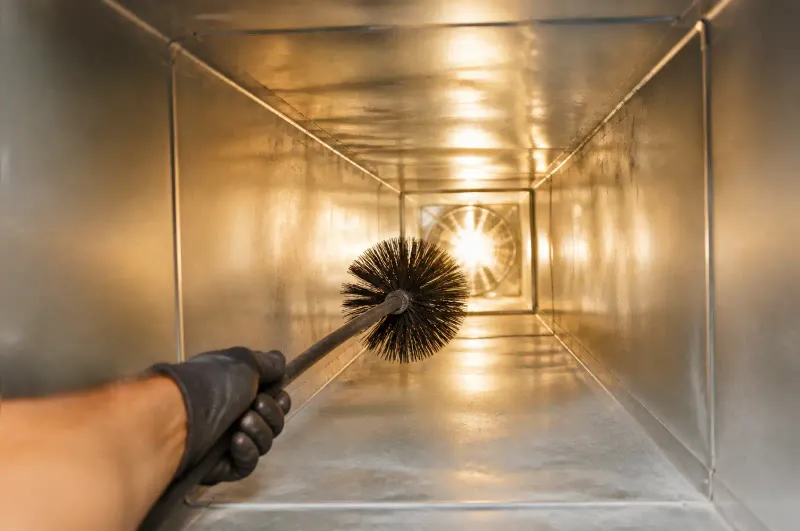
Clean the dryer vent. We already wrote the 15-minute version that is about fire, not efficiency. Fall is when the hose is still reachable and the lint from summer towels is sitting in the run. Pull the machine out. Disconnect the hose. Vacuum. If the exterior flap is packed, knock it out from outside.
Fireplace and chimney. If you burn wood, get the flue looked at before the first fire, not after the living room smells like a campground. If you never burn, still close the damper so you are not heating the sky.
Flush the water heater. Sediment sits all summer. A drain onto a floor that can take water is a maintenance job. If the tank is 12 years old and making noise, that is a replacement conversation, not a vinegar hack.
Winterize outdoor faucets. Quartz and HomeZada both put this near the top for a reason. Disconnect hoses. Drain them. Shut the interior valve if you have one, then open the spigot so the remaining water can leave. A split hose bib in January is a plumber and a wet rim joist.
Trees. Dead branches over the roof are a wind problem. You do not need to become an arborist. You need to not leave a widowmaker above the gutter you just cleaned.
Drains are their own file on this site. If showers have been slow since August, do the room-by-room version now, while you still want to be in the bathroom with a window open.
A weekend order that does not require a new personality
Do not “prepare the home for the cozy months.” Do six jobs in a sequence that respects weather.
Saturday morning: gutters and downspouts, then the outdoor HVAC box, then hoses off the spigots. Saturday afternoon: dryer vent and a walk around trees. Sunday: filters, thermostat test, alarm test, weatherstripping on the worst door. Call the furnace tech before you sit down. Chimney and water heater if you have the energy; those two can be booked rather than improvised.
If you only have two hours, do gutters, hoses, and the filter. Ice, frozen pipes, and a starved furnace are the expensive trio. Decorative pumpkins can wait.
Ice dams are the reason gutters cannot wait for a pretty Saturday in November. Meltwater on a warm roof hits a frozen eaves and sits. Then it backs up under shingles. Carrier’s copy names that risk in one line. The repair is not a line. If you can only do one ladder job this month, do the troughs and the downspout outlets. The decorative wreath can hang on a nail that does not leak.
Chimney and dryer vent belong in the same mental bucket as gutters: paths that carry exhaust or lint until they do not. HomeZada lists both. If you burn, book the sweep. If you only have a gas insert, still look at the termination cap for nests. Birds like warm holes in September.
Water heater flush is the job people postpone until the tank sounds like a coffee percolator. Drain it into a floor that can get wet. If the water comes out black, you waited too long and you should still finish the flush. If the tank is old enough to vote, get a quote rather than a new anode you will never install.
Do not power-wash the outdoor HVAC coils at full blast. You will fold the fins. Do not wrap the unit in plastic “for winter” unless the manual says to. Trapped moisture is worse than leaves. Do not store the grill next to the condenser so that the first windstorm makes them one object.
Carrier’s list is an ad. Use it as a checklist anyway. The house does not care who paid for the press release.
Discussion
Comments
Share a helpful tip, question, or takeaway from Do These Fall Jobs Before the First Freeze.
0 Comments
Loading comments…