
The backpack ends up on the kitchen floor. The permission slip is somewhere under a pile of mail. The lunch box is still in the car from yesterday. Shoes vanish five minutes before the bus arrives.
Sound familiar? Back-to-school chaos does not come from a lack of effort. It comes from a home that was not designed for the rhythm of a school year. Summer runs on a different schedule, and the systems that kept things calm in July break down fast once September hits.
The fix is not a massive overhaul. It is a focused reset: eight specific zones in your house that need attention before the first morning alarm goes off. Each one takes under an hour to set up. Together, they change how the entire household moves through a school day.
The Entryway Drop Zone
The entryway is where school-year chaos starts or stops. If backpacks, shoes, jackets, and lunch boxes have no designated landing spot, they end up everywhere — scattered across the floor, draped over chairs, shoved into corners.
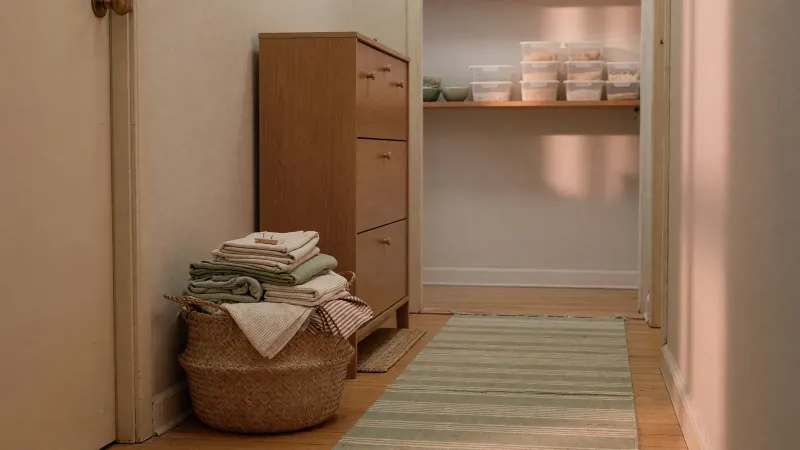
A functional drop zone does not need a mudroom or a Pinterest-worthy setup. You need a hook for each child’s backpack, a basket or bin for shoes, and a small shelf or tray for papers and lunch boxes. That is it. The key is placing everything within arm’s reach of the door your family uses most.
The drop zone works best when it is the first thing kids see when they walk in and the last thing they pass when they leave, according to professional organizers. Hooks mounted at each child’s height (not all at adult level) make it easy for even young kids to hang their own bags. A simple shoe rack or a labeled bin per child keeps the floor clear.
One trick professional organizers swear by: put a small hook or clip near the drop zone specifically for tomorrow’s outfit. On Sunday evening, have each child pick out a complete outfit — including socks, shoes, and accessories — and hang it there. This eliminates the morning wardrobe meltdown that eats up fifteen minutes before anyone even touches a cereal bowl.
The Family Command Center
A family command center is a central spot where the household’s schedule, papers, and to-do items live in one visible place. Without one, parents end up fielding the same questions five times a day: “What time is practice?” “When is the field trip?” “Did you sign that form?”
The simplest version is a wall-mounted calendar (a large dry-erase board works well), a mail sorter with slots for each family member, and a hook for keys. Place it in a high-traffic area — the kitchen, the hallway near the front door, or wherever the family naturally gathers.
For families with multiple kids, add a color-coded system: each child gets a color, and their papers, sports schedules, and permission slips go in the matching slot. The weekly review takes two minutes every Sunday night and prevents the “I forgot to tell you” emergencies that derail mornings.
A command center also doubles as a homework accountability tool. Post a simple checklist: backpack ready, folder checked, lunch packed, jacket by the door. Kids who can see what they need to do are far more likely to do it without being reminded.
The Homework Station
The kitchen table looks like a convenient homework spot until you realize it is also where you chop vegetables, sort mail, and argue about who left crumbs everywhere. A dedicated homework station, even a small one, creates a boundary between work and everything else.
The ideal homework station has a flat surface, good lighting, and a supply caddy with pencils, erasers, scissors, and a ruler. It does not need to be a full desk. A folding table in a quiet corner, a countertop section that stays clear after dinner, or even a sturdy TV tray in a bedroom works.
The supply caddy is where things click. Instead of kids wandering the house looking for a sharpened pencil or a protractor, everything they need sits in one portable container. Stock it at the start of the year and refill it monthly. A small basket under the table holds extra paper, folders, and any subject-specific materials.
Keep the homework station away from screens. A desk facing a wall or a window beats a desk facing the TV every time. Research on focus and attention consistently shows that environmental distractions are the number one enemy of concentration, and a homework station positioned to minimize visual clutter helps kids settle into work faster.
The Morning Launch Pad
School mornings are a logistics problem. You are moving multiple people from asleep to out-the-door in roughly sixty minutes, and every second wasted hunting for something is a second closer to everyone being late.
The morning launch pad is a pre-staged area where everything needed for the next day is assembled the night before. Backpacks go here. Folders get checked here. Lunch boxes land here. Shoes line up here.
For families with younger kids, add a visual checklist: a laminated card with pictures of each step, like backpack, folder, lunch box, jacket, shoes. Kids who cannot read yet can still follow the sequence. The checklist lives on the launch pad and becomes part of the bedtime routine.
The launch pad does not need its own room. A section of the hallway, the edge of the kitchen counter, or the top of a small bookshelf works. The rule is simple: nothing leaves the house in the morning that was not placed on the launch pad the night before.
The Pantry School Lunch Station
Packing school lunches from scratch every morning burns parents out faster than just about anything else. The fix is a pantry lunch station — a dedicated section of your pantry or kitchen where lunch-packing supplies live in one place.
Stock it with the basics: sandwich bread or wraps, a bin of shelf-stable snacks (granola bars, crackers, trail mix, dried fruit), reusable containers, and a spot for napkins and utensils. Add a small whiteboard or notepad where kids can circle or write their lunch choices the night before. This eliminates the morning debate about what to pack and reduces the number of items that end up in the landfill because no one ate them.
A pantry organization system makes this even smoother. Group school-lunch items at kid-accessible height so older children can pack their own lunches. Label bins with pictures for younger kids. The goal is to make lunch prep a five-minute task, not a twenty-minute hunt through cabinets.
The cold items — yogurt, cheese sticks, cut fruit — go in a designated shelf in the fridge, ideally at eye level. When everything has a spot, packing lunch becomes mechanical rather than creative, and that is exactly what you want at 7:15 in the morning.
The After-School Landing Zone
When kids walk in after school, they are carrying stuff: backpacks, jackets, sports equipment, library books, folders full of papers. If there is no system for what happens next, that stuff sits where it lands until someone trips over it.
The after-school landing zone is separate from the morning drop zone because the tasks are different. In the morning, you need grab-and-go efficiency. After school, you need a place to unload, sort, and reset.
A bench with storage underneath, a set of cubbies, or even a row of bins labeled with each child’s name works. The routine is: backpack comes off, jacket goes on the hook, lunch box goes to the kitchen, folder goes to the command center for parent review, and any sports gear goes in its designated bin.
The key is making this a habit from day one. The first week of school is when routines either stick or do not. Walk through the after-school sequence with your kids on the first day. Show them where each item goes. Do it together for the first few days until the routine becomes automatic.
The Drawer of Forgotten School Supplies
Every household has one: a junk drawer, a catch-all bin, or a closet shelf stuffed with leftover school supplies from previous years. Half-used notebooks, dried-out markers, broken scissors, and enough pencils to last through college.
Before the school year starts, pull everything out. Sort it into three piles: usable (sharpened pencils, working scissors, blank notebooks), donate (extra supplies in good condition), and trash (dried markers, broken items, random odds and ends).
What remains goes into a clearly labeled supply bin — one for writing tools, one for paper products, one for art supplies and miscellaneous items. Place it somewhere accessible but not in the way: a closet shelf, a garage cabinet, or the bottom of the linen closet.
This bin becomes your backup during the school year. When a pencil breaks mid-homework or a notebook fills up unexpectedly, you do not need to make a store run. The supply is already there.
A similar approach works for the digital clutter that accumulates over summer: old school apps, outdated calendar entries, and photo libraries that need organizing before they become a problem.
The Car Organization Kit
Your car is an extension of your home during the school year. It carries kids, gear, lunch boxes, water bottles, and whatever else ends up in the backseat. Without a system, the car becomes a mobile junk drawer.
A simple car organization kit includes: a seat-back organizer for each child (holding water bottles, snacks, and a small activity book for wait times), a trunk bin for sports equipment and library books, and a small trash bag that gets emptied weekly.
The most overlooked item: a backup kit in the glove compartment. Stash an extra phone charger, a pack of tissues, a granola bar, a pen, and a blank permission slip form. The morning when your kid forgets their lunch or a form is due that day, this kit saves the trip back home.
Clean the car out completely on Sunday nights. Every water bottle, every crumpled paper, every forgotten jacket. A clean car on Monday morning sets a different tone than a car that still has Friday’s McDonald’s bag in the cupholder.
Putting It All Together
Eight zones. Eight focused areas that each take less than an hour to set up. The total investment is a weekend afternoon, and the payoff lasts the entire school year.
Start with the zones that cause the most daily friction — for most families, that is the entryway drop zone and the morning launch pad. Once those are working, add the homework station and the pantry lunch station. The rest follows naturally.
None of this needs to be perfect. The point is cutting out the small, repetitive frustrations that make school mornings feel like a battle. When every item has a home and every routine has a visual cue, the whole family moves faster, argues less, and starts the day calmer.
Back-to-school preparation is more than buying supplies and new shoes. It is about resetting the house to match the rhythm of a new season. Get the systems in place before the first day, and the rest of the year gets easier.
Discussion
Comments
Share a helpful tip, question, or takeaway from Back-to-School Home Reset: 8 Zones to Organize Before the First Bell Rings.
0 Comments
Loading comments…