How to Clean and Maintain Every Drain in Your House
Most people do not think about their drains until something goes wrong. By then, you are standing in an inch of murky water, staring at a plunger and wondering where it all went wrong. A few minutes of monthly maintenance per drain can prevent nearly every common clog, bad smell, and emergency plumber visit.
Why Drains Clog in the First Place
Drain clogs do not happen overnight. They build up gradually as debris accumulates on pipe walls.
In bathrooms, the culprit is almost always hair. Human hair does not dissolve in water, and it tangles with soap scum to form dense mats that cling to pipe surfaces. Kitchen drains suffer from a different problem: grease. Cooking oils and fats flow down as liquids when hot, but they solidify inside cooler pipes and trap food particles against the pipe walls.
Laundry drains collect lint, fabric fibers, and detergent residue. Floor drains, often forgotten, accumulate dust, insects, and sediment over months of inactivity.
Each of these problems has a straightforward prevention strategy.
Bathroom Sink Drains
The bathroom sink is usually the first drain to show warning signs: water pools around the drain instead of flowing freely, or you notice a faint odor after running the tap.
Monthly maintenance:
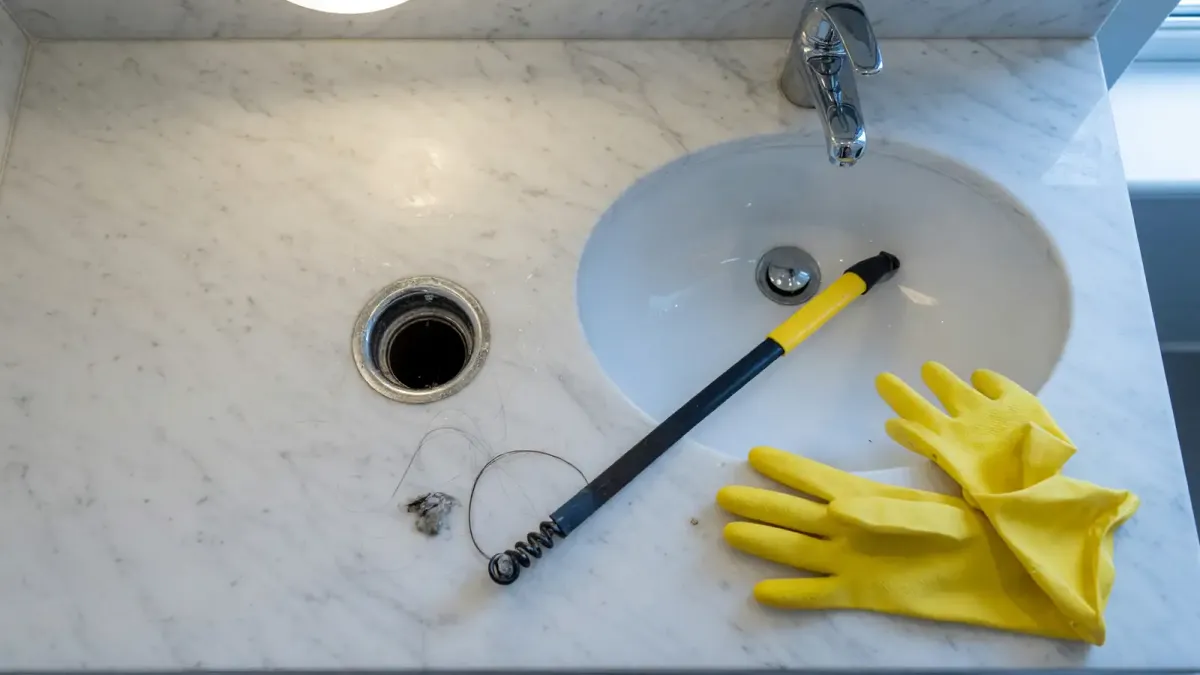
- Remove the drain stopper and pull out any visible hair with needle-nose pliers or a bent wire hanger.
- Pour half a cup of baking soda down the drain, followed by half a cup of white vinegar.
- Cover the drain with a plug or wet cloth and wait 15 minutes.
- Flush with a full kettle of boiling water.
This combination dissolves soap scum buildup without damaging pipes. Chemical drain cleaners like Drano or Liquid-Plumbr work faster, but they contain sodium hydroxide or sulfuric acid that can corrode older pipes and damage rubber seals. A 2023 study by the Plumbing Manufacturers International found that repeated use of chemical cleaners increased the risk of pipe failure in homes with galvanized steel plumbing by up to 40%.
If you already have a slow drain: Remove the P-trap (the U-shaped pipe under the sink), empty it into a bucket, and clean it out. Most bathroom sink clogs live right there. Reassemble the trap and run water to check for leaks.
Shower and Bathtub Drains
Shower drains clog faster than any other drain in the house because of the sheer volume of hair they collect. A single shower can shed 50 to 100 strands of hair, and that adds up quickly.
The best prevention tool: A silicone drain cover that sits over the drain opening. Unlike flat metal screens, silicone covers conform to the drain surface and catch hair without blocking water flow. Clean the cover after every shower or at least twice a week.
Monthly deep clean:
- Remove the drain cover and clean off all trapped hair and soap residue.
- Use a drain snake (a flexible plastic tool with barbs, available for under $10) to reach hair deeper in the pipe. Insert it until you feel resistance, then pull it out slowly.
- Pour a mixture of 1 cup baking soda and 1 cup vinegar down the drain.
- Wait 30 minutes, then flush with very hot water.
For standing water that will not drain: Fill the tub with 3 to 4 inches of hot water, place a plunger over the drain, and push and pull rapidly 15 to 20 times. The water pressure from the standing water gives the plunger more force than it would have on an empty drain.
Kitchen Sink Drains
Kitchen drains face a unique challenge: grease. Even if you never pour grease directly down the drain, cooking residue from pots, pans, and dishes carries enough fat to coat your pipes over time. Add food particles, and you have the recipe for a stubborn clog.
Weekly maintenance:
- After doing dishes, run hot tap water for 30 seconds to flush grease through the trap before it solidifies.
- Once a week, pour a kettle of boiling water directly down the drain. This melts and pushes through any grease buildup before it hardens.
Monthly deep clean:
- Sprinkle half a cup of baking soda down the drain.
- Pour half a cup of salt on top of the baking soda.
- Wait one hour (or overnight for best results).
- Flush with boiling water.
The salt acts as an abrasive that scrubs the pipe walls while the baking soda dissolves grease. This combination is more effective than either ingredient alone.
Never put these down a kitchen drain: cooking grease, oil, coffee grounds, eggshells, pasta, rice, flour, or fibrous vegetables like celery and artichokes. Coffee grounds are especially deceptive because they wash down easily but settle in pipes and create dense blockages.
If your garbage disposal is involved, run cold water (not hot) while using it, and always for 15 seconds after turning it off. Cold water keeps grease solid so the disposal can chop it up and push it through. Hot water melts grease, which then re-solidifies further down the pipe.
Laundry Room Drains
Washing machine drains collect lint, fabric fibers, and detergent residue that form a paste-like buildup inside the standpipe and hose. Front-loading machines are especially prone to drain problems because they use less water and have smaller drain hoses.
Monthly maintenance:
- Pull the washing machine away from the wall and disconnect the drain hose from the standpipe.
- Flush the hose with hot water to remove lint and residue.
- Pour a cup of white vinegar into the standpipe and let it sit for 30 minutes.
- Flush the standpipe with hot water and reconnect the hose.
Tip: Clean the washing machine’s lint trap (usually accessible behind a panel on the front of the machine) every month. A clogged lint trap forces the drain pump to work harder and can cause the machine to drain slowly or not at all.
If you use liquid detergent, try switching to a high-efficiency (HE) formula. Regular detergent creates more suds, which leave more residue in the drain system.
Floor Drains
Floor drains are common in basements, laundry rooms, garages, and utility closets. They exist to prevent flooding, but many homeowners forget they exist until water is pooling on the floor.
The biggest problem with floor drains is that the water in the P-trap evaporates over time. When the trap dries out, sewer gases can enter your home, creating a rotten egg smell. This happens especially in drains that are rarely used, like basement floor drains.
Monthly maintenance:
- Pour a gallon of water down the drain to refill the P-trap.
- Add a tablespoon of mineral oil, which floats on top of the water and slows evaporation.
- Check that the drain cover is intact and sitting flat.
If your floor drain smells: The trap is almost certainly dry. Pour water down the drain and follow with mineral oil. If the smell persists after refilling the trap, there may be a crack in the pipe or the vent stack may be blocked.
Toilet Drains
Toilets have the widest drains in your home, which means they can handle more material before clogging. But when they do clog, the problem is usually severe.
Prevention:
- Only flush toilet paper and human waste. Never flush wipes (even “flushable” ones), cotton swabs, dental floss, feminine products, or paper towels. Flushable wipes are a leading cause of sewer line blockages nationwide.
- Use less toilet paper per flush. If you consistently need large amounts, consider a bidet attachment, which reduces toilet paper use by 80% or more.
For a simple clog: A flange plunger (the one with a rubber flap that extends from the cup) creates a better seal than a flat cup plunger. Fill the bowl with enough water to cover the plunger cup, create a tight seal, and push and pull 15 to 20 times. The first few plunges break up the clog; the following ones push it through.
For persistent clogs: A toilet auger (also called a closet auger) is a specialized tool with a curved neck that fits into the toilet drain without scratching the porcelain. Feed it in until you feel the clog, then crank the handle to break it up.
Main Sewer Line
The main sewer line carries all your household drains to the municipal sewer or septic tank. When it clogs, multiple drains back up simultaneously, and the situation goes from annoying to emergency fast.
Signs of a main sewer line problem:
- Multiple drains clog at once
- Gurgling sounds from toilets when using other fixtures
- Water backing up into showers when you run the washing machine
- Wet, mushy areas in the yard near the sewer line
- Foul odors from multiple drains
Prevention: Never plant trees or large shrubs near the sewer line. Tree roots are the number one cause of main sewer line blockages, and they can penetrate joints in older clay or concrete pipes. If you have mature trees near the sewer line, have it inspected every 2 to 3 years with a camera scope.
Tools Worth Having
You do not need a full plumber’s toolkit, but a few basics make drain maintenance much easier:
- Silicone drain covers ($5 to $15): Prevent hair clogs in showers and tubs.
- Plastic drain snake ($8 to $12): Reaches hair and debris deep in pipes without scratching.
- Flange plunger ($10 to $20): Works on both toilets and flat drains.
- Bucket and old towels ($0): Essential for P-trap cleaning and any mess.
- Baking soda and white vinegar ($5 total): The most effective non-toxic drain cleaner combination.
When to Call a Plumber
DIY drain maintenance handles most issues, but some situations need professional help:
- Chemical cleaners did not work and the drain is still clogged
- Multiple drains are backing up at the same time
- You smell sewer gas that does not go away after refilling traps
- Water is backing up into fixtures you are not currently using
- The drain makes gurgling noises that are getting worse over time
A professional drain cleaning typically costs between $100 and $350, depending on the severity and location of the clog. Camera inspections of the main line run $100 to $250 and can identify problems before they become emergencies.
A Simple Monthly Routine
Keeping all your drains healthy does not require a weekend project. Here is a five-minute monthly routine:
- Week 1: Bathroom sink and shower drains (baking soda + vinegar + hot water flush)
- Week 2: Kitchen sink (salt + baking soda scrub, then boiling water)
- Week 3: Laundry drain (vinegar flush) and floor drains (water + mineral oil refill)
- Week 4: Check all drain covers and clean off any visible buildup
Set a recurring calendar reminder for the first of each month. Five minutes of maintenance saves hours of frustration and hundreds of dollars in plumber fees over the course of a year.

Discussion
Comments
Share a helpful tip, question, or takeaway from How to Clean and Maintain Every Drain in Your House.
0 Comments
Loading comments…