You hired a professional organizer. They walk into your home, take one look around, and immediately know what’s wrong. It isn’t that you lack storage space — it’s that you’re storing things the wrong way.
Professional organizers see hundreds of homes every year. They’ve figured out which products actually work and which ones end up in landfills. Below are 12 items they consistently recommend across every job, and none of them costs more than $25.
Why Cheap Products Work Better Than Expensive Ones
When one writer paid $1,000 for a professional organizer to overhaul her home, the biggest lesson wasn’t about fancy systems. The organizer pointed out that the entryway bench nobody sat on was aspirational, not practical (Business Insider). The best organizing solutions match your real behavior — not the version of yourself you want to become.
That’s why these products are all inexpensive. They lower the barrier to getting organized. You don’t need a $200 modular system to fix a junk drawer.
1. Acrylic Drawer Dividers
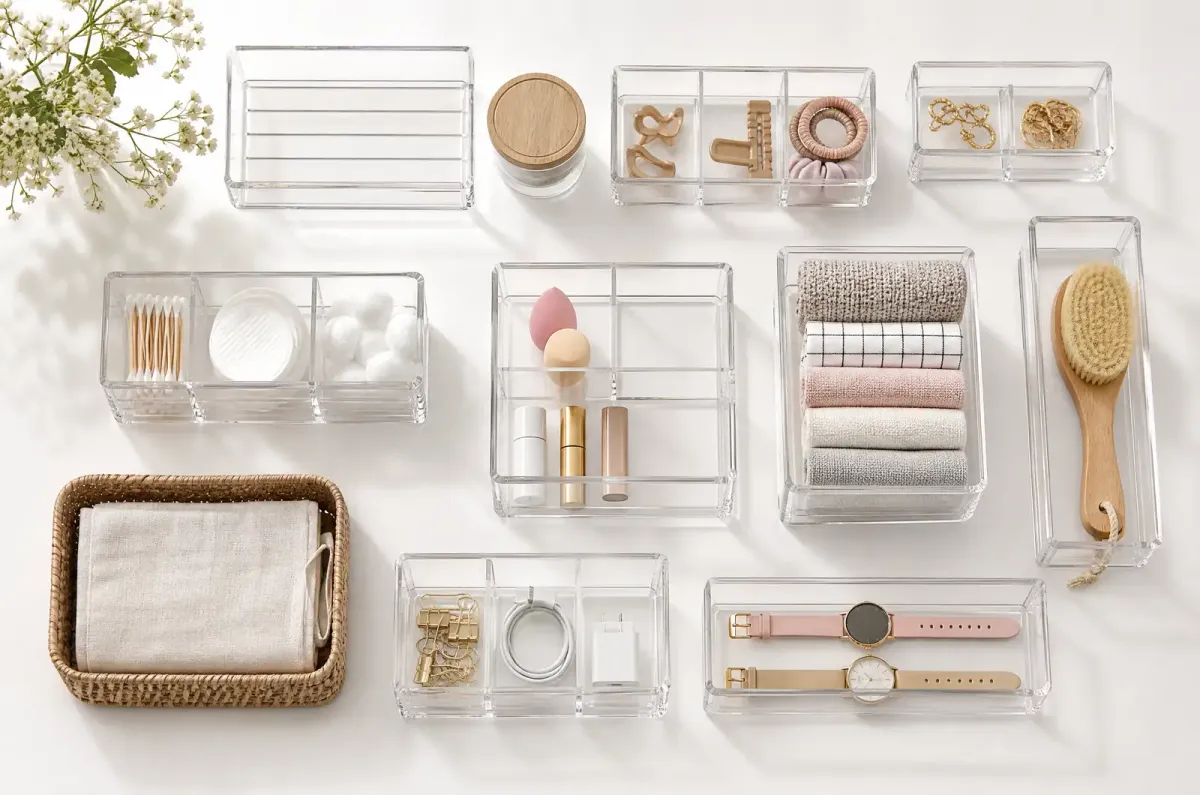
Clear acrylic organizers are the number one item pros carry into every client’s kitchen. They give you instant visual access to small items — cords, chip clips, rubber bands, twist ties, spare keys — without opening three different containers to find what you need.
The transparency matters more than you’d think. When you can see everything at once, you stop buying duplicates of things you already own.
2. Tension Rods (The $8 Fix)
Tension rods don’t just hold curtains. Pros use them inside cabinets to create vertical dividers for baking sheets, cutting boards, and tray lids. Two rods, installed parallel to each other, turn a messy pile into an upright filing system.
You can also mount one under the sink to hang spray bottles by their triggers.
3. Over-the-Door Shoe Organizer
This is not just for shoes. Professional organizers hang these on pantry doors to hold cleaning supplies, snacks, craft materials, or bathroom essentials. Each pocket becomes its own mini-category, which keeps similar items grouped together instead of scattered across multiple shelves.
Look for the clear-pocket version so you don’t have to guess what’s inside each slot.
4. Label Maker (or Masking Tape and a Sharpie)
The tool doesn’t matter as much as the habit. A labeled bin is a bin that gets used correctly. Without labels, other household members put things back wherever they feel like it, and your system collapses within a week.
Professionals often start with masking tape because it’s cheap and temporary — once you figure out what works, you can upgrade to a real label maker.
5. Under-Shelf Baskets
These wire baskets slip onto existing shelves and instantly create a second level of storage. They work in pantries for lightweight items like snack bags, in bathrooms for extra towels, or in closets for folded accessories.
The trick is using them only for things you don’t need to access every day. High-frequency items should stay on the main shelf at eye level.
6. Drawer-Length Utensil Trays
Most kitchens come with a utensil tray that’s too small for the drawer it sits in. The wasted space on either side becomes a graveyard for random items.
Pros measure the drawer first, then buy a tray that fills the full width. A single piece that spans the entire drawer means no sliding, no gaps, and no room for clutter to creep back in.
7. Stackable Clear Bins for Pantry
Square bins outperform round containers every time. Rectangular shapes pack together without leaving dead corners, and clear sides let you see inventory at a glance.
The standard professional approach: group by category (baking supplies, snacks, breakfast items), put each group in its own bin, and place the bins on shelves with the heaviest ones at the bottom. This is the same method used in the KonMari approach to closet organization — assign a home for each category, then stick to it.
8. Command Hooks
Peel-and-stick hooks are the organizing product that shows up in almost every professional’s toolkit. They go on walls, inside cabinet doors, on the back of pantry doors, and inside closet doors. You can hang measuring cups, oven mitts, cleaning brushes, jewelry, bags, and belts — all without drilling a single hole.
For renters, this is the difference between an organized home and a security deposit deduction.
9. Magazine Holders
Magazine files are one of the most versatile organizing tools available. They store cutting boards vertically next to the stove. They hold pot lids upright inside a lower cabinet. They corral cleaning supplies on a shelf so bottles don’t topple over.
The upright orientation is the key. Stacking things horizontally means you have to dig through the whole pile to reach the item at the bottom. Vertical storage eliminates that problem entirely.
10. Lazy Susan Turntables
A rotating tray turns the back corner of any cabinet into accessible space. Pros use them under kitchen sinks for cleaning products, in pantries for condiments and oils, and in bathrooms for skincare products.
The rule of thumb: if an item lives in a deep cabinet or a corner shelf, it belongs on a turntable. Otherwise you’re playing a daily game of “what fell behind everything else.”
11. Cord Management Boxes
Every household accumulates cables. Phone chargers, laptop bricks, USB cables, HDMI cords — they pile up in drawers and tangle with each other.
A cord management box with slots or dividers keeps each cable separate and visible. Some people use a shoebox with holes cut in the lid, which works just as well as products marketed specifically for cables. The goal is the same: one dedicated spot, no tangling.
If you’re dealing with a larger collection of tech accessories, the same principles used in smart home device optimization apply here — group by function and label each section.
12. Vacuum Storage Bags for Seasonal Items
For clothing, bedding, and other bulky items that you only use part of the year, vacuum bags compress volume by up to 75%. This frees up closet and shelf space for the items you actually use right now.
The important caveat: only store clean, completely dry items in these bags. Trapped moisture turns sealed bags into mold incubators, which defeats the entire point of organizing in the first place.
How to Use These Products Without Wasting Money
Here’s the mistake most people make: they buy all 12 products at once, then realize they don’t actually need most of them.
Professional organizers follow a simple process:
- Empty the space completely. Take everything out of the drawer, cabinet, or closet.
- Sort into keep, donate, and toss piles. If you wouldn’t buy it today, it doesn’t get a storage product.
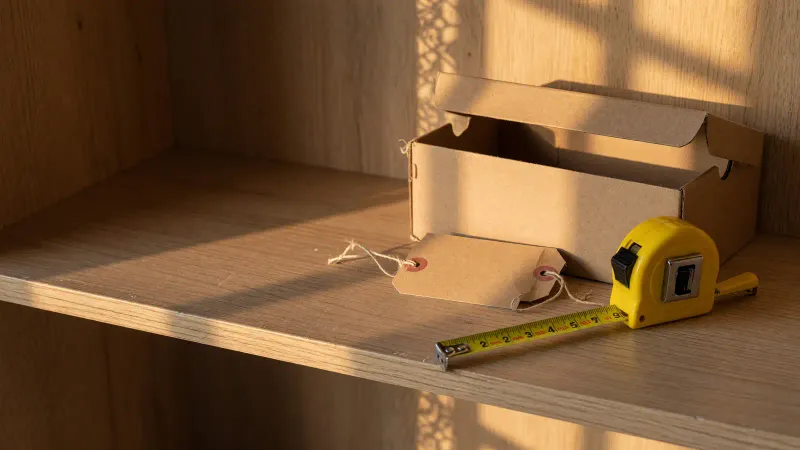
- Measure the space. Know your exact dimensions before buying anything.
- Buy only what you need. Start with one or two products per problem area.
- Label everything. A labeled system is a system that lasts.
This is the same declutter-first approach recommended when you declutter your refrigerator — remove expired items, wipe the shelves, then organize what’s left. The sequence matters. Organizing clutter just makes a tidier mess.
What Professional Organizers Won’t Tell You
Not every product works for every home. The tension rod trick is useless if your cabinet walls are too thin. Clear acrylic organizers look great on Instagram but show every speck of dust in real life. Vacuum bags are brilliant until you need to retrieve something from the middle of the stack.
The point isn’t to buy these products. The point is to solve a specific problem you actually have. If your junk drawer is the only issue, a $6 divider tray is enough. If your entire pantry is chaos, start with stackable bins and a label maker.
Professional organizers charge $50 to $150 per hour. These 12 products cost less than one hour of their time. Try them first — you might find that the hardest part of organizing isn’t the storage. It’s deciding what to keep.
Discussion
Comments
Share a helpful tip, question, or takeaway from 12 Things Professional Organizers Always Recommend (That Cost Under $25).
0 Comments
Loading comments…