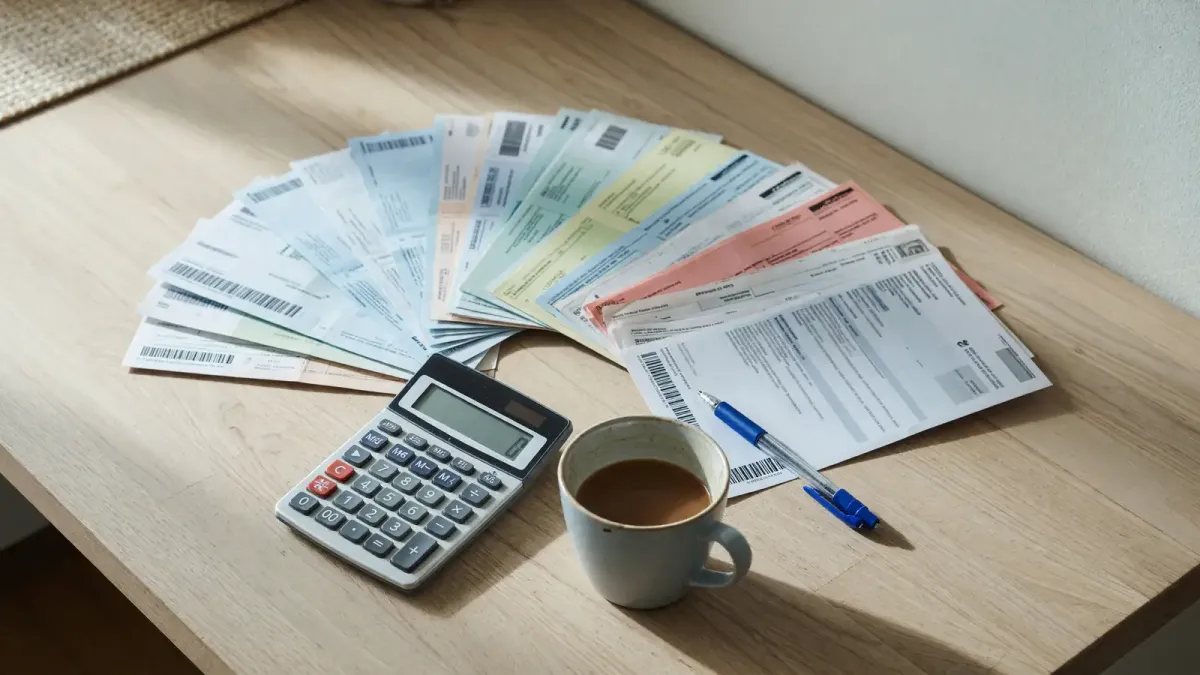
You probably know you spend too much on something. The hard part isn’t figuring out what — it’s the slow realization that you’ve been overpaying for months, maybe years, on bills you never bothered to look at twice.
The average American household drops roughly $6,000 per year on recurring bills, according to NerdWallet’s 2026 analysis. That figure covers the obvious stuff like rent, car payments, and groceries. What it doesn’t fully capture is the smaller bleed — the $15 monthly fee you forgot to cancel, the internet plan you upgraded two years ago and never downgraded, or the insurance policy you auto-renewed without shopping around.
These twelve recurring bills are the most common offenders. Every one of them has a concrete fix that takes less than an hour.
1. Internet service
The average broadband bill in the U.S. hit $85 per month in 2026, up from $70 three years ago. Most people pay whatever their provider charges without question, largely because negotiating feels pointless.
Here’s the thing: internet providers expect you to call. Their retention departments exist specifically to keep you from switching, and they have authority to offer discounts that frontline agents cannot. The script is simple. Call the number on your bill, say you’re considering switching to a competitor (name whichever local alternative exists), and ask what they can do to keep your business.
According to NerdWallet, households that negotiate their internet bill save an average of $120 to $300 per year. If you’ve been with the same provider for more than 12 months, you’re almost certainly eligible for a retention offer. If they won’t budge, switch to an MVNO-style provider like T-Mobile Home Internet or Verizon 5G Home, which typically run $25 to $50 per month for comparable speeds.
One caveat: check whether your current plan has a promotional rate that expires soon. Sometimes the “discount” they offer is just extending your old rate, and you’re better off actually switching.
2. Cell phone plan
The average wireless plan costs $147 per month for a family of four, according to J.D. Power’s 2026 wireless satisfaction study. Meanwhile, MVNO carriers — Mint Mobile, Visible, Cricket, US Mobile — operate on the same T-Mobile, Verizon, and AT&T networks for $15 to $35 per line.
The catch with MVNOs is that they can throttle speeds during peak congestion. In practice, most people never notice. If you’re not streaming 4K video on your commute or running speed tests for fun, the difference is negligible.
The switch takes about 30 minutes. You bring your own phone (any unlocked phone from the last five years works), transfer your number, and pick a plan. Mint Mobile’s annual plan at $15 per month for 5GB of data saves a family of four roughly $5,000 per year compared to a typical T-Mobile postpaid plan.
If you need unlimited data, Visible’s base plan runs $25 per month with no throttling and hotspot included. That’s $1,440 per year for a single line versus $1,800 or more at a major carrier.
3. Homeowners or renters insurance
Most people set up their homeowners or renters insurance and never touch it again. This is expensive inertia. Shopping around for the same coverage every two to three years saves the average household 15 to 30 percent on premiums, according to a 2025 Consumer Federation of America report.
The process isn’t complicated. Pull up your current policy declarations page (your insurer emails this annually), note your coverage limits and deductibles, and get three to five quotes from competitors. Increasing your deductible from $500 to $1,000 typically drops your annual premium by 15 to 25 percent, according to the Insurance Information Institute.
Bundling home and auto insurance with the same provider usually saves 10 to 25 percent on both policies. State Farm, Allstate, and USAA all offer meaningful bundle discounts, though USAA is limited to military-affiliated households.
If your home hasn’t been re-evaluated recently, ask your agent about current replacement cost. Many homes are insured for more than they’d cost to rebuild, especially if you’ve made energy-efficient upgrades that lowered construction costs. Over-insuring means paying premiums on coverage you’ll never use.
4. Cable or streaming subscriptions
This is the bill most people think they’ve already optimized. You canceled cable three years ago and now you have Netflix, Hulu, Disney+, and HBO Max. You’re saving money, right?
Maybe. But the average American household now spends $61 per month on streaming services, according to a 2026 CTA survey. That’s more than many cable packages cost in 2020. The shift from one big bill to six small ones doesn’t save money — it just makes the spending harder to see.
To stop this, do a quarterly audit. Every three months, check which services you actually watched in the last 30 days. If the answer is fewer than three, cancel the rest. Streaming services make it easy to re-subscribe, and most offer return discounts when you cancel (Netflix’s ad-supported tier at $7 per month, for instance, is half the standard price).
Rotate instead of subscribing to everything simultaneously. Watch what you want on one service for a month, cancel it, and move to the next. A disciplined rotation across four major services costs roughly $30 per month instead of $60.
5. Energy bills
Heating and cooling account for roughly 48 percent of the average utility bill, according to the Energy Information Administration. Thermostat settings are the biggest lever most households can pull.
A programmable thermostat set back 7 to 10 degrees for eight hours a day saves about 10 percent on heating and cooling, according to Energy Star. If you’re still adjusting the thermostat manually when you leave the house, you’re leaving money on the table. Basic programmable models cost $25 to $50 and pay for themselves within a year.
Other quick energy wins that cost nothing:
- Lower your water heater from 140 degrees Fahrenheit to 120 degrees. The Department of Energy estimates this saves $36 to $61 per year on water heating.
- Switch your HVAC filter every 90 days instead of 120. A clogged filter makes the system work harder and run longer.
- Seal gaps around windows and doors with weatherstripping. A $10 roll of foam tape can reduce heating costs by 5 to 10 percent in drafty rooms.
- Use cold water for laundry. About 90 percent of the energy a washing machine uses goes to heating water, and modern detergents work fine in cold water.
6. Subscription services you forgot about
A 2026 study by C+R Research found that the average American thinks they spend $86 per month on subscriptions but actually spend $219. The gap — $133 per month — comes from services people forgot they signed up for, free trials that converted to paid plans, and duplicate subscriptions within a household.
The most common ghosts: fitness apps (the average American pays for 1.4 gym or workout subscriptions), cloud storage tiers that stack up, news apps with auto-renewing annual plans, and meal kit services that paused but never canceled.
What to do: pull your last three months of credit card statements and search for recurring charges. Cancel anything you haven’t used in the last 30 days. This exercise typically uncovers $50 to $200 per month in recoverable spending.
For future prevention, use a virtual credit card number (offered by Privacy.com and most major banks) for any free trial. Set it to close after one charge so the service can’t auto-renew.
7. Bank fees
Monthly maintenance fees, overdraft charges, and ATM fees quietly drain checking accounts. The average American pays $32 per month in bank fees, according to the FDIC’s 2025 National Survey of Unbanked and Underbanked Households.
If your checking account charges a monthly maintenance fee ($10 to $15 is common), switch to a no-fee option. Online banks like Ally, Discover, and Capital One 360 charge zero monthly fees, earn interest, and reimburse ATM charges up to a set limit.
Overdraft fees are the biggest offender. The average overdraft fee hit $33.58 in 2026, according to Bankrate. Even one or two per quarter adds up to $100 to $260 per year. Opt out of overdraft coverage on debit card transactions — your purchase will simply be declined instead of approved with a $33 penalty attached.
8. Auto insurance
Auto insurance works the same way. Rates vary dramatically between providers for the exact same coverage. A 2026 Insurance.com analysis found that the difference between the cheapest and most expensive quote for identical coverage averaged $804 per year.
The easiest way to save: raise your deductible from $250 to $1,000. This typically cuts premiums by 20 to 40 percent, according to the III. If you have a decent emergency fund and a clean driving record, the math almost always works in your favor.
Other moves that lower premiums without reducing coverage:
- Ask about low-mileage discounts if you drive under 7,500 miles per year.
- Bundle with your homeowners or renters policy for 10 to 25 percent off.
- Complete a defensive driving course — many states require insurers to offer a discount for it.
- Remove comprehensive and collision coverage on older cars worth less than $4,000.
9. Gym memberships
The average gym membership costs $60 per month, according to IHRSA’s 2026 fitness industry report. Yet a 2025 survey byFinder found that 67 percent of gym members never go.
If you’re paying for a gym you don’t use, cancel. The national average for cancellation is straightforward — most chains require 30 days’ written notice. Some gyms make this intentionally difficult, so check your contract for the cancellation procedure and follow it exactly.
If you do exercise regularly but don’t need a full gym, alternatives cost less: Planet Fitness runs $10 to $24 per month, home gym equipment pays for itself within six months for consistent exercisers, and free workout apps like Nike Training Club and adidas Running offer structured programs without a fee.
10. Water and sewage
The average household water bill is $70 per month, according to the American Water Works Association. Most of that cost comes from indoor use: toilets, showers, dishwashers, and washing machines.
Fixing leaks alone saves roughly 10 percent on water bills. A single dripping faucet wastes over 3,000 gallons per year. Low-flow showerheads cut shower water use by 40 percent and cost $10 to $20. Dual-flush toilet converters do the same for toilet flushes at a similar price point.
Run your dishwasher only when it’s full. Modern dishwashers use 3 to 5 gallons per cycle. Hand-washing the same load uses 20 gallons. The dishwasher actually saves water, so stop feeling guilty about using it.
11. Credit card interest
This one isn’t a subscription, but it’s the most expensive recurring charge most households carry. The average credit card APR hit 24.7 percent in 2026, according to the Federal Reserve. On a $5,000 balance, that’s $1,235 per year in interest alone.
The fastest fix: call your card issuer and ask for a lower rate. A 2026 Bankrate survey found that 70 percent of cardholders who asked received a rate reduction of 1 to 3 percentage points. It takes five minutes and costs nothing to try.
If you carry a balance across multiple cards, a 0 percent APR balance transfer card can save hundreds. Most balance transfer cards offer 12 to 21 months at 0 percent with a 3 to 5 percent transfer fee. On a $5,000 balance, transferring from a 24.7 percent card to a 0 percent card for 15 months saves roughly $1,500 in interest minus a $150 transfer fee.
12. Vehicle registration and fees
Many states allow you to shop for the cheapest insurance at renewal time without penalty, but they also quietly stack fees onto vehicle registrations: parking violations from other states, emissions testing fees, and administrative charges that creep up over time.
Check your registration renewal statement line by line. Contact your county clerk if you see charges you don’t recognize. In some cases, fees from old parking tickets in a previous state get transferred to your new registration automatically, and you can dispute them if you never received notice.
This one requires patience, but people regularly recover $50 to $200 by questioning unexpected line items.
The compound effect
None of these fixes will make you rich on its own. Negotiating your internet saves $15 per month. Switching phone plans saves $30 per month. Canceling a forgotten subscription saves $12 per month. Together, those three changes alone put $700 per year back in your pocket.
But here’s the math that matters: if you implement changes on even half of these twelve items and save an average of $50 per month across them, that’s $3,000 per year. Over five years, with that money invested at a conservative 7 percent return, you’re looking at nearly $18,000.
The real cost of ignoring your bills isn’t any single overpayment. It’s the accumulated effect of dozens of small ones compounding year after year. One Saturday morning of phone calls and account updates can change that trajectory.
Start with the items where you know you’re overpaying. If you haven’t negotiated your internet in over a year, that’s probably the highest-return call you can make this week. If you can’t remember the last time you shopped for insurance, put that on the calendar for next weekend. Each one you knock off the list makes the next one easier, because you’ll start noticing every bill as an opportunity instead of an obligation.


Discussion
Comments
Share a helpful tip, question, or takeaway from 12 Recurring Bills You're Overpaying On (And Exactly How to Fix Each One).
0 Comments
Loading comments…