Most renters know the feeling. You move into a new place, unpack the boxes, and realize the closet has one shelf, the bathroom has no storage, and the landlord’s lease threatens to charge you for every pinhole in the drywall. You want the place to feel like home, but you also want your security deposit back.
The good news is you don’t have to choose. A combination of tested adhesive products, tension-based systems, and freestanding furniture can get a rental organized without a single drill hole. The bad news is not every “renter friendly” product on the shelf actually works the way the packaging promises.
What Adhesive Hooks Can (and Can’t) Hold
Consumer Reports tested six brands of adhesive strips and hooks in July 2026, mounting picture frames and small shelves to painted walls and leaving them overnight. The results are worth knowing before you hang anything you care about. [1]
Command Large Picture Hanging Strips held a 4-pound frame reliably, and Command Utility Hooks handled keys, light decor, and small wall art without issue. But when testers tried mounting shelves with any adhesive product, every single brand failed. Shelves loaded with even modest weight pulled off the wall, taking paint with them.
FrogTape reMOVEables had the cleanest removal of any product tested, leaving zero paint damage when pulled correctly. Alien Tape, by contrast, left adhesive residue that required scrubbing. Scotch-Mount and Gorilla Heavy Duty Mounting Tape fell somewhere in the middle: decent hold for the rated weight, but removal was hit or miss depending on the wall texture. [1]
The key takeaway: adhesive hooks are for light, non-breakable items. If the thing you’re hanging would break when it hits the floor, or cost more than $50 to replace, do not hang it with an adhesive strip.
Wall Makeovers Without the Regret
If your rental walls are beige and boring, you have options beyond asking the landlord for permission to paint. The Spruce tested over 30 removable wallpapers and tracked them for six months. The best performers were still holding strong with no peeling at the half-year mark. [2]
Vinyl peel-and-stick wallpaper was the most durable material across the board. The Bungalow Rose Ethan-Jay Peel and Stick Roll came out on top for ease of application, clean removal, and price. Small air bubbles were common during installation but could be buffed out with a credit card wrapped in a microfiber cloth. [2]
For a faster, cheaper refresh, contact paper on shelves and drawer liners gives kitchen cabinets and bathroom vanities a new look for about $8 a roll. It peels off cleanly when you move out. Static-cling window film is another zero-adhesive upgrade: it adds privacy, blocks UV, and pulls off the glass without leaving anything behind.
These aren’t permanent renovations, but they’re enough to make a rental feel like yours for the year or two you’re living there.
Tension, Over-Door, and Freestanding: The No-Touch Toolkit
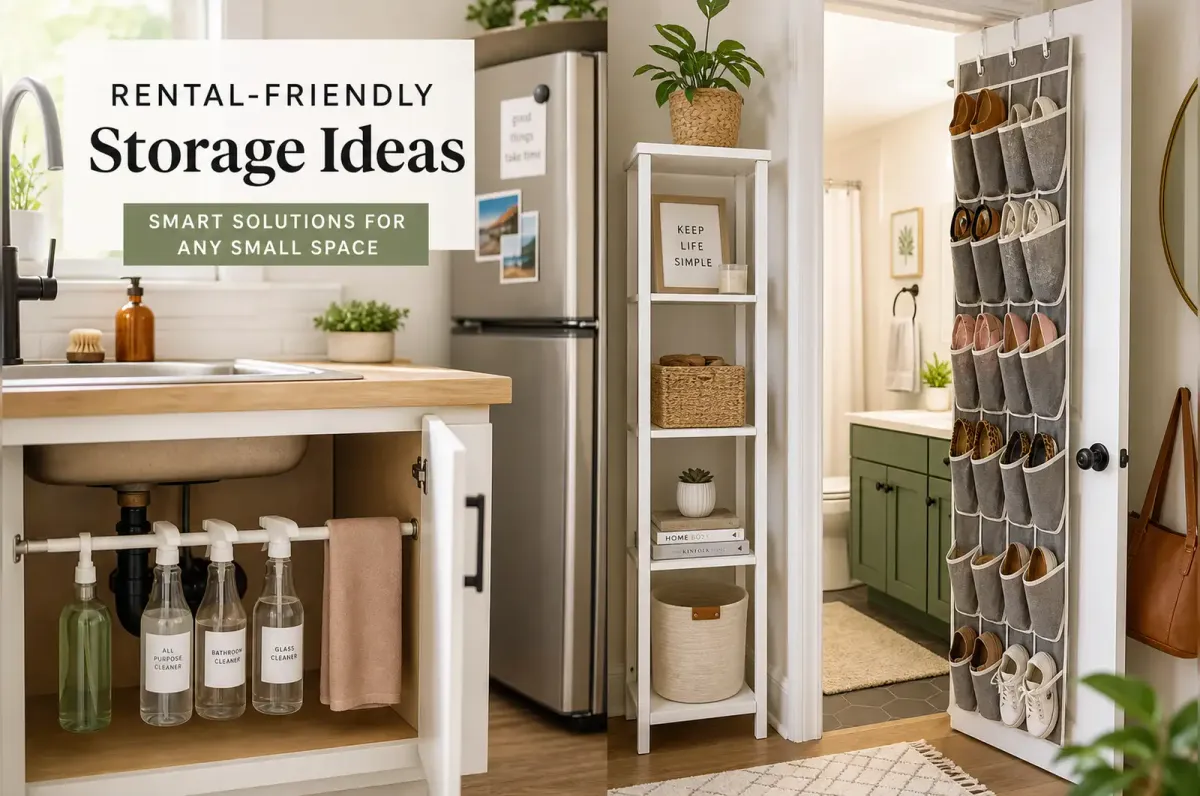
Tension rods work in places most people don’t think to put them. Under the kitchen sink, a short tension rod holds spray bottles by their triggers, freeing up the cabinet floor. In a closet with a single hanging rod, a second tension rod mounted lower doubles your hanging space for shirts and folded pants. In the bathroom, a tension rod across the tub area holds a hanging caddy for shampoo and soap without any suction cups that will fail in two weeks.
The trick with tension rods is matching the diameter to the weight you’re hanging. A thin ½-inch rod from the shower curtain aisle can hold spray bottles and lightweight baskets. For anything heavier (wet towels, a full hanging shoe organizer, a row of hanging file folders), step up to a 1-inch rod rated for 20 pounds or more. The extra few dollars buys you peace of mind and saves the midnight crash when the rod gives out.
Another underused tension-rod spot: between two walls in a narrow closet or hallway nook. Mount a rod at chest height and hang a fabric shoe organizer from it. You’ve just created vertical storage in a space that was doing nothing, and you didn’t have to touch a single wall.
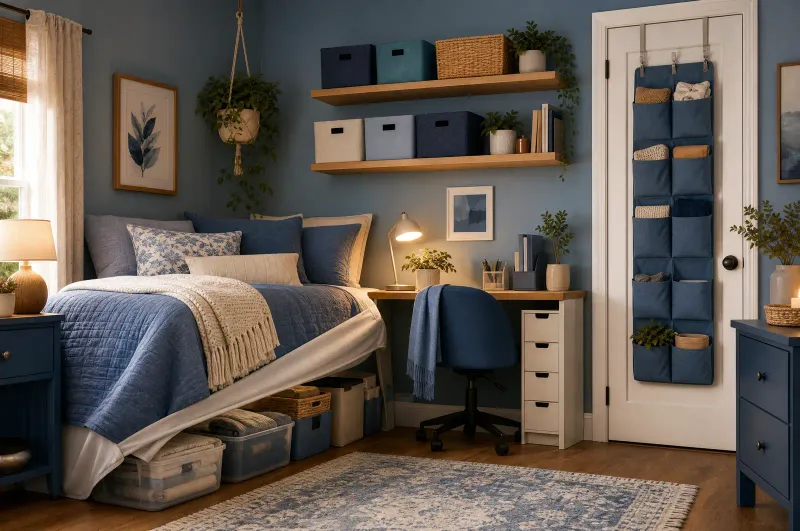
Over-door organizers are the unsung heroes of rental storage. An over-door shoe rack on the bathroom door holds toiletries, cleaning supplies, or hair tools. The same rack on a pantry door stores spice jars, snack bags, or canned goods. They install in 30 seconds, hold 20 to 40 pounds depending on the model, and leave zero marks when removed. One caveat: check that your door closes fully with the rack in place. Some older doors with tight frames need a slim-profile model, or the door won’t latch, which defeats the purpose of any room with a door.
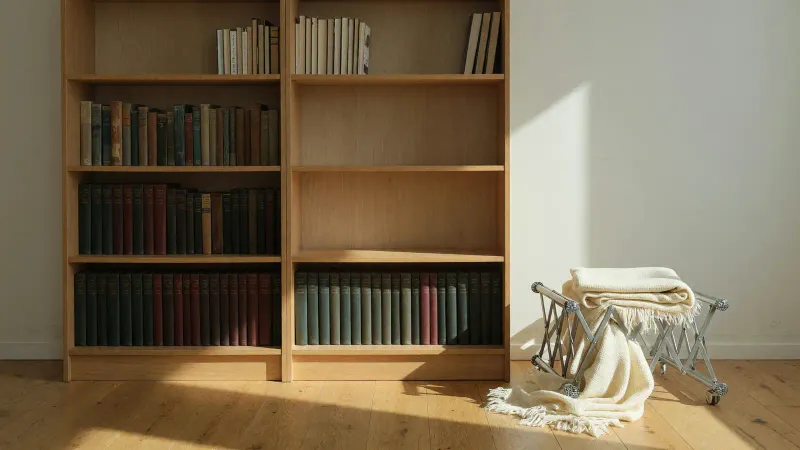
Freestanding shelving units, particularly the narrow ones designed for gaps between appliances, turn dead space into storage. A 6-inch-wide unit between the fridge and the wall can hold cutting boards, baking sheets, and canned goods that would otherwise clutter the counters. For bathrooms, a freestanding over-toilet shelf (the kind with legs that straddle the toilet tank) adds two or three shelves of storage above the toilet without touching the wall. In the living room, a leaning ladder shelf holds books and plants against any wall, requires one screw at the top for safety (a tiny hole that takes 30 seconds to spackle), and moves with you to the next apartment. The whole setup works without drilling into anything structural. That one screw is optional, and your landlord will never notice it.
The Weight-Class Hook Guide
Not all adhesive hooks are created equal, and using the wrong one is how things end up on the floor at 2 a.m. Here’s what to use for each weight range, based on Consumer Reports’ testing and manufacturers’ stated limits. [1]
Light (under 2 pounds): Keys, lightweight frames up to 8x10 inches, small decor items. Command Small Wire Hooks or FrogTape reMOVEables. Both hold reliably and remove cleanly.
Medium (2 to 4 pounds): Medium picture frames, wall clocks, small mirrors, robe hooks. Command Large Picture Hanging Strips or Command Utility Hooks rated for 4 pounds. Always use two strips for frames over 2 pounds, spaced at the top corners.
Heavy (4 to 8 pounds): Coats, bags, larger mirrors. At this weight, adhesive alone gets risky on textured walls. Command Heavyweight Hooks (the ones with metal hooks, rated to 7.5 pounds on smooth surfaces) are your best bet, but test with something unbreakable for 24 hours before trusting them with a mirror.
Over 8 pounds: No adhesive product is reliable here. Use a freestanding coat rack, an over-door hook rack, or a leaning floor mirror. If it absolutely must go on the wall and weighs more than 8 pounds, ask the landlord if you can install a proper anchor and offer to patch and paint when you leave. Most will say yes if you ask ahead of time and offer to handle the repair.
How to Remove Adhesive Products Without Losing Paint
The difference between getting your deposit back and losing $200 for wall repair often comes down to how you remove the adhesive, not which brand you bought.
Pull the tab straight down, slowly, parallel to the wall. Do not pull it outward, away from the wall. The tab stretches as you pull, and when you pull outward, it snaps, leaving the adhesive strip stuck behind the paint. Once that happens, you’ll need a hairdryer to warm the remaining adhesive and dental floss to saw through it. It works, but it takes five times as long and the odds of paint damage go up.
For wallpaper removal, start at a corner and peel slowly at a 45-degree angle. If you hit resistance, use a hairdryer on low heat to warm the adhesive for 10 to 15 seconds, then continue peeling. Vinyl wallpapers come off in larger sheets than paper-based ones, which tend to tear, so vinyl is the better choice for renters. [2]
One more thing that will save you: take photos of every wall before you hang anything. If a dispute comes up during move-out, having “before” photos showing pre-existing marks, scuffs, or peeling paint is more useful than any argument.
What Not to Do
Some mistakes are common enough to call out directly. Don’t mount shelves with adhesive strips, no matter what the packaging claims. Consumer Reports couldn’t get any product to hold a shelf reliably, and a falling shelf takes whatever was on it down with it. [1]
Don’t hang anything valuable or sentimental above your bed with adhesive. Gravity wins eventually, and waking up to a broken frame on your pillow is a lousy start to the day.
Don’t use adhesive hooks on wallpaper or textured walls without testing first. The texture reduces the contact area, and wallpaper can peel off with the hook, doing more damage than a nail hole would have.
Five Things to Do This Weekend
If your rental needs organizing and you have one weekend to tackle it, here’s where to start.
-
Put tension rods under every sink. Under the kitchen sink, under the bathroom sink. Hang spray bottles by the trigger. It clears the cabinet floor instantly.
-
Install an over-door organizer on one door. Start with the bathroom door for toiletries or the pantry door for food storage. Whichever room drives you most crazy.
-
Add a freestanding narrow shelf in the kitchen. The gap between the fridge and the counter, or between the stove and the wall. That dead space is storage waiting to happen.
-
Swap one ugly shelf liner. Pull out the stained, peeling liner from one kitchen drawer or cabinet shelf, clean the surface, and lay down new contact paper. It’s a 20-minute upgrade that makes the whole kitchen feel cleaner.
-
Hang only what passes the adhesive test. Go through the things you planned to hang on walls. Anything fragile, heavy, or expensive goes on a freestanding surface. Everything else gets the right-weight adhesive hook, applied to a clean, dry wall.
None of these require permission from a landlord. All of them can be undone in an afternoon when it’s time to move. And when you get your full deposit back, you’ll be glad you reached for the tension rod instead of the drill.
Sources:
- Rodriguez, J. (2026, July 24). “4 Best Adhesive Strips and Hooks, Tested by Our Experts.” Consumer Reports. https://www.consumerreports.org/home-garden/home-organization/best-adhesive-strips-and-hooks-a2522406797
- The Spruce. (2026, July 22). “7 Best Removable Wallpapers of 2026, Spruce Approved.” https://www.thespruce.com/best-removable-wallpaper-4165109
Discussion
Comments
Share a helpful tip, question, or takeaway from Rental-Friendly Organization: No-Damage Hacks That Won't Cost Your Deposit.
0 Comments
Loading comments…