
The internet has convinced an entire generation that they can fix anything with a 12-minute YouTube tutorial and a trip to Home Depot. Some of the time, that’s true. The rest of the time, it ends with a panicked call to a professional who charges extra because they have to undo your work first.
The question isn’t “can I do this?” — with enough time and stubbornness, you probably can. The question is “what happens if I get it wrong?” For some projects, the answer is a crooked shelf. For others, it’s a flooded basement or an electrical fire.
The Projects Worth Learning
Painting interior walls. This is the gateway DIY. The materials are cheap, mistakes are fixable, and the skill ceiling is low. Buy good painter’s tape, use drop cloths, and cut in the edges with a brush before rolling. The difference between a professional paint job and a careful DIY one is small enough that the $1,000-plus savings is worth it.
Replacing a toilet. It looks intimidating. It isn’t. If you can turn a wrench and lift 80 pounds, you can replace a toilet in two hours. Shut off the water, drain the tank, disconnect the supply line, unbolt it from the floor, lift it off, scrape the old wax ring, set the new ring, drop the new toilet, bolt it down, reconnect. A plumber charges $200 to $400 for this. A new toilet costs $150 to $300. You just cut the cost in half.
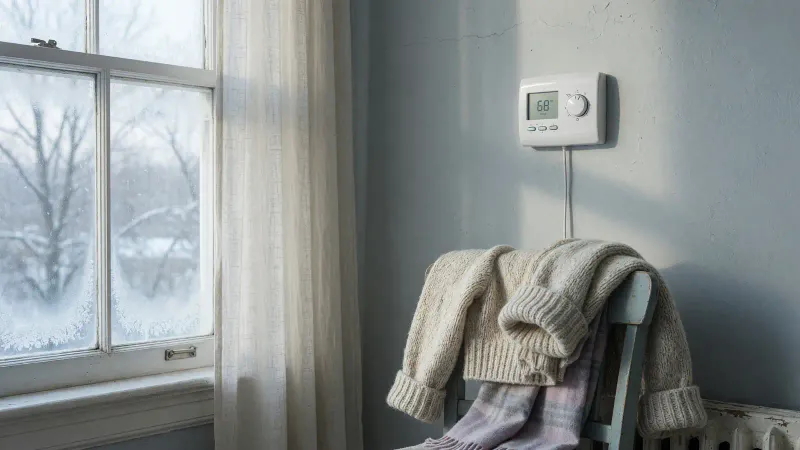
Caulking and weather stripping. These are the highest-return DIY projects in terms of money saved per minute spent. A tube of caulk is $5 and seals drafts around windows and baseboards. Weather stripping for doors costs $10 to $20. Together they can cut your heating and cooling bills by 10 to 15 percent, per the Department of Energy.
Replacing light fixtures and outlets. Turn off the breaker. Verify the power is off with a voltage tester. Take a photo of the existing wiring before disconnecting anything. Match wire colors to the new fixture. This is a 20-minute project that electricians charge $150 for. If the existing wiring is modern and you’re replacing like for like, it’s safe and straightforward.
Unclogging drains with a snake. Plungers work for basic clogs. For anything deeper, a $25 drain snake from the hardware store will clear most kitchen and bathroom clogs in 10 minutes. The alternative is a $200 plumber visit for what is essentially the same tool and the same motion.
Patching drywall. Small holes (nail holes, doorknob dents) take 10 minutes with spackle and a putty knife. Medium holes (fist-sized) need a patch kit and some patience but are still very doable. Large holes or ceiling damage are where you call someone — the texture and blending are harder than they look.
Replacing a faucet. Like the toilet, a faucet replacement is mostly about shutting off water and turning nuts. A basin wrench ($15) makes the tight space under the sink manageable. You’ll save $150 to $300 in labor.
Installing a programmable thermostat. Three wires, clearly labeled, into clearly labeled terminals. The thermostat itself comes with instructions. It takes 30 minutes and saves about 10 percent on heating and cooling annually, according to Energy Star.
Changing your car’s air filters. Engine air filter and cabin air filter — combined cost about $30, combined time about 10 minutes, and a mechanic will charge you $60 to $100 for the labor alone. This one is not just money-saving, it’s borderline offensive to pay someone else to do.
The Projects Where You Call Someone
Anything involving the main electrical panel. Adding circuits, upgrading service, messing with the panel itself — these are not DIY projects. The risk is electrocution or fire, and the insurance implications of unpermitted electrical work can deny a claim if something goes wrong.
Gas lines. Do not touch gas lines. If you smell gas, leave and call the utility company. If you need a gas line moved for a new range or dryer, call a licensed plumber. Gas leaks kill people.
Major plumbing that requires cutting into walls or floors. Replacing a section of pipe behind drywall, moving a sink to a different wall, anything involving the main stack — these require permits, specialized tools, and the ability to handle it when the pipe crumbles as soon as you touch it.
Structural work. Removing walls, cutting into floor joists, adding a window where there wasn’t one. If you get this wrong, your house can literally sag. Structural engineers and licensed contractors exist for a reason.
Roof repairs. Walking on a roof is dangerous if you don’t know what you’re doing. Improper repairs leak and cause thousands in water damage before you notice. Pay the roofer.
The principle is simple: if the cost of failure is just wasted time and materials, try it yourself. If the cost of failure is injury, major property damage, or voided insurance, write the check.

Discussion
Comments
Share a helpful tip, question, or takeaway from DIY or Call a Pro? 9 Home Fixes Worth Learning and 5 You Should Never Attempt Alone.
0 Comments
Loading comments…