A disorganized kitchen costs you time in small increments that add up: 15 seconds searching for the vegetable peeler, 30 seconds untangling measuring spoons, a minute digging through the junk drawer for scissors. Over a week of cooking, that’s 20-30 minutes of lost time. A systematic drawer reorganization recovers that time permanently.
Step zero: empty everything
Pull every item out of every kitchen drawer onto the counter. You’ll find duplicates you forgot you owned (three can openers is two too many), gadgets you’ve never used (the avocado slicer, the egg separator, the strawberry huller), and items that belong somewhere else (batteries, rubber bands, a screwdriver). Sort into keep, donate, relocate, and trash piles.
The junk drawer: tackle it first
Most kitchens have a junk drawer, and most junk drawers are chaotic because they try to store too many unrelated small items together. The fix: drawer dividers. Not the flimsy bamboo ones that slide around — get an expandable organizer with compartments sized for your actual contents. Dedicated spots for rubber bands, batteries, tape, scissors, pens, stamps, and twist ties. If it doesn’t have a compartment, it doesn’t go in the drawer.
Utensil drawer: the most-used drawer
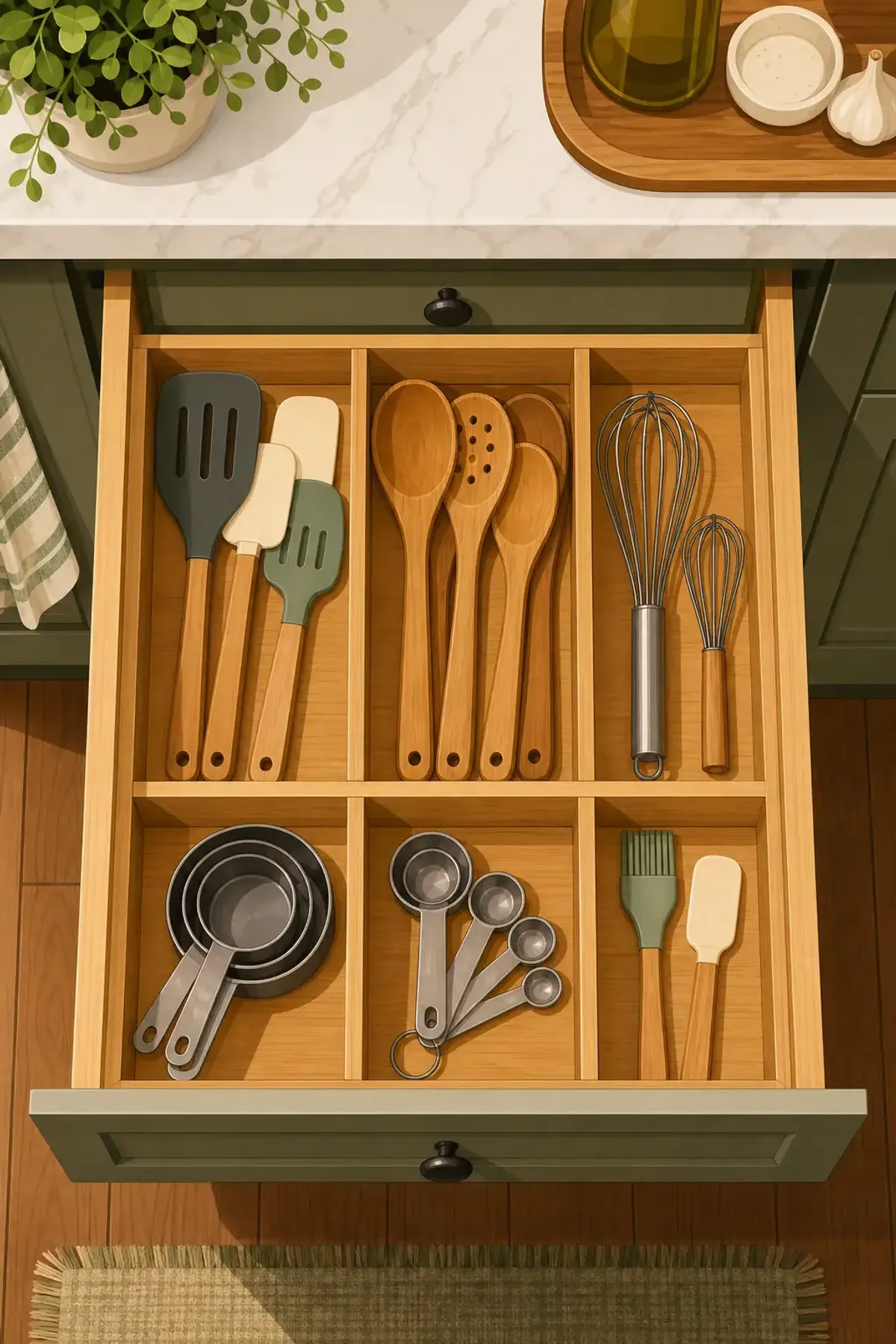
Cooking utensils (spatulas, wooden spoons, tongs, ladles, whisks) need to be grab-able with one hand, which means they can’t be stacked or tangled. A drawer-within-a-drawer approach: use shallow dividers to create lanes. Group by function: stirring (spoons, spatulas), flipping (turner, tongs), measuring (cups, spoons), serving (ladle, pasta server).
If your utensil drawer overflows, it’s probably because you’re storing duplicates or specialty tools you use once a year. The turkey baster, the melon baller, and the cake decorating tips can live in less accessible storage.
Knife storage: safety and blade preservation
Knives thrown loose in a drawer dull each other and cut fingers reaching in. In-drawer knife blocks or magnetic strips inside the drawer keep blades separated and protected. If you use a countertop knife block, make sure it’s the universal slot type, not the kind with specific-sized slots that limit which knives you can own.
Spice drawer: flat and labeled
Spices stored upright on a shelf are hard to see and hard to access. A shallow drawer with jars lying flat, labels facing up, is dramatically more usable. You can see every spice at once with no reaching behind front rows. Uniform jars with printed labels look nice, but the functionality comes from the layout, not the aesthetics.
The measuring tool drawer
Measuring cups and spoons nest, which is efficient for storage but means you always need the one at the bottom of the stack. Pull them apart and store them flat in a divided drawer, or use magnetic measuring spoons that stack but separate easily. Alternatively, hang them on hooks inside a cabinet door.
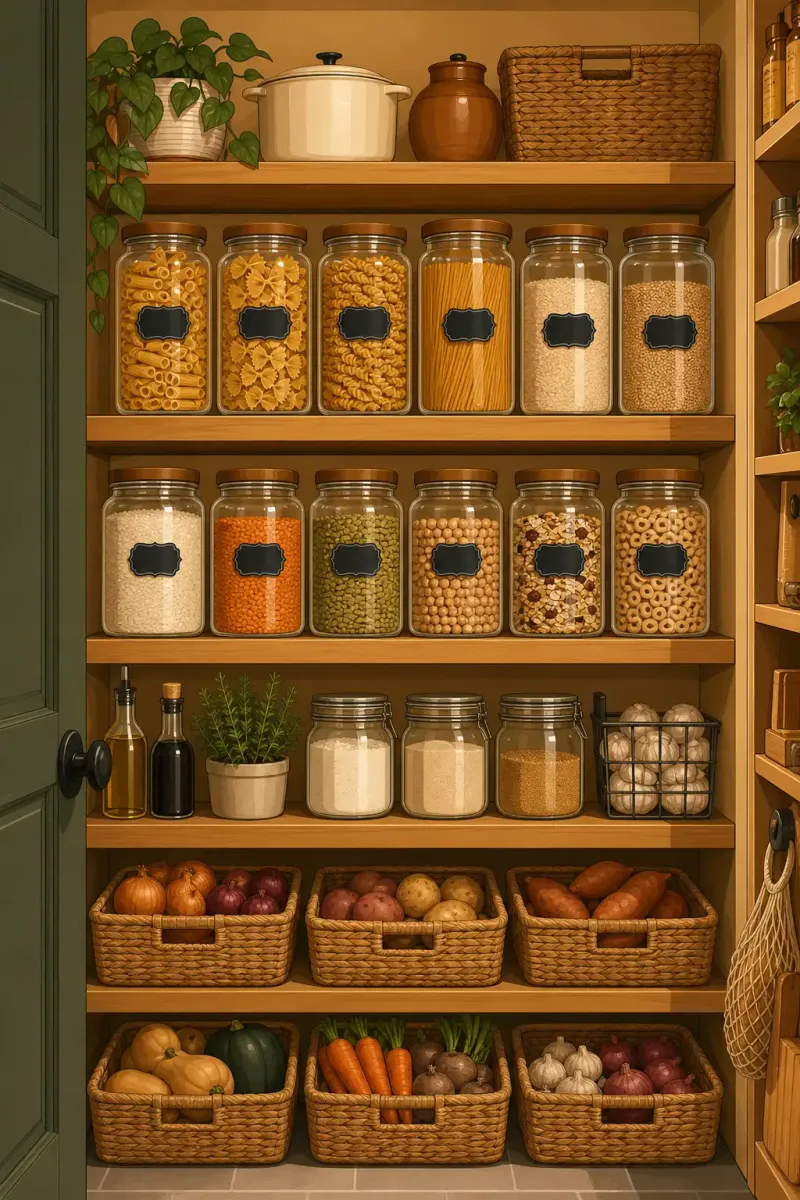
For more kitchen organization, see our pantry organization guide and decluttering guide for refrigerators.

Discussion
Comments
Share a helpful tip, question, or takeaway from Kitchen Drawer Organization: The Weekend Project That Makes Cooking Faster Every Day.
0 Comments
Loading comments…