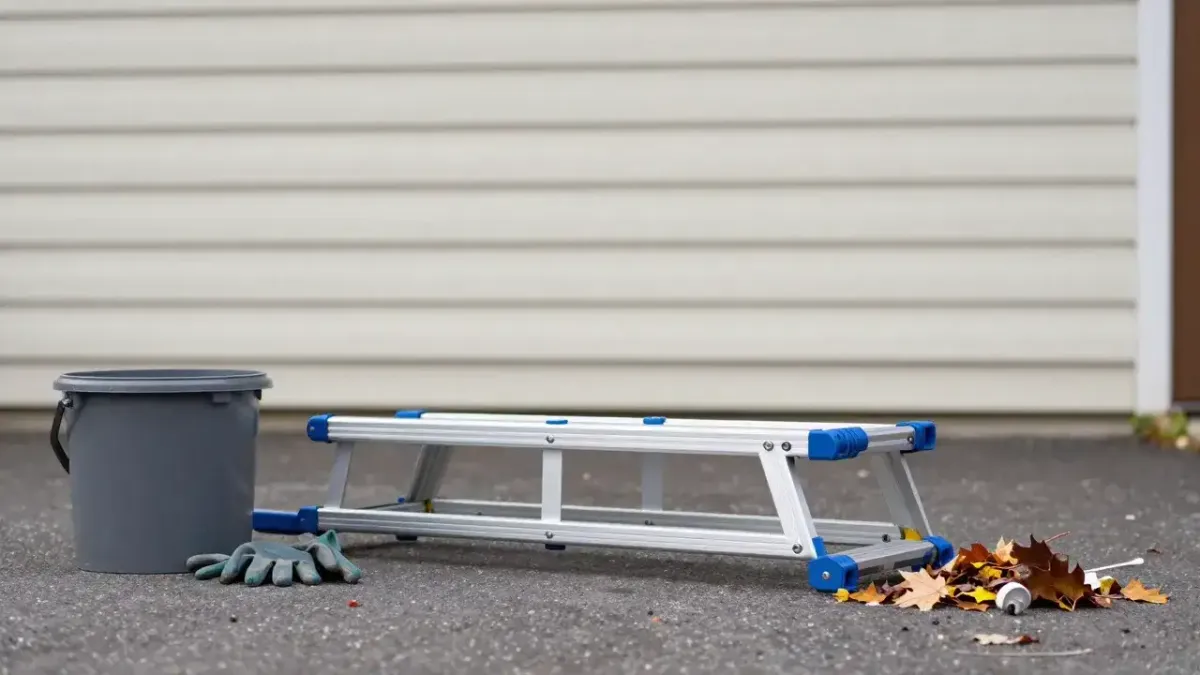
Federal safety regulators and Little Giant Ladder Systems have announced a nationwide recall of roughly 3.66 million multi-position ladders equipped with Rapid Locks. According to the official notice published by the U.S. Consumer Product Safety Commission, the ladders can suddenly retract or collapse during use if the locking mechanisms fail to engage completely. The defect poses an immediate fall hazard to anyone working at elevation.
The announcement comes right as millions of homeowners head outdoors for late-autumn maintenance. Across the country, households rely on telescoping ladders to clean roof valleys, scoop decayed leaves from gutters, wash high exterior windows, and hang seasonal holiday lights. When an adjustable ladder slips out of its locked height setting under load, the person standing on the rungs has virtually no warning and no handhold to break their fall.
Little Giant has received 39 reports of Rapid Locks malfunctioning or slipping out of position, alongside 25 documented incidents where ladders collapsed unexpectedly while individuals were standing on them. Those incidents resulted in 19 physical injuries. Three consumers suffered traumatic brain injuries, concussions, or skull fractures. Another 16 sustained bone fractures, deep lacerations, and severe bruising.
If you own a Little Giant ladder purchased over the past decade, take it out of service until you complete a visual inspection and verify whether your specific model requires the manufacturer repair kit.
Models, dates, and retail distribution
The recall covers approximately 3,662,000 units manufactured in the United States, China, Mexico, and Malaysia and sold through major hardware chains, warehouse clubs, and online retailers between December 2015 and October 2026. The retail price for the affected units ranged from $100 for basic telescoping configurations to more than $1,000 for commercial-grade multi-position systems with integrated leveling legs.
Major outlets that distributed the recalled models include:
- Lowe’s home improvement centers nationwide
- Costco Wholesale warehouses and member delivery channels
- Direct online purchases through Little Giant’s official website
- Online marketplaces including Amazon.com
- Independent hardware stores and regional contractor supply distributors
The action applies to 11 specific Little Giant product lines featuring adjustable black or orange Rapid Locks mounted on the side rails:
- Adjustable Fortress 2.0
- Conquest 2.0
- Dark Horse 2.0
- Epic
- King Kombo XT
- Leveler
- MegaLite and MegaLite+
- Multi
- Quantum
- Vector
Owners should note that not every ladder within these product lines is subject to the recall. Little Giant implemented a factory inspection protocol on later production batches. You can determine your ladder’s status by examining the side rail directly above the Rapid Lock assembly. If you find an orange rectangular sticker bearing the letters “QC” printed on the rail, your unit has been inspected and certified by the factory. Ladders displaying the orange “QC” sticker are safe to remain in service and are excluded from the recall. If that orange sticker is missing, your ladder is included in the recall and must not be used until serviced.
The mechanics behind Rapid Lock retraction
Understanding why the Rapid Lock fails requires looking at how multi-position ladders support weight. Unlike traditional extension ladders that use gravity-assisted rung hooks resting directly on lower steps, multi-position ladders depend on spring-loaded pins that pass horizontally through aligned holes in nested aluminum or fiberglass rail sections.
The Rapid Lock uses a rotatable or pull-release barrel housing a heavy-duty internal steel pin. When a user extends the ladder or shifts its configuration from an A-frame step ladder into an extended straight ladder, the inner rail slides past the outer rail. Once the rungs reach the desired height, the spring pushes the pin through the outer rail sleeve and deep into the receiving hole of the inner rung channel.
An analysis of how multi-position mechanisms operate reveals how incomplete pin engagement creates a fall hazard consistent with the CPSC notice. Under certain conditions, the locking pin fails to travel through its full stroke, creating a deceptive false-lock condition. The tip of the pin may catch on the outer bevel of the rung hole or bind against the inner wall without penetrating the structural core. From a standing distance or from an oblique angle, the lock dial or tab appears flush against the rail, misleading the operator into thinking the ladder is locked.
As soon as a homeowner climbs the ladder, their static body weight may hold the assembly in place through surface friction. However, exterior home maintenance is never purely static. Scraping wet mud out of a gutter channel, pulling on a stiff garden hose, or reaching out to wash an upper window pane introduces lateral torque and dynamic shifting. That movement can cause the partially seated pin to slip off the edge of the rung hole. When the pin disengages under load, the telescoping section drops instantly, causing the ladder to telescope downward or fold inward.
Environmental contamination accelerates this mechanical breakdown. When homeowners tackle exterior cleaning, water runoff mixed with roof grit, moss fragments, and fine sand runs down the rails. If dirty water seeps into the Rapid Lock housing, the abrasive grit settles around the return spring and the cylindrical guide channel. Over time, that contamination creates friction that slows down pin extension, making incomplete engagement far more frequent on well-used ladders.
How to inspect your ladder step by step
Before clearing gutters or starting exterior painting, walk through this systematic inspection procedure to verify your ladder’s safety status.
1. Confirm the model name and serial tag
Locate the permanent product label affixed to the outer side rail. Look for the product line name, such as Leveler, MegaLite, King Kombo XT, or Multi. If the label has peeled away or become unreadable from weather exposure, examine the lock housing on each leg. Recalled ladders use black or orange rotating or pull-tab Rapid Locks located at the hinge and telescoping junction points.
2. Check for the orange QC marker
Wipe down the rail surface directly above each Rapid Lock using a damp cloth to remove surface dirt and oxidation. Inspect the area for a small, rectangular orange sticker with the letters “QC” printed in bold black text.
- If the orange “QC” sticker is present and intact above the locks, the ladder has already undergone quality verification and is excluded from the recall.
- If no orange “QC” sticker is present, stop using the ladder immediately. Do not attempt temporary fixes like wrapping duct tape, clamping vice grips, or running bungee cords around the rail.
3. Inspect pin travel and spring action
On an out-of-service ladder laid flat on the ground, manipulate the Rapid Lock levers. Pull each lock fully outward and release it slowly. The pin should snap back into its resting position with a crisp, audible click and zero mechanical hesitation. If the pin moves sluggishly, stops halfway, or requires manual pushing to seat, the internal spring mechanism is compromised by dirt buildup or component fatigue.
4. Verify pin projection
Extend the ladder one rung section while keeping it on the ground. Turn the Rapid Lock until it engages the rung hole. Look closely at the back side of the rail channel: the steel locking pin should protrude completely through the metal rung wall. The outer collar of the Rapid Lock must sit completely flat against the outer rail without any visible gap.
Claiming the free Little Giant repair kit
Little Giant is providing free repair kits to all affected consumers. Under the official CPSC recall terms, the kit contains warning labels and instructions advising consumers to verify Rapid Locks are fully engaged before every use and to maintain locks with lubrication.
To register your ladder and receive the free repair kit, consumers can submit their details through the official Little Giant Ladder Recalls Page or contact the manufacturer directly. Little Giant also operates a toll-free customer support hotline at 866-201-9069, available Monday through Friday from 6:00 a.m. to 3:00 p.m. Mountain Time.
When you contact the company, have your ladder’s model name, approximate purchase date, and retailer information ready. Once you receive the repair kit, apply the warning labels and follow the manufacturer instructions to ensure your Rapid Locks are maintained with proper lubrication and verified before every use.
If a lock still fails to engage or function properly after applying lubrication and following the provided instructions, contact Little Giant for evaluation. If the ladder cannot be brought into safe operating condition, Little Giant will provide a replacement ladder of the same or equivalent model, or issue a refund. Refunds are depreciated based on the purchase date, with up to the full purchase price available for ladders purchased within the past 12 months.
Safe cleaning practices when working at height
A ladder recall highlights the broader risks involved in seasonal home maintenance. Elevating several feet off the ground during autumn and spring outdoor chores carries inherent risks whenever equipment shifts or slips unexpectedly. Following strict safety protocols reduces your exposure to mechanical failures and physical slips.
Pair ladder inspections with seasonal jobs
Whenever you schedule outdoor maintenance, make equipment inspection your first task. If you are following our fall home maintenance checklist to prepare your roof and siding before freezing temperatures arrive, inspect every hinge, latch, and rubber foot before carrying the ladder out of the garage.
For roofline cleaning, review our gutter cleaning fall maintenance guide to ensure you set up your ladder at the correct four-to-one slope ratio: for every four feet of vertical height, the base should sit one foot out from the wall. Placing the base too close makes the ladder prone to tipping backward, while placing it too far away increases downward bowing stress on the locking pins.
Keep both feet centered
When working from a ladder, your belt buckle should remain between the side rails at all times. Overreaching to scoop debris from a distant gutter section shifts your center of gravity outside the ladder’s footprint. This lateral force is exactly what triggers disengagement in a faulty or partially seated Rapid Lock. If you cannot comfortably reach an area without leaning sideways, climb down and relocate the ladder.
Use proper standoff attachments
Resting ladder rails directly against aluminum or vinyl gutters can crush the metal and leave the ladder unstable. Equipping your ladder with a wide standoff stabilizer distributes the load across your roof deck or solid exterior siding. Stabilizers prevent the ladder from sliding sideways on wet gutter edges and provide a wider, more rigid stance that dampens vibrations while you work.
Ground verification on soft autumn soil
Fall rains soften the ground around flower beds and foundation perimeters. Never set ladder feet on soggy topsoil, wet mulch, or uneven flagstones without using heavy plywood pads to spread the weight. If one leg sinks into the soil while you are ten feet up, the sudden shift places tremendous torsional stress on the rail locking pins.
For multi-story structures or steep roof pitches, evaluate whether handling the job yourself is worth the hazard. As outlined in our guide on small home repairs that prevent big bills, hiring an insured professional for high-eave work or complex gutter replacements is often far more economical than risking a catastrophic fall.
Long-term maintenance: cleaning, lubricating, and storage
Proper maintenance extends the operating life of any multi-position ladder and prevents dirt from interfering with mechanical locks. Even after you apply the repair kit instructions or verify that your ladder carries the orange “QC” sticker, routine cleaning keeps the locking pins moving freely.
Wash away abrasive residue
After completing muddy gutter cleaning or exterior pressure washing, do not fold up your ladder and slide it straight into the shed. Hose down the side rails with clean fresh water to flush away fine sand, leaf tannins, and dirt. Use a stiff nylon brush and a mild dish soap solution to scrub around the Rapid Lock housings and the sliding rail guides. Avoid high-pressure water blasting directly into the spring seals, as high pressure can force grit deeper into the internal mechanism.
Select the right lubricant
Never spray standard general-purpose penetrants or heavy automotive grease into ladder locking mechanisms. Wet oils and thick grease attract airborne dust, sawdust, and sand, forming a thick abrasive paste that jams the pins within a few months.
Instead, use a quick-drying PTFE dry-film spray or a light silicone lubricant designed for sliding metal assemblies. Spray a short burst into the pin chamber while working the lock back and forth five to ten times. Wipe off any excess fluid immediately with a clean microfiber rag. Never allow lubricant to drip onto the ladder rungs, rail handles, or rubber feet, as any residue on standing surfaces creates a severe slipping risk.
Protect equipment from freeze-thaw cycles
Store aluminum and fiberglass ladders indoors, suspended horizontally on sturdy wall brackets or resting flat on dry shelving. If a ladder must stay in an unheated shed or covered porch, keep it off bare concrete floors where ground moisture causes surface corrosion. Storing a ladder with wet lock housings in freezing winter weather causes trapped water to expand, which can crack plastic lock housings and distort internal return springs.
Before putting ladders away for the winter, performing a quick clearance check on lock pins and registering for any required manufacturer repair kits prevents an unserviced unit from being pulled out unnoticed during spring cleaning next year.


Discussion
Comments
Share a helpful tip, question, or takeaway from Little Giant Recalls 3.6 Million Ladders Over Lock Hazards.
0 Comments
Loading comments…