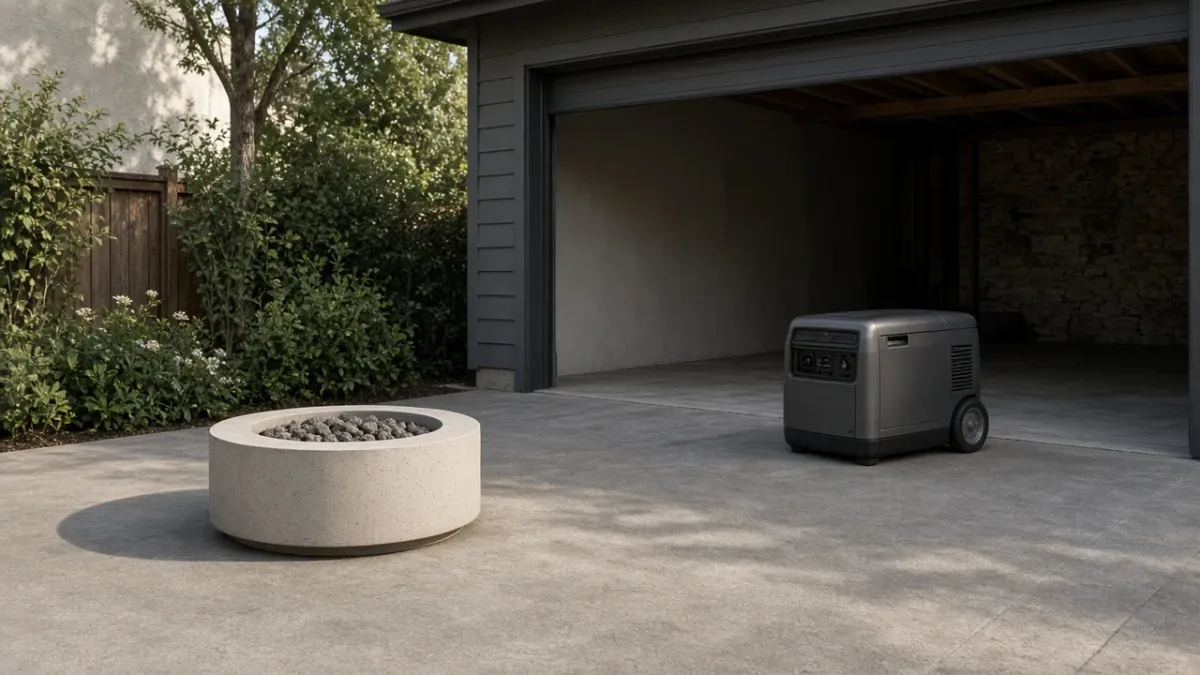
Two recall notices posted by the U.S. Consumer Product Safety Commission on November 12, 2026 ask for different work in different parts of the house. One covers Sharper Image tabletop fire pits that may let ignited fuel escape. The other covers a Cummins Onan dual-fuel portable generator whose gasoline tank may not vent as designed. A patio check will not find the generator. A garage check will not find the fire pit.
This is not medical advice. The incident lines below are the firms’ reports as printed on the CPSC pages. Someone with a burn, fuel in the eyes or mouth, or breathing trouble after a fuel leak should contact a clinician or emergency services. A household article is not a care plan.
CPSC’s own note, printed on both pages, sits under the product details. The agency says it is charged with protecting the public from unreasonable risk of injury associated with consumer products. The same pages say federal law prohibits any person from selling products subject to a Commission-ordered recall or a voluntary recall undertaken in consultation with CPSC. The phone numbers and refund language below are the remedy text on those pages. They are not a shopping list, and the printed prices are the sale ranges on the notices, not a bid for a replacement.
What the two notices cover
The fire pit notice is recall number 27-082. CPSC dates it November 12, 2026. The product names are Sharper Image Tabletop Fire Pits and Sharper Image Tabletop Infinity Fire Pits. The remedy line is Refund. The unit line is about 265,000. The importer named on the page is Allstar Marketing Group, LLC, of Winston-Salem, North Carolina. The page says the products were manufactured in China. The notice is marked Fast Track Recall. The posted text does not define that label, so this article will not invent a definition for it.
The generator notice is recall number 27-087, with the same recall date. The product name is Cummins Onan P5000iDF EFI Dual Fuel Portable Generators. The remedy line is Repair. The unit line is about 2,960. The distributor named on the page is Cummins Inc., of Columbus, Indiana. The page says the generators were manufactured in Vietnam. That notice is also marked Fast Track Recall, again without a definition in the text that was opened.
@USCPSC posted the fire pit recall on November 12, 2026, with the short instruction to get a refund, and linked the fire pit announcement. The same account posted the generator recall later that day, with the short instruction to get a repair, and linked the generator announcement.
The scale difference is already in the unit lines. About 265,000 fire pits, set against about 2,960 generators, means a tabletop pit from this notice is a much more common object than this particular generator. That does not shrink the generator job for the household that owns one. It changes how a person should spend the first ten minutes. Start with the patio, the balcony, and the bin of outdoor gear for the fire pit. Open the generator check only if a dark gray Cummins Onan unit is actually in the garage, the shed, or the camper.
The roles on the two pages are also different, and they should not be swapped when someone looks up a phone number. Allstar Marketing Group is named as the importer of the fire pits. Cummins Inc. is named as the distributor of the generators. Calling the generator line about a tabletop pit, or the fire pit line about a P5000iDF, sends the question to the company the notice did not assign to that product.
How to recognize the fire pits
The CPSC description covers outdoor Sharper Image-branded tabletop fire pits and Sharper Image-branded tabletop infinity fire pits. The page says the units have a “77” logo on the front, a lot code sticker in the center of the base, and a round black sticker marked “CHINA” with a 5-digit code. It also lists the letters KS-CY or KS-FC, and a date code in YYYY-MM-DD format.
Those marks are how the page tells an owner to recognize the recalled units. The text CPSC posted does not publish a short list of excluded lot numbers. If the logo, the center lot sticker, the round “CHINA” sticker, and the KS-CY or KS-FC letters are on the base, the unit matches the description the notice gives. A date code in year-month-day form is part of that same description. The page does not, in the opened text, say that only some of those date codes are in scope. Treat the cluster of marks as the identification, and use the registration page if a mark is worn or partial.
The two body styles are different enough that a quick glance can miss one of them. The tabletop fire pits have a small cylindrical concrete body, a removable snuffing lid, and an open burn chamber at the top. The tabletop infinity fire pits have a steel base and tempered glass side panels. A concrete cylinder and a glass-sided pit can both be this recall. Checking only the style that looks familiar is how a second unit stays in use on the same patio.
The lot code sticker, as the page describes it, sits in the center of the base. The practical check is to turn the pit over, or to look at that center sticker, before the next use. A pit stored with the lid on still needs the base check. The snuffing lid is part of the concrete model’s description. It is not described as a shield against the hazard.
A household with two pits should check both. One may be the concrete cylinder kept for a balcony. The other may be the glass-sided infinity pit that lives in a storage tote. The notice names both styles under one recall number. Matching one unit does not clear the other.
Where the fire pits were sold, and for how much
CPSC says the fire pits were sold at Ace Hardware, Burlington, Home Depot, Lowe’s, Kohl’s, Marshalls, Nordstrom, Rite Aid, Target, TJ Maxx, Walgreens, Walmart, and other retailers nationwide. Online sellers named on the page include Amazon.com and Hsn.com. The sale window runs from January 2023 through June 2026. The price range on the page is between $30 and $50.
That window matters for a house check in November 2026. The recall date is November 12, 2026. The listed sales end in June 2026. A person standing in a store aisle this week is not the audience of the sale line. The audience is anyone who still has a matching pit from that retail run, including a pit bought last spring, a pit bought in 2023, or a pit that arrived as a gift. The notice describes the product. It does not limit the remedy to the person whose name is on a card statement.
The retailer list is wide on purpose, in the sense that the page names both hardware stores and apparel off-price chains. A pit from Marshalls, TJ Maxx, or Burlington is in the same notice as a pit from Home Depot, Lowe’s, Ace Hardware, Target, Walmart, Kohl’s, Nordstrom, Rite Aid, or Walgreens. The store name on a bag, if the bag even survived, is a memory aid. The base stickers are the check.
The price range is the figure CPSC printed for what shoppers paid. It is not a quote for a replacement pit. It is not a reason to keep using a matching unit because the dollar amount looks small. The remedy on the page is a full refund, after the steps below.
What the fire pit notice says went wrong
The hazard line is specific. Ignited flammable liquid can escape from the recalled fire pits, or it can trigger flame jetting from the fuel containers. The page says that poses a risk of serious injury from burn and fire hazards. The @USCPSC post uses the same core point: ignited flammable liquid can escape, or flame jetting can come from the fuel containers, with a risk of serious injury, and the short remedy is a refund.
The incidents line should be read as the firm’s report, not as a complete national count. The firm has received four reports of ignited fuel escaping from the unit during use. Those reports resulted in four injuries, including third- and fourth-degree burns to multiple body parts. The page does not say those four reports are the only way the hazard can show up. It says that is what the firm had received when the notice was posted.
A household article should not narrate those injuries. The useful point is the gap between a tabletop object sold for between $30 and $50 and the injury type the firm reported. The remedy is to stop. It is not to change how the pit is lit, how full the cup is, or which side of the table it sits on. None of those adjustments appear in the notice.
What fire pit owners are asked to do
Stop using the recalled fire pits immediately. Contact Allstar for a full refund. The consumer contact block lists a toll-free number, 855-215-5032, from 9 a.m. to 5 p.m. ET, Monday through Friday. It lists the email [email protected]. It also lists www.firepitrecall.expertinquiry.com, and www.allstarmg.com, where the page says to click “Fire Pit Safety Recall” at the bottom of the page.
The remedy paragraph adds the sequence. Owners will be asked to register at www.firepitrecall.expertinquiry.com, to mark the unit in permanent marker with the do-not-use warning printed in that remedy paragraph, and to submit three photographs following the instructions on Allstar’s recall page. The CPSC text tells owners what words to write. It does not, in the opened page, describe the camera angles. Those instructions live on the recall page the notice names. Follow that page for the three photos rather than guessing which sides to shoot.
After registration is confirmed, the page says to dispose of any remaining fuel in accordance with local hazardous-waste requirements and to discard the recalled fire pits safely. The order matters. The page puts disposal after confirmation, not before the photos. A pit that has already gone into a dumpster cannot supply the three photographs the remedy asks for. Take the photos while the unit and the base stickers are still in hand. Then wait for the confirmation the page describes before the fuel and the pit leave the house.
The page does not tell owners to keep using the pit until the refund arrives. The first verb is stop. Fuel disposal is a local hazardous-waste step. The notice does not authorize pouring leftover fuel into a drain, a flower bed, or another container the page does not name. If the local rule for small amounts of flammable liquid is a household hazardous-waste drop-off, that is the path the notice points to. The notice does not name a national drop-off address.
The opened remedy paragraph also does not list a store receipt as a required step. The steps it does list are registration, the permanent-marker warning, and three photographs, followed by fuel disposal and discard after confirmation. A missing receipt is not, on this page, described as a bar. A person who cannot find the bag should still do the listed steps if the unit matches. Whether the refund administrator asks for more is a question for the contact line and the registration site, not a guess from the summary.
Hours are part of the contact block. Allstar’s toll-free line is staffed, on this page, from 9 a.m. to 5 p.m. ET on weekdays. A Sunday evening discovery still has a stop-use step that does not require the phone. Mark the unit, keep it out of service, and use the registration site or the weekday line for the refund.
How to recognize the generator
The generator recall names one product: the Cummins Onan P5000iDF EFI Dual Fuel Portable Generator, sold in a dark gray color. The page says the generators can operate on gasoline or propane, and that they produce between 4,500 and 5,000 watts, depending on fuel. “Cummins” is printed in white on the front of the unit and on the handle above the control panel. The Cummins “C” logo and the words “Onan P5000iDF EFI” are printed on the side. The model and part number are on a label attached to the side of the generator.
That side label is the check the remedy actually requires. The product name on the notice is the first filter. The campaign page is the confirmation. CPSC tells owners to stop using the recalled generators immediately and to open the campaign page to see whether the model and part number are included. A dark gray generator with a different name on the side is not identified by this notice. A unit that shows Onan P5000iDF EFI still needs the label check the page describes, because the remedy is written as a match against the campaign list. The opened CPSC page does not print a table of included part numbers in the body. Do not invent one from a sticker photo. Use the campaign page the notice links.
The watt range is an identification detail, not a shopping tip. Between 4,500 and 5,000 watts, depending on fuel, is how the page describes output. It is not a promise that every generator in that watt band is this recall. Color, the white “Cummins” print, the side logo, and the Onan P5000iDF EFI wording are the filters. The part number on the side label is the confirmation step.
The dual-fuel line is easy to misread. The page says the generators can run on gasoline or propane. The hazard paragraph is about the gasoline tank: valves were installed incorrectly, so fuel vapors may not vent properly, pressure can build, and fuel can discharge or the fuel cap can eject. The remedy does not offer a propane-only exception. It says stop using the recalled portable generators. A household that has been running the unit on propane still has the stop-use instruction if the side label matches the campaign page.
Where the generators were sold, and for how much
CPSC says these generators were sold at Camping World, Factory Pure, Northern Tool, and AP Electric stores, and online at Cummins.com, from May 2025 through August 2026. The price range on the page is between $1,640 and $1,930.
The sale window is shorter than the fire pit window, and the unit count is far smaller. About 2,960 units, sold from May 2025 through August 2026, at a four-figure price. The page sets the remedy as a free repair at a service location. It does not explain why the remedy is a repair rather than a refund. What an owner can use is the pair of facts that are printed: the object sold for between $1,640 and $1,930, and the stated fix is free if the unit is included. That is a reason to book the service visit. It is not a reason to keep the generator in the storm kit while the appointment is pending.
The seller list is short next to the fire pit list. Camping World, Factory Pure, Northern Tool, AP Electric, and Cummins.com are the names on the page. A generator bought at a big-box hardware store is not, by that fact alone, this recall. Read the side label anyway if the unit is dark gray and carries the Onan P5000iDF EFI name. The sale list is where units were offered. The label is whether this notice applies.
As with the fire pits, the sale window closes before the recall date. Listed sales run through August 2026. The recall date is November 12, 2026. The person the notice is written for is the one who still has the unit, not a shopper looking at a new pallet this week. The pages do not say that every retailer has finished removing stock. They do say that selling a product under this kind of recall is prohibited. A private resale is the same problem, and it is covered in the legal line below.
What the generator notice says went wrong
The hazard paragraph says the valves were installed incorrectly. That installation prevents fuel vapors from venting properly from the gasoline tank. Excessive pressure can then build. The pressure can cause fuel to discharge, or it can cause the fuel cap to eject. The page says that poses a risk of serious injury from fire and burn hazards. The @USCPSC post compresses the same mechanism: valves installed incorrectly, vapors not venting from the gasoline tank, excessive pressure, fuel discharge or fuel-cap ejection, and a repair.
The incidents line is narrower than the hazard line. The firm has received eleven reports of fuel discharging from the unit and of the fuel cap ejecting unexpectedly. One consumer reported being splashed in the face with fuel. The page says no medical attention was needed.
That last sentence is easy to over-read. It is the firm’s statement about the reports it had received, including that one splash. It is not a finding that a fuel-cap ejection is harmless. It is not a reason to keep the generator in service until a convenient weekend. The hazard line still names fire and burn hazards. The incident line says medical attention was not needed in the reports the firm described. Both sentences are on the page. They answer different questions. One describes the risk the recall is meant to address. The other describes what the firm said about care after the reports it had.
Eleven reports against about 2,960 units is the firm’s count, not a rate this article is calculating, and not a reason to wait for a twelfth report in one garage. The instruction on the page does not depend on whether this particular unit has already leaked. If the model and part number are included, stop use applies before the next start.
What generator owners are asked to do
Stop using the recalled portable generators immediately. Then go to the campaign page CPSC links, at https://www.cummins.com/en-na/na/generators/portable-generators/safety-recalls/campaigns/7308, and check whether the model and part number are included. If the unit is affected, contact an authorized Cummins service location and arrange a free repair at that service location. The page points owners to a service locator at https://quickserve.cummins.com.
The consumer contact block lists Cummins at 800-286-6467, Monday through Friday, anytime. It also points to the same campaign path, and to www.cummins.com/en-na/na/generators/portable-generators, where the page says to click “Safety Recalls” at the top of the page.
The repair is described as free, and it is described as happening at the service location. The notice does not describe a mail-in kit, a video fix, or a home adjustment of the valve. An owner who is comfortable with small engines still has the instruction the page printed: arrange the repair at an authorized location. The locator link is how the page says to find that location. A nearby mower shop that is not on the locator is not the destination the notice names.
Until that repair is done, the stop-use line is the operating rule. The page does not publish a list of allowed tasks, such as a brief test run or a storm standby with the cap loosened. Those ideas are not in the notice. Handling the fuel cap to “let pressure off” is not a step the page offers. The reported failure is fuel discharge and cap ejection. The stated action is to stop and to book the repair.
Cummins’ phone line, on this page, is Monday through Friday, anytime. That is a wider window than Allstar’s 9 a.m. to 5 p.m. ET block. It is still a weekday line. The stop-use step does not wait for the call. If the side label matches, leave the generator off, including overnight before a forecast storm, until the service location has done the free repair.
Two notices, two rooms, two endings
The useful comparison is the ending each notice allows. This is the part a combined “recall afternoon” has to get right, because the products want opposite last steps.
The fire pit path ends in disposal. After registration is confirmed, owners discard the pit and deal with leftover fuel as local hazardous waste. The refund is the money step. The unit does not come back into service under this notice. A household that wants a tabletop flame on the patio later needs a different pit. The notice does not name a substitute model. Replacing it is a separate shopping decision. The recall page’s job is the refund and the removal.
The generator path ends in a repair. The unit sold for between $1,640 and $1,930, the count is about 2,960, and the remedy is a free fix at a Cummins service location. After that repair, the notice’s stated goal is a corrected unit, not a discarded one. Until the service visit, the unit stays off. A camper or a storm kit that depends on this generator needs a different power plan for the gap. The notice does not name a loaner. It names a stop and a service appointment.
That difference is why one shared routine fails here. The fire pit wants photos before it goes in the trash. The generator wants a side-label reading before anyone drives it to a shop, and it wants the shop to be an authorized Cummins location from the locator. Mixing the steps can waste the only evidence the fire pit remedy asks for. It can also send a generator owner to a counter the notice did not name.
Who has to act is printed in the sale lines, then widened by the product descriptions. Fire pit buyers at the named retailers from January 2023 through June 2026, and generator buyers at the named sellers from May 2025 through August 2026, are the core group. So is anyone else holding a unit that matches the markings, because the identification sections describe the object. A gift still counts if the base stickers or the side label match. The notice is about the product in the house.
A receipt helps a person remember where it came from. It is not, in the fire pit remedy paragraph, one of the listed steps. Those steps are registration, a permanent-marker warning, and three photos. The generator steps are a label check on the campaign page and a service appointment if the label matches. Do the listed steps for the product you actually have. Do not run the fire pit photo routine on the generator, and do not book a Cummins service visit for a concrete tabletop pit.
Do not sell either product, and where to report a new incident
Both pages carry the same legal line. Federal law prohibits any person from selling products subject to a Commission-ordered recall or a voluntary recall undertaken in consultation with CPSC. A yard sale, a marketplace listing, or a handoff to a neighbor is the kind of transfer that line is written to stop. The fire pit remedy already ends in disposal after confirmation. The generator remedy ends in a repair, not in a resale of an unrepaired unit. Listing either product while the remedy is unfinished puts another household in the path the notice is trying to close.
Reporting uses a different phone number from the company lines. Both pages list CPSC’s hotline at 800-638-2772 (TTY 800-638-8270). Both point to www.SaferProducts.gov for reporting a dangerous product or a product-related injury. Allstar’s 855-215-5032 line and Cummins’ 800-286-6467 line are the remedy contacts. The CPSC hotline is the reporting contact. Calling the company line starts the refund or the repair. Using SaferProducts.gov is still the reporting door the pages name if fuel escaped or someone was hurt.
CPSC also prints a cost figure on both pages: deaths, injuries, and property damage from consumer product incidents cost the nation more than $1 trillion annually. That sentence is the agency’s boilerplate on these notices. It is not a calculation of these two recalls. The figures that belong to these notices are the ones in the unit, price, and incident lines above. About 265,000 fire pits. About 2,960 generators. Between $30 and $50. Between $1,640 and $1,930. Four fire pit injury reports. Eleven generator fuel-discharge reports. Those are the numbers the pages attach to these products.
The pages also note that CPSC was established more than 50 years ago, and that the agency has worked on consumer product safety across that span. That is context the pages print. It does not change the weekday task, which is still the two product checks.
A short check for this week
Start with the patio, the balcony, the gift shelf, and any bin of outdoor gear. Look for a Sharper Image tabletop pit, either the concrete cylinder with a snuffing lid or the glass-sided infinity style. Turn it over. Look for the “77” logo, the center lot sticker, the round black “CHINA” sticker with a 5-digit code, and the letters KS-CY or KS-FC, plus a date code in YYYY-MM-DD form. If those marks match the notice, stop using it. Register at the fire pit recall site. Mark it with the warning the remedy paragraph prints. Take the three photos before any fuel disposal. Use 855-215-5032 on weekdays from 9 a.m. to 5 p.m. ET, or the email on the notice, if the registration site is not enough.
Then look at portable generators, only if the house has one. This notice does not cover every generator in a garage. It covers the dark gray Cummins Onan P5000iDF EFI dual-fuel unit described above, about 2,960 of them, sold from May 2025 through August 2026. Read the side label. Compare the model and part number with the campaign page. If it is included, stop using it and book the free repair through an authorized location from the service locator. The weekday line is 800-286-6467. If the label does not match, this notice is not the instruction for that other machine.
The two posts from @USCPSC on November 12 are the short versions: get a refund for the fire pits, get a repair for the generators. The pages those posts link are the versions with the markings, the sale windows, the phone hours, and the order of steps. A household that does those two checks, and that does not sell either matching product, has done what these notices actually ask.



Discussion
Comments
Share a helpful tip, question, or takeaway from November CPSC Recalls: Sharper Image Fire Pits and Cummins Onan Generators.
0 Comments
Loading comments…