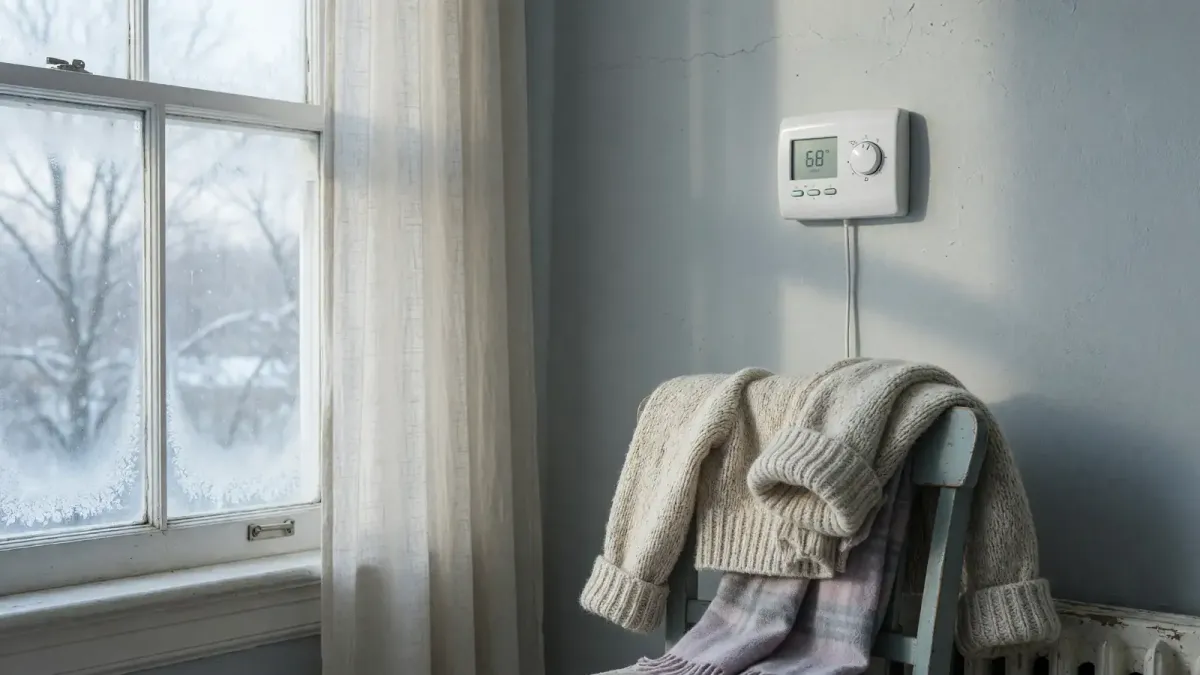
Winter is still weeks away on the calendar. The paperwork that actually reduces a heating bill is due much sooner.
Michigan is telling low-income renters and homeowners to apply for its Home Heating Credit by September 30. Florida Power & Light just stood up a new online assistance desk for people who cannot make the electric payment. In Wisconsin, consumer groups are fighting a 14% We Energies rate hike and using a line you have probably already said out loud: groceries or electricity.
If you wait until the furnace kicks on in November, you have already missed the cheap money. This is the month to file, weatherize, and decide whether the heating system itself is the leak.
The bill is going up before the first freeze
Energy burden is not a winter-only problem anymore. The Michigan Public Service Commission says about one-quarter of Michigan households already spend more than 6% of their income on electricity and natural gas. For lower-income households, that share climbs well past the 6% line researchers treat as a warning. Electric bills also rose this year for customers of Michigan’s two largest utilities, so the heating line on the statement is not the only one moving.
Wisconsin’s fight is more specific. Groups there are opposing We Energies’ proposed 14% increase, arguing that households with no buffer will have to choose between food and power. Rate cases are not decided by a single filing. Testimony from residents and consumer advocates can change the outcome, but it does not change your bill this month. Assistance programs and wasted-energy cuts still help even when they cannot cancel a utility-wide hike.
Do not panic-buy a new furnace. Treat September like a deadline month, because for a lot of programs it is.
September 30 is a real deadline, not a reminder email
Michigan’s Home Heating Credit is a state tax credit meant to offset the cost of keeping a home warm. The important detail, the one people miss, is that you do not have to owe Michigan income tax to claim it. You do not even have to file a regular state return. If you are not otherwise required to file, you can submit Form MI-1040CR-7 by itself.
Eligibility is narrower than the marketing makes it sound. You generally need to own the Michigan home or be responsible for rent under a lease, and household income is typically at or below 110% of the federal poverty level, according to the Michigan Public Service Commission. The actual credit is calculated from household resources, household size, and heating costs. That last part matters: two families at the same income can get different amounts if one lives in a leaky rental and the other does not.
Governor Gretchen Whitmer said nobody should have to choose between keeping the heat on and paying for food, medicine, or rent. The useful part is the date. Miss September 30 and the credit is gone for this season.
If you do not live in Michigan, do not tune this out. Most states run a similar calendar. LIHEAP (the federal Low-Income Home Energy Assistance Program) and state heating credits tend to open in late summer and close or hit first-come-first-served walls once cold weather starts. Look up your state’s energy office this week, not after the first 20-degree night.
Free money that goes straight to the utility
Filing a tax credit is one path. Getting a grant applied directly to the account is another, and it is usually faster.
LIHEAP is federally funded and pays heating and cooling costs for income-qualified households. Approved money is applied to the utility account. You do not get a check to “use wisely.” The balance just drops. FPL’s new portal at fpl.com/assistance is a useful example of how this is supposed to work in 2026: log into the account, see whether you qualify for a payment extension, and follow the link to Florida’s Department of Commerce LIHEAP page instead of calling five different 800 numbers.
Michigan has a parallel stack. State Emergency Relief can step in if heating or electric service has been shut off or is about to be. The Michigan Energy Assistance Program covers electricity, natural gas, propane, heating oil, and other home-energy costs for qualifying low-income households. The Public Service Commission says changes already approved should grow MEAP from roughly 55,000 households a year to more than 150,000. That expansion only helps you if you apply.
A practical sequence that does not require a spreadsheet:
- Log into your utility account and look for “assistance,” “energy aid,” or “payment options.” If your utility launched a portal this year, use it. FPL’s version exists because people were bouncing between departments.
- Apply for LIHEAP through your state’s commerce or human-services site. Have last month’s bill, proof of address, and income documents ready. Incomplete applications sit in a pile.
- If you are in a shutoff window, call the utility’s hardship line the same day you file. Assistance programs and disconnection holds are different queues.
- Ask about weatherization, not just bill payment. A one-time credit disappears. Air sealing does not.
If you have already been negotiating other household bills, treat the utility the same way: ask for the hardship desk, not the general customer-service script. The person who can freeze a disconnect is rarely the first voice you hear.
Cheap weatherization before you touch the furnace
A 14% rate hike is not something you caulk away. Waste is. The Cool Down’s reporting on the Wisconsin case makes that plain: weatherization and cutting wasted energy lower the monthly bill even when they cannot offset the utility’s increase.
Do the $0–$50 work first. It is boring and it is the highest return you will get this month.
Walk the house at dusk and look for daylight around exterior doors and window frames. If you can see light, you are heating the yard. A roll of foam weatherstripping and a door sweep will cost less than one propane fill. Close the chimney damper if you do not use the fireplace. An open damper in an unused fireplace is a hole in the roof you are paying to heat.
On the heating system itself: replace the furnace filter if you cannot remember the last date. A clogged filter makes the blower run longer for the same temperature. Vacuum the return vents. If you have hot-water radiators, bleed them until the hissing stops. If you have a heat pump, clear leaves and grass from around the outdoor unit now, before they freeze into a block.
Set the thermostat back 3–4 degrees while you sleep or work, then use a heavy blanket instead of pretending 72°F at 2 a.m. is a personality trait. If you already trimmed the summer electric bill by killing phantom loads and raising the AC setpoint, the winter version is the same habit with the numbers flipped.
Skip the viral “boil a pot of water to humidify the house” trick as a heating strategy. Humidity can make a room feel warmer, but an open pot on the stove is a gas or electric bill you did not need, plus a mold problem if you overdo it. A $20 hygrometer will tell you whether the air is actually dry.
One more unfashionable item: plastic window film on single-pane glass. It looks like 1998. It also cuts the draft you feel on the couch. If the landlord will not replace the windows, film plus heavy curtains that actually close is the available option.
When replacing the heating system is the real leak
Some houses are not leaking around the windows. They are leaking through the fuel.
A New York homeowner told The Cool Down they were looking at heat pumps after spending about $3,000 on heating oil in a single winter. Oil in their area was about $3.30 a gallon. Electricity was about $0.27 per kilowatt-hour. The fill-up math was blunt: roughly $1,000 per delivery, three deliveries a season.
Commenters who had already switched off oil were not romantic about it. The condition they kept repeating was sizing. A heat pump that is too small will emergency-strip all winter and you will hate it. A unit that is too large short-cycles. The document that prevents both is a Manual J load calculation, not a salesperson’s “this model is popular.” Get at least three estimates. Read the cold-weather performance rating, the warranty, and what happens to efficiency below 20°F. If the installer cannot explain that without a brochure, get another installer.
A study published in late August found that pairing air-source heat pumps with thermal storage cut upfront equipment cost by 29.7% compared with a system sized for the building’s peak instantaneous load. That paper is about a commercial-scale design with night-time storage, not your split-level ranch. The household version of that finding is simpler: storage and off-peak operation can change the math, and sizing for the peak hour is often how contractors inflate the quote.
Leave a working furnace alone. Replacement only pays if the current system is old, oil-fired, or constantly repaired. Run the numbers against this winter’s expected fuel cost, not against a 10-year-old memory of what oil used to cost.
If the quote is more than you can pay in cash, ask the contractor about financing last, after you have the Manual J and the three bids. Cheap money on a badly sized system is still a badly sized system.
Call before the past-due notice, not after
FPL’s new assistance center exists so customers can see payment-extension options on their own account instead of waiting on hold. Dawn Nichols, FPL’s vice president of customer service, said the point is to connect people with programs that pay the current bill, tips that cut the next one, and community resources for everything else that is also overdue.
Use that model even if you are not an FPL customer. Before you are 30 days late:
- Ask for a payment extension in writing through the account portal so there is a timestamp.
- Ask whether a budget-billing or level-pay plan would flatten the winter spike. Level-pay is not a discount. It is a smoothing tool, and it helps only if you stay on it through the cheap months too.
- If you are already in the shutoff window, say that in the first sentence. The hardship queue and the billing queue are different.
- Keep the confirmation number. Screenshot the chat. Paper disappears.
The same discipline applies to recurring bills you have been overpaying. Heating is just the line item that punishes delay the hardest, because the disconnect happens in the weather that makes the bill large.
Do not send money to a random “energy grant” website that texted you. LIHEAP and state credits do not start from an SMS. They start from a .gov page or your utility’s own domain.
Do this week, not after the first frost
If you only have one hour:
Look up your state’s heating-assistance deadline and start the application, even if you think you might be over the income line. The form will tell you. Michigan’s is September 30; yours may be earlier.
Log into the utility account and click every link that says assistance. Apply for LIHEAP. Put a $20 weatherstripping kit on the doors that show daylight. Change the furnace filter. If you heat with oil and last winter cost you something in the $3,000 neighborhood, get a Manual J quote before you pre-buy another tank.
The rate hike may still land. The credit, the grant, and the draft you seal this weekend are the parts you still control.

Discussion
Comments
Share a helpful tip, question, or takeaway from How to Cut Your Heating Bill Before Winter.
0 Comments
Loading comments…